What a Take-Up Pulley Does
A take-up pulley is the drum that maintains the correct tension in a conveyor belt. It is usually mounted on a sliding carriage or a pivoted arm so that it can move to compensate for belt stretch, wear, and load changes. Without a reliable take-up pulley, the belt may slip on the drive pulley, wander off the idler rollers, or fail to transfer power efficiently. In industries such as mining, quarrying, cement, and power generation, this component is essential for keeping the conveyor system stable over long periods.
Sometimes called a tension pulley or a take-up drum, this device is not the same as a drive pulley, tail pulley, or bend pulley. Each has a distinct role: the drive pulley transmits power, the tail pulley redirects the belt at the loading end, and the bend pulley changes belt direction. The take-up pulley specifically manages slack and ensures consistent belt wrap on the drive pulley.
Construction and Key Features
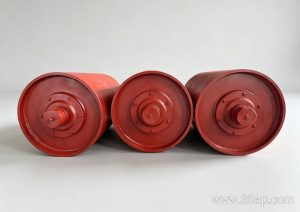
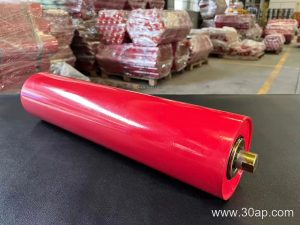
Most take-up pulleys are built from a steel drum shell with welded end discs and a through shaft. The shell surface may be plain, rubber lagged, or ceramic lagged, depending on the application. Lagging helps improve friction and reduce belt slippage. Common lagging thicknesses include 8 mm, 10 mm, 12 mm, 15 mm, and 20 mm. The pulley is supported by bearings, often mounted in a sliding frame that allows horizontal or vertical movement.
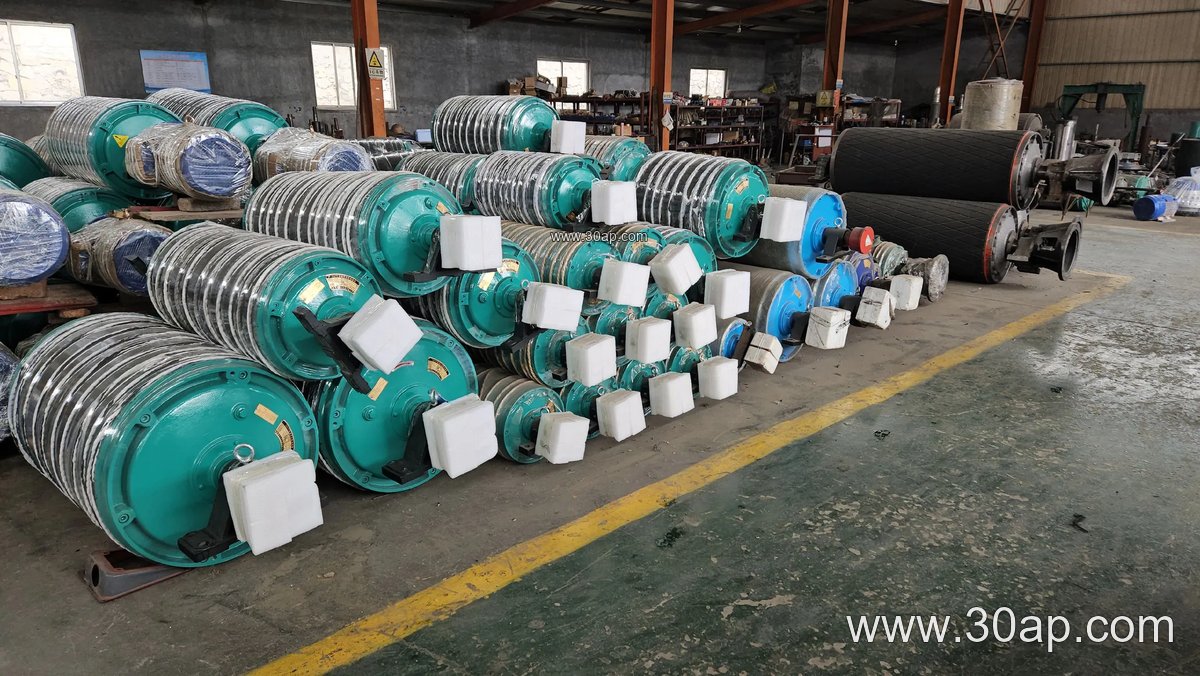
The pulley diameter and face width are matched to the conveyor belt width. For example, a B800 belt typically uses a pulley face width of about 950 mm, while a B1200 belt may use a 1400 mm face. Diameters can range from Ø200 to Ø1800, but the final choice depends on belt tension, shaft load, and available space. Shaft diameters are usually selected by torque and load calculations, not simply by belt width; common shaft sizes include Ø50 to Ø200.
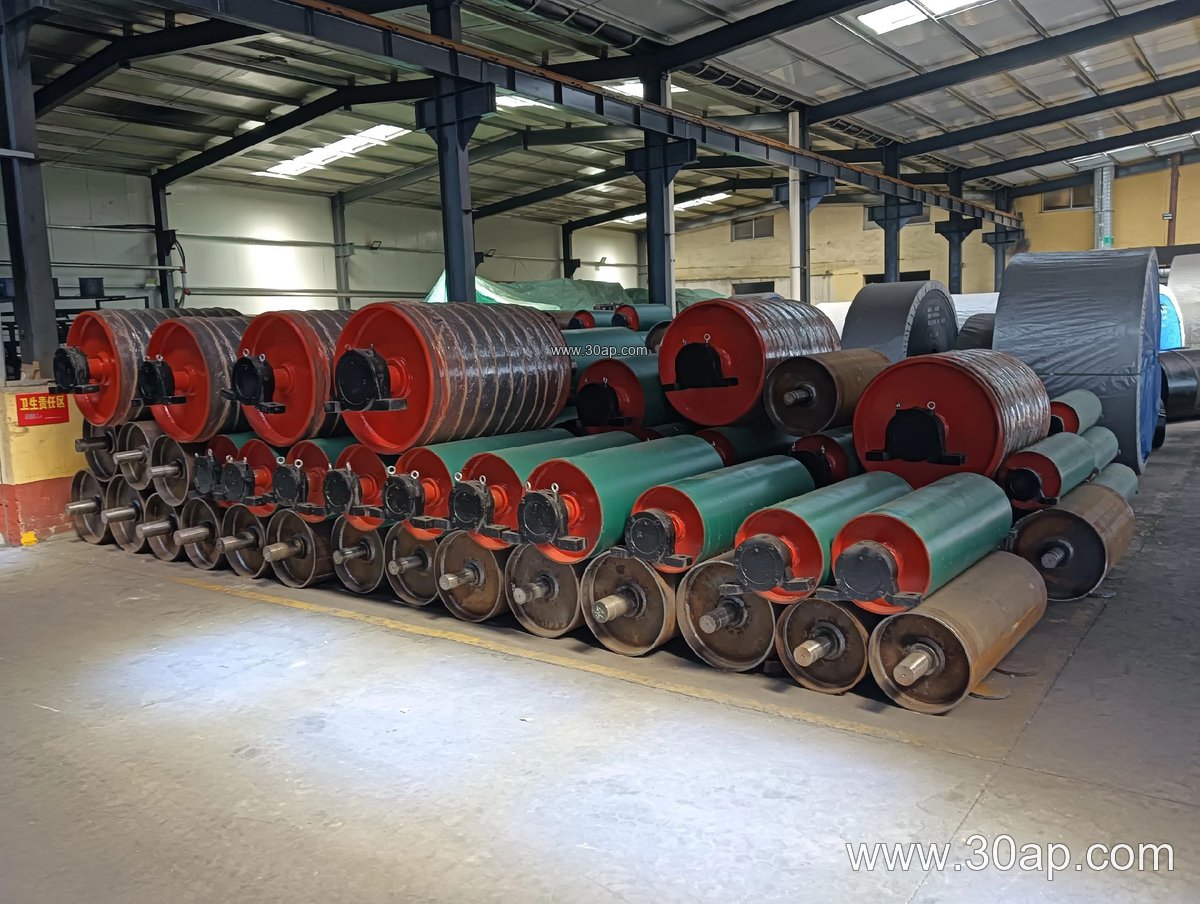
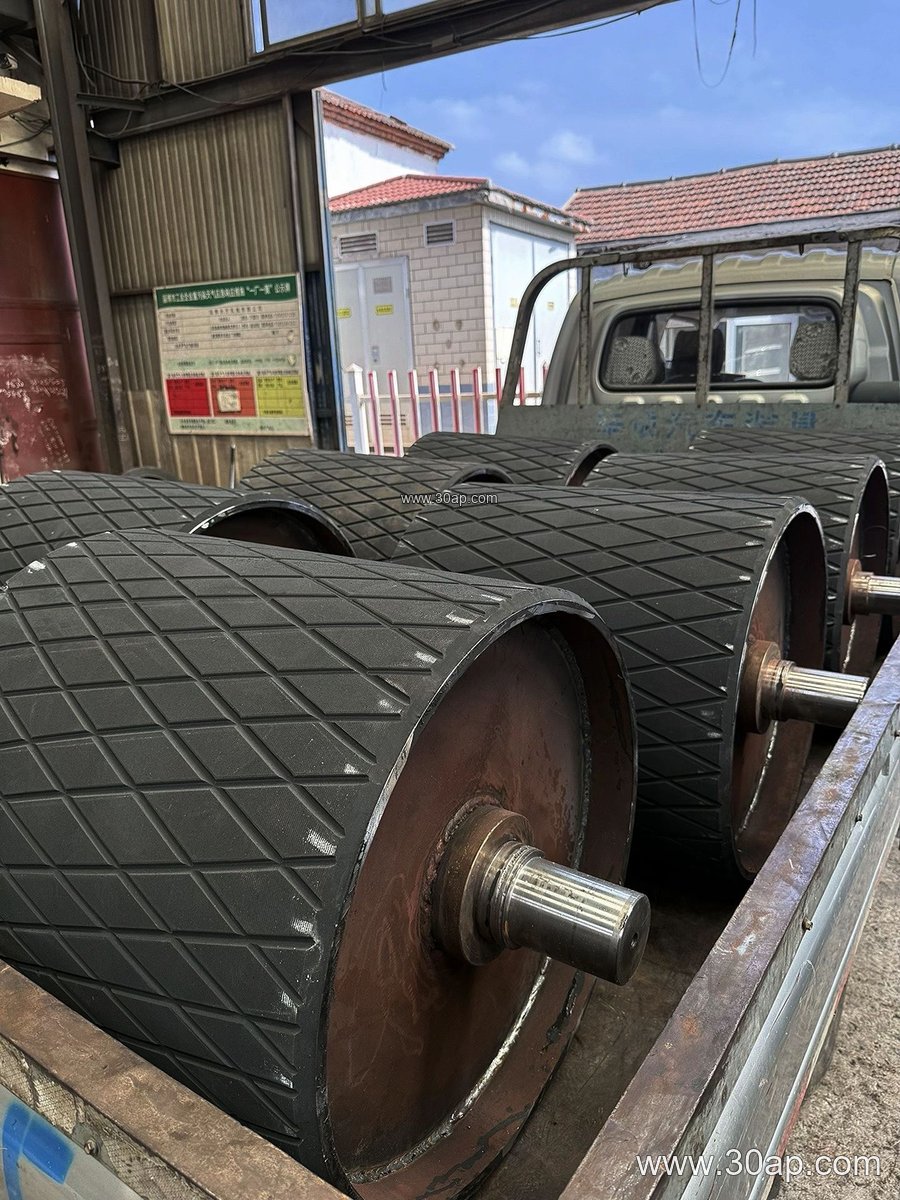
Take-up pulleys can be supplied with different surface forms such as plain, diamond grooved, herringbone grooved, or ceramic lagged. In dusty or wet conditions, grooved lagging helps expel water and debris, improving grip.
Where Take-Up Pulleys Are Used
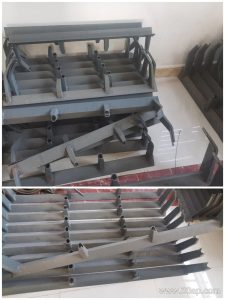
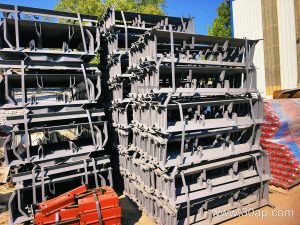
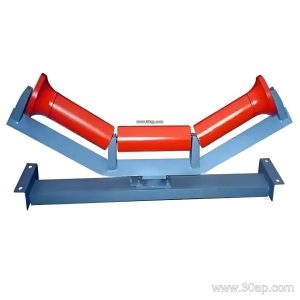
You will find take-up pulleys in mining operations, coal preparation plants, cement kilns, power station coal handling systems, and aggregate quarries. They are also used in port bulk terminals and steel plants. The pulley works together with the conveyor belt, idler rollers, and conveyor brackets to keep material moving smoothly. In a typical overland conveyor, the take-up pulley may be located near the tail end or in a specially designed tensioning tower.
For heavy-duty applications such as underground coal mining or iron ore transport, the take-up pulley must be robust enough to handle high tension and harsh conditions. Flame retardant conveyor belts and abrasion resistant conveyor belts are often paired with well-designed take-up pulleys to ensure safety and longevity.
Selection and Maintenance Tips
When choosing a take-up pulley, consider the belt width, the maximum belt tension, the travel distance required for take-up, and the environment. The pulley diameter should be large enough to avoid excessive bending stress on the belt, especially with steel cord conveyor belts or thick fabric core belts. For instance, a B1400 belt might use a Ø800 take-up pulley, while a B500 belt could use a Ø400 pulley—but these are examples, not fixed rules.
Regular maintenance includes checking bearing condition, inspecting lagging wear, and verifying that the take-up carriage moves freely. Misalignment or insufficient travel can lead to belt tracking problems. Always follow the manufacturer’s recommendations for lubrication and tension adjustment.
For more information on conveyor components and belt selection, visit conveyor pulley and conveyor belt resources. Proper integration of the take-up pulley with quality idler roller and conveyor bracket systems ensures reliable operation.