What Conveyor Bracket Fabrication Involves
Conveyor bracket fabrication is the process of cutting, bending, drilling and welding steel into the support frames that hold idler rollers and carry the belt along a conveyor line. In a quarry, a coal preparation plant or a cement kiln feed line, these brackets are the quiet backbone of the system: if a bracket is twisted or under-built, the belt will misalign, the rollers will wear unevenly, and spillage will follow. Good fabrication starts with the drawing, not the welder.
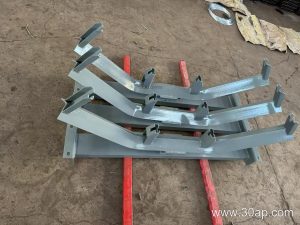
The work usually covers three families of parts: upper troughing brackets that set the belt into a trough, return brackets that support the empty belt, and transition or impact brackets that handle the load where material first lands. Each one is made to match a specific belt width, trough angle and roller diameter, and those three values drive every hole position and beam length.
How the Frames Are Built
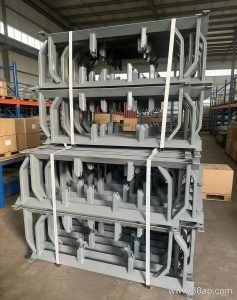
Most brackets are fabricated from angle steel, channel steel or folded steel plate. A typical upper troughing bracket uses a cross beam with two or three inclined roller seats; the center seat is often a fixed saddle while the side seats tilt to the required trough angle. Return brackets are simpler, usually a straight cross member carrying one flat roller or two rollers in a V arrangement.
Fabrication steps are fairly consistent across workshops:
- Cutting the angle or channel to length according to the belt width.
- Punching or drilling mounting holes for the roller shafts and the frame bolts.
- Bending or pressing the roller seats to the design trough angle.
- Jig welding so that the shaft centerlines stay parallel and square.
- Cleaning, priming and finishing, with galvanizing or painting chosen for the site environment.
Squareness matters more than most buyers expect. A bracket that is out by a few millimeters over a 1,200 mm span will push the belt sideways, and no amount of idler roller adjustment will fully cure it.
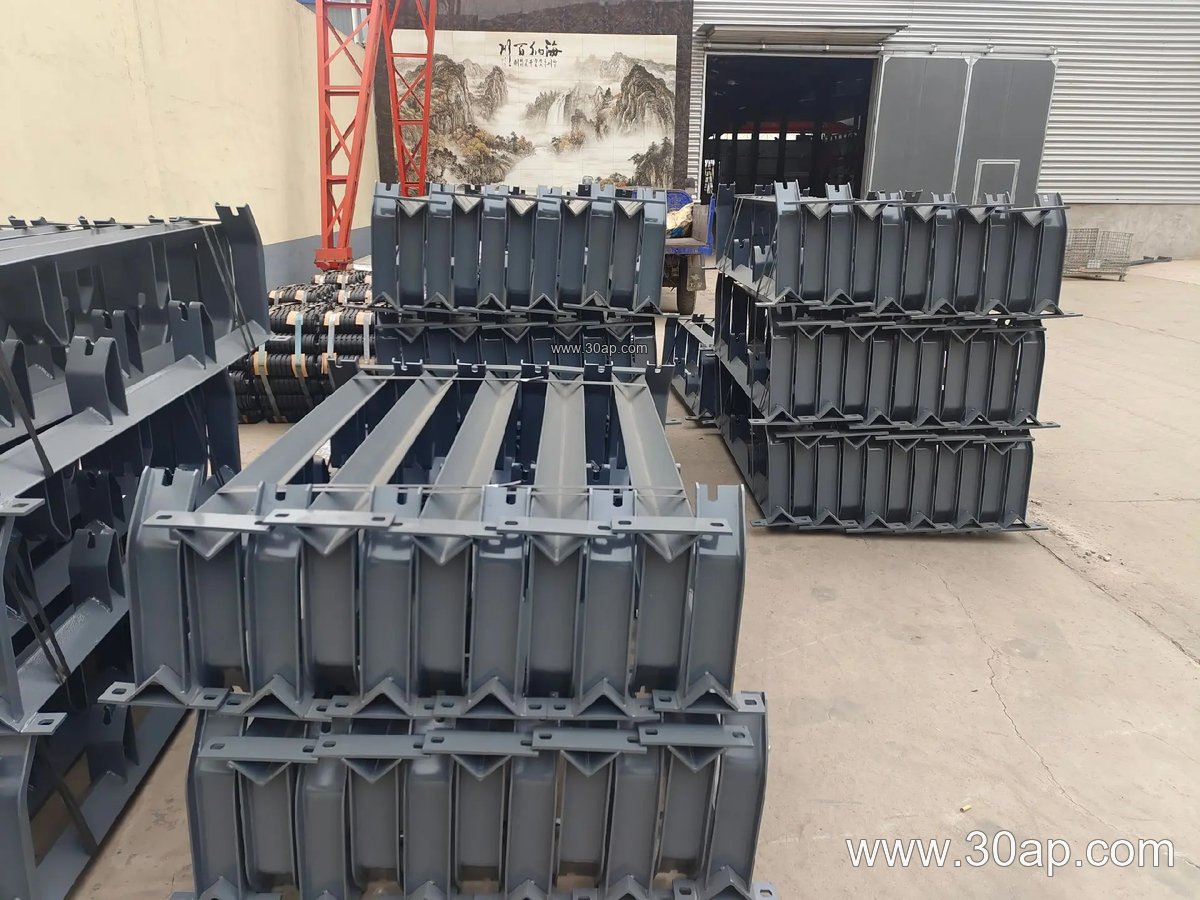
Matching Brackets to Belt Width, Trough Angle and Roller Diameter
There is no single bracket that fits every conveyor. A B650 line running at 30 degrees with Ø89 rollers needs a very different frame from a B1400 line at 45 degrees with Ø133 rollers. Adjustable brackets help where a plant wants one frame type across several positions, since the side roller seats can be set between common trough angles such as 20, 30, 35 and 45 degrees.
The table below shows typical reference combinations; actual hole spacing and beam length should always be confirmed against the conveyor drawing.
Reference Bracket Data
| Belt Width | Typical Trough Angle | Common Roller Diameter | Typical Bracket Type |
|---|---|---|---|
| B500 – B650 | 20° – 30° | Ø89 | Upper troughing, return |
| B800 – B1000 | 30° – 35° | Ø108 | Troughing, transition, V-return |
| B1200 – B1400 | 35° – 45° | Ø133 | Troughing, impact, self-aligning |
| B1600 – B1800 | 35° – 45° | Ø159 | Heavy troughing, buffer bracket |
| B2000 – B2200 | 35° – 45° | Ø194 | Heavy-duty troughing, return |
These are reference values, not fixed rules. A wide belt can run at a shallow angle, and a narrow belt can use a larger roller if the load demands it. What matters is that the bracket, roller and belt are designed as one set.
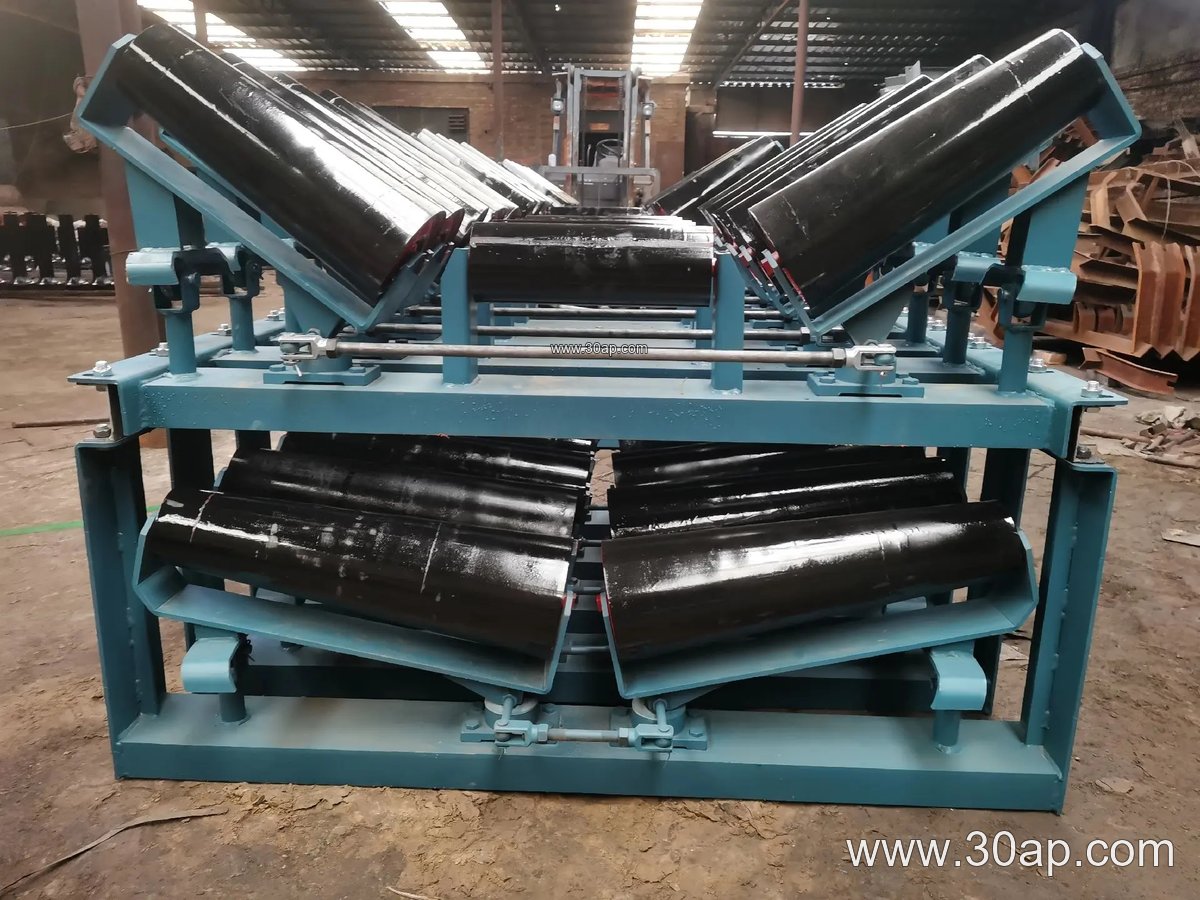
Where Fabricated Brackets Are Used
In a stone crushing and screening line, troughing brackets carry the belt under the crusher discharge, while impact brackets with rubber buffers absorb the first hit from large rock. In a power plant coal yard, return brackets and V-return brackets keep the empty strand tracking straight on long runs. Port ship loaders and cement plant clinker conveyors also rely on well-built frames, since a single failed bracket can stop a whole transfer point.
The belt itself influences bracket choice. A heavy [Steel Cord Conveyor Belt](/steel-cord-conveyor-belt) needs stiffer frames and larger rollers than a light EP belt, and a [Flame Retardant Conveyor Belt](/flame-retardant-conveyor-belt) in an underground coal mine often comes with stricter requirements for bracket finish and clearance.
What Buyers Should Check Before Ordering
Before placing an order, confirm the belt width, the intended trough angle, the roller diameter and the mounting hole pattern. Ask for the material thickness and the welding standard, and specify the surface treatment: painted, galvanized or powder coated. For dusty or corrosive sites such as fertilizer plants or coastal ports, galvanizing usually pays for itself.
It also helps to state whether the brackets are fixed or adjustable, and whether transition or impact positions are included. A fabrication drawing with hole coordinates avoids site rework, and a small pre-production sample can confirm fit before a full batch is welded. Buyers who plan maintenance should keep a few spare troughing and return brackets on hand, since replacing a bracket is far cheaper than replacing a damaged [conveyor belt](/conveyor-belt) or a bent [conveyor pulley](/conveyor-pulley).
Done well, conveyor bracket fabrication is simple work with a large effect: straight frames, correct angles and clean holes keep the belt centered, the rollers turning and the material moving.