What a Conveyor Support Bracket Does on the Frame
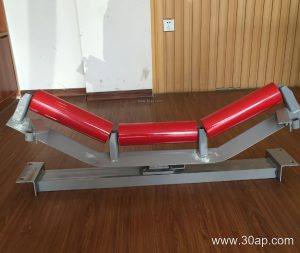
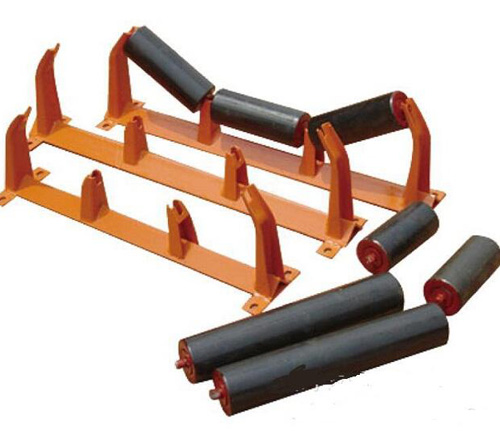
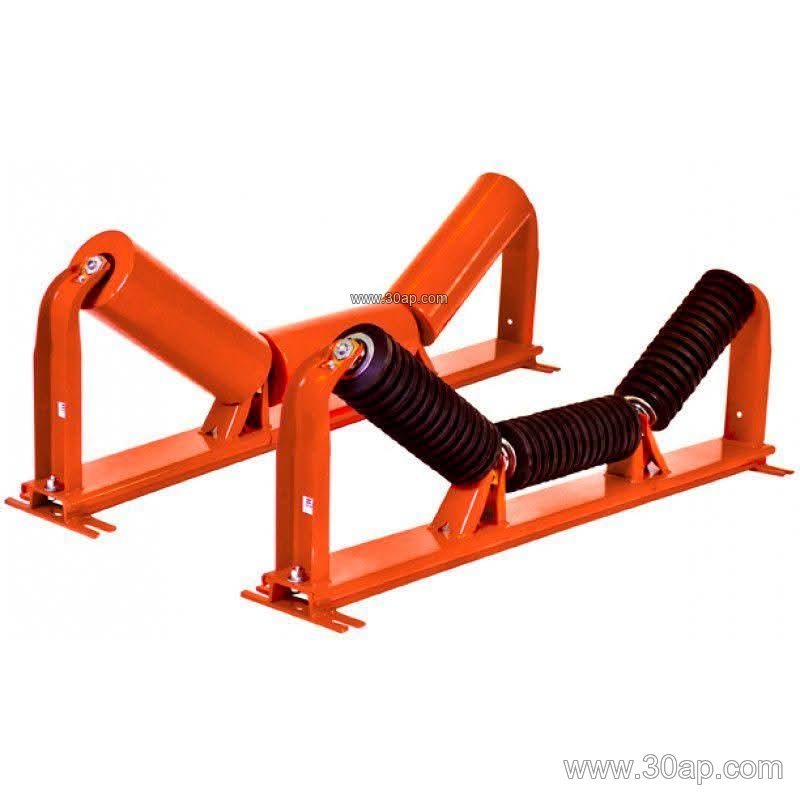
A conveyor support bracket is the interface between the idler roller and the conveyor frame. It holds each roller at the intended height, angle and spacing so the conveyor belt keeps its trough shape and runs without wandering. In practice the part is often called a conveyor bracket or roller support bracket, and those names refer to the same component. On a typical troughed section, three brackets or bracket positions carry the three-roller set; on the return side, a simpler bracket supports the return roller.
The bracket does not carry the belt directly. Its job is to position the conveyor idler roller accurately and keep it there under load, vibration and belt pull. A weak or misaligned bracket shows up quickly as roller movement, belt edge wear or spillage at the transfer point.
How the Bracket Is Built
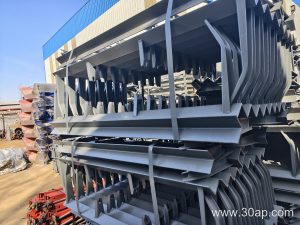
Most conveyor support brackets are fabricated from angle steel, channel steel or folded steel plate. The common design has a base that bolts or welds to the frame stringer, a vertical face with a slot or hole pattern for the roller shaft, and a stop or notch that fixes the trough angle. Slotted holes allow small field adjustments; welded designs favor rigidity.
Construction details that matter to buyers include:
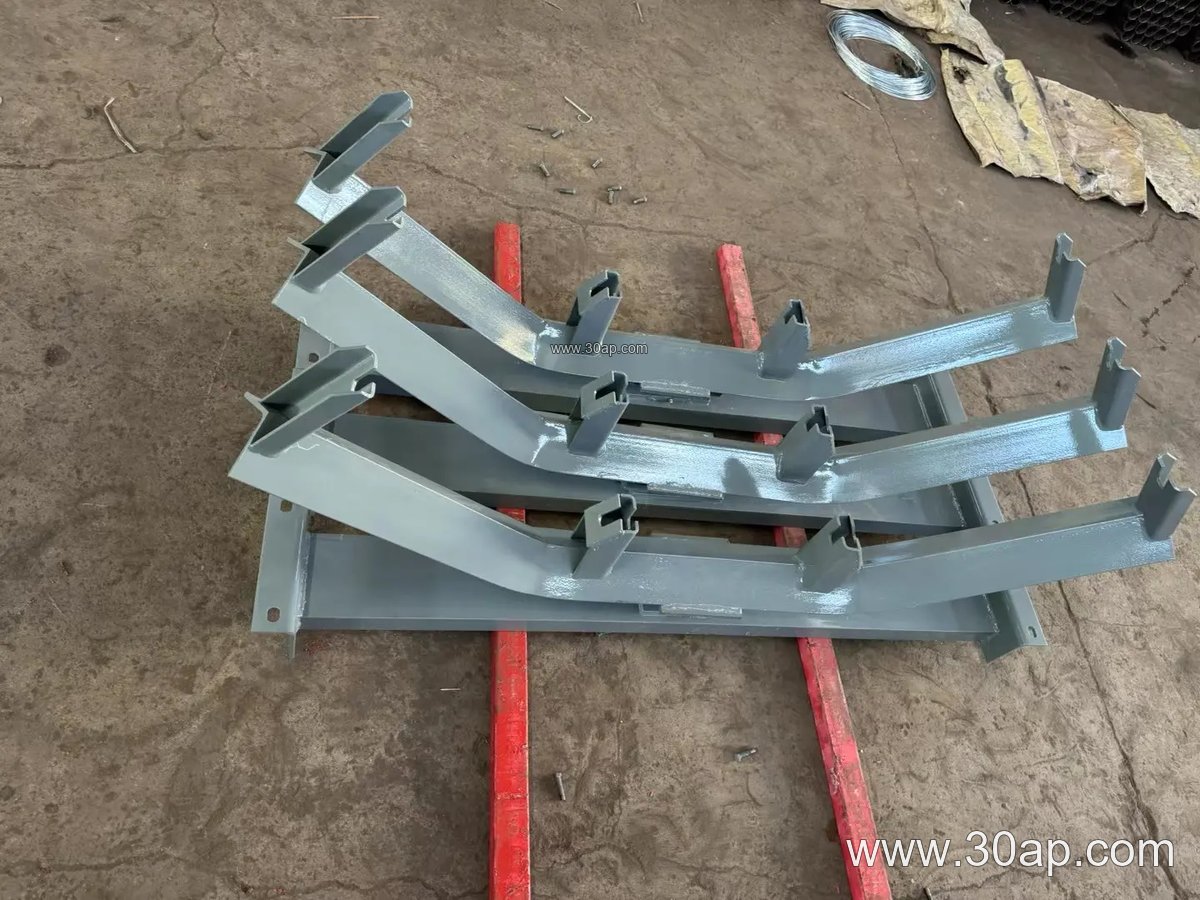
- Material thickness and whether the bracket is pressed or welded
- Hole spacing for the roller shaft, which follows belt width and trough angle
- Mounting hole pattern for the frame stringer
- Surface treatment, such as painted, galvanized or bare steel
Installation hole pitch and crossbeam length are not universal figures. They change with belt width, trough angle and frame design, so they should be confirmed against the drawing for each conveyor.
Common Types and Where They Sit
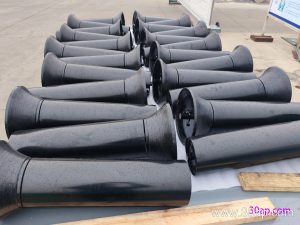
The bracket family covers several positions along the conveyor. Trough brackets support the carrying rollers; transition brackets sit near the head or tail to ease the belt from flat to troughed; return brackets and V-return brackets hold the return roller; impact brackets are used under loading points together with impact rollers; and self-aligning brackets work with training rollers to correct belt drift. Adjustable brackets let the trough angle be set between positions such as 20, 30, 35 or 45 degrees, while fixed brackets lock one angle.
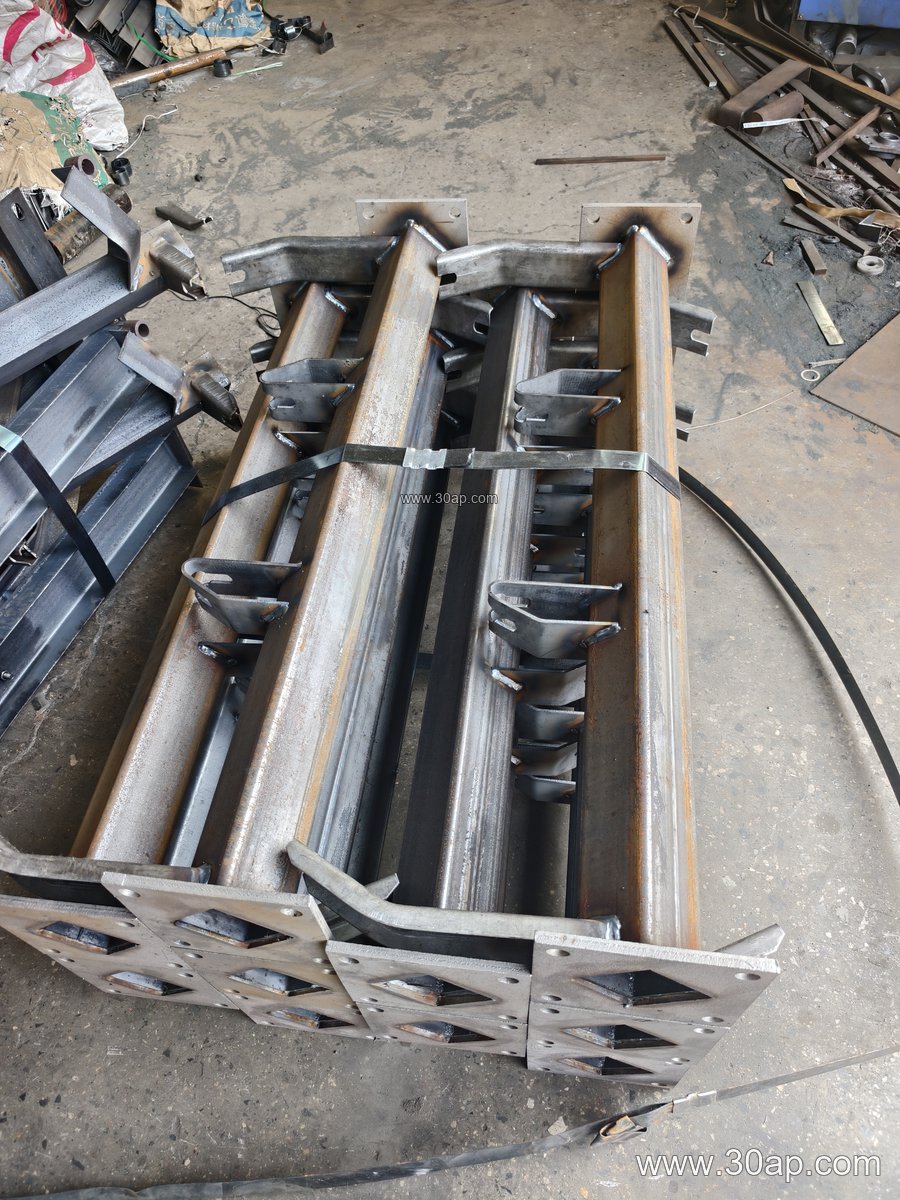
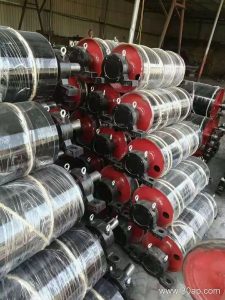
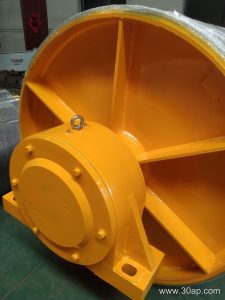
A forward-tilted bracket, usually around 1.5 to 2 degrees, is used with forward-tilted rollers to help center the belt. This is a different function from a bend pulley or a tail pulley, which redirect the belt itself and are not interchangeable with support brackets.
Typical Reference Data
The values below are common reference points, not fixed combinations. A given belt width can be matched with more than one roller diameter and more than one trough angle, depending on load, belt stiffness and frame design.
| Item | Common reference values |
|---|---|
| Belt width | B500, B650, B800, B1000, B1200, B1400, B1600, B1800, B2000, B2200 |
| Trough angle | 20°, 30°, 35°, 45° |
| Idler roller diameter | Ø89, Ø108, Ø133, Ø159, Ø194 |
| Bracket material | Angle steel, channel steel, folded steel plate |
Example combinations seen in design work include B800 with 35 degrees and Ø108, B1200 with 45 degrees and Ø133, and B650 with 30 degrees and Ø89. These are illustrations of how width, angle and roller diameter are written together, not mandatory pairings.
Where These Brackets Are Used
Support brackets appear wherever a belt conveyor runs on rollers. In a limestone quarry or sand and gravel line, they are used on the long incline conveyors between the crusher and the screening plant, where dust and constant load make rigid brackets important. In a coal preparation plant or a power station coal handling system, trough and return brackets keep the belt trained through transfer towers and bunker feed points.
The same part is used in cement plants, steel and sintering lines, port bulk terminals, batching plants and tunnel spoil conveyors. The working conditions differ, but the bracket function stays the same: hold the roller in the right place.
What to Check Before Ordering
Buyers should start from the conveyor drawing rather than from a generic list. Confirm the belt width, the trough angle, the roller diameter and the frame stringer dimensions. Ask whether the bracket is fixed or adjustable, and whether it must match an existing hole pattern for replacement work.
Also confirm the material and finish against the environment. A washdown area, a dusty coal yard and an outdoor stockpile may call for different surface protection. For replacement projects, check the mounting hole spacing on the old bracket and compare it with the new one before shipping. A bracket that is close but not matching can stall a planned shutdown.
Finally, treat the bracket as part of a system. Its alignment with the conveyor belt, the conveyor idler roller and the frame affects tracking, roller life and power draw. Small errors in bracket position are easier to correct at installation than after the belt has run for weeks.