What a High-Strength Idler Is
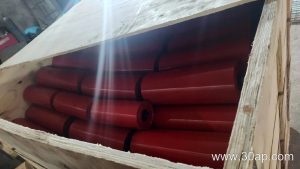
A high-strength idler is a heavy-duty conveyor roller engineered to carry high belt loads and resist impact, abrasion, and misalignment in tough bulk-handling environments. Often referred to as a heavy-duty idler roller, it forms the load-bearing bed beneath the conveyor belt, maintaining belt profile and reducing friction along the carrying and return sides. While standard idlers suit light aggregate or packaging lines, the high-strength version is built for continuous duty in mines, coal preparation plants, cement works, power station coal yards, and primary crushing circuits where spillage, shock loading, and dust are routine.
Construction and Key Components
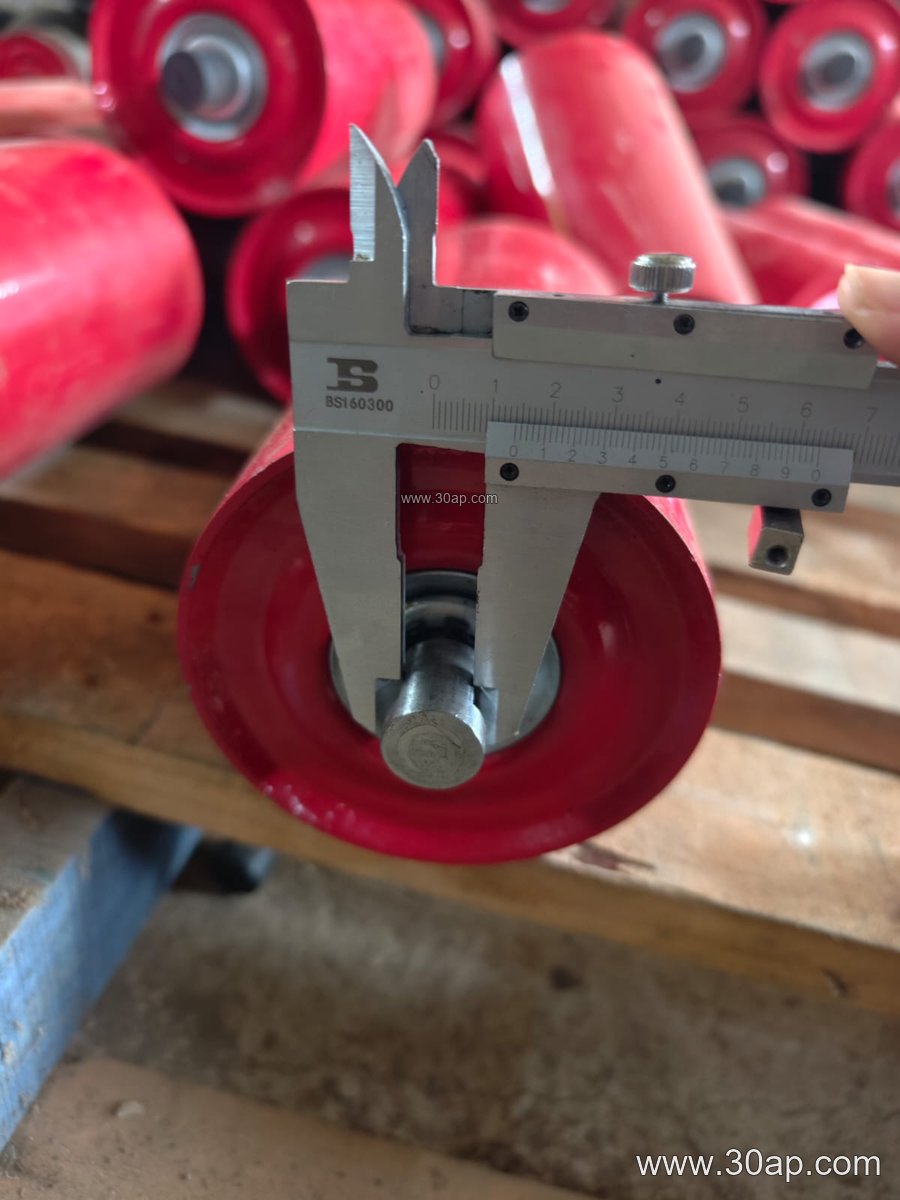
The strength of this idler starts with the roller shell, usually a thick-wall steel tube that resists denting from lump impact. For abrasive or sticky materials, shells may be fitted with rubber rings or ceramic tiles to protect the belt and extend service life. The shaft is machined from round bar and sized according to the load case rather than the belt width alone; a common mistake is to assume a fixed shaft diameter for a given belt width. Bearings are selected from widely available deep-groove ball bearing series such as 6204, 6205, 6305, 6306, 6308, and 6310, matched to the duty and sealing arrangement. High-strength idlers typically use labyrinth seals or contact seals with grease retention features to keep out fine dust and water. The end caps and bearing housings are welded or pressed with extra care to maintain concentricity, because runout shortens bearing life and wears the belt edge.
Common Configurations and Dimensions
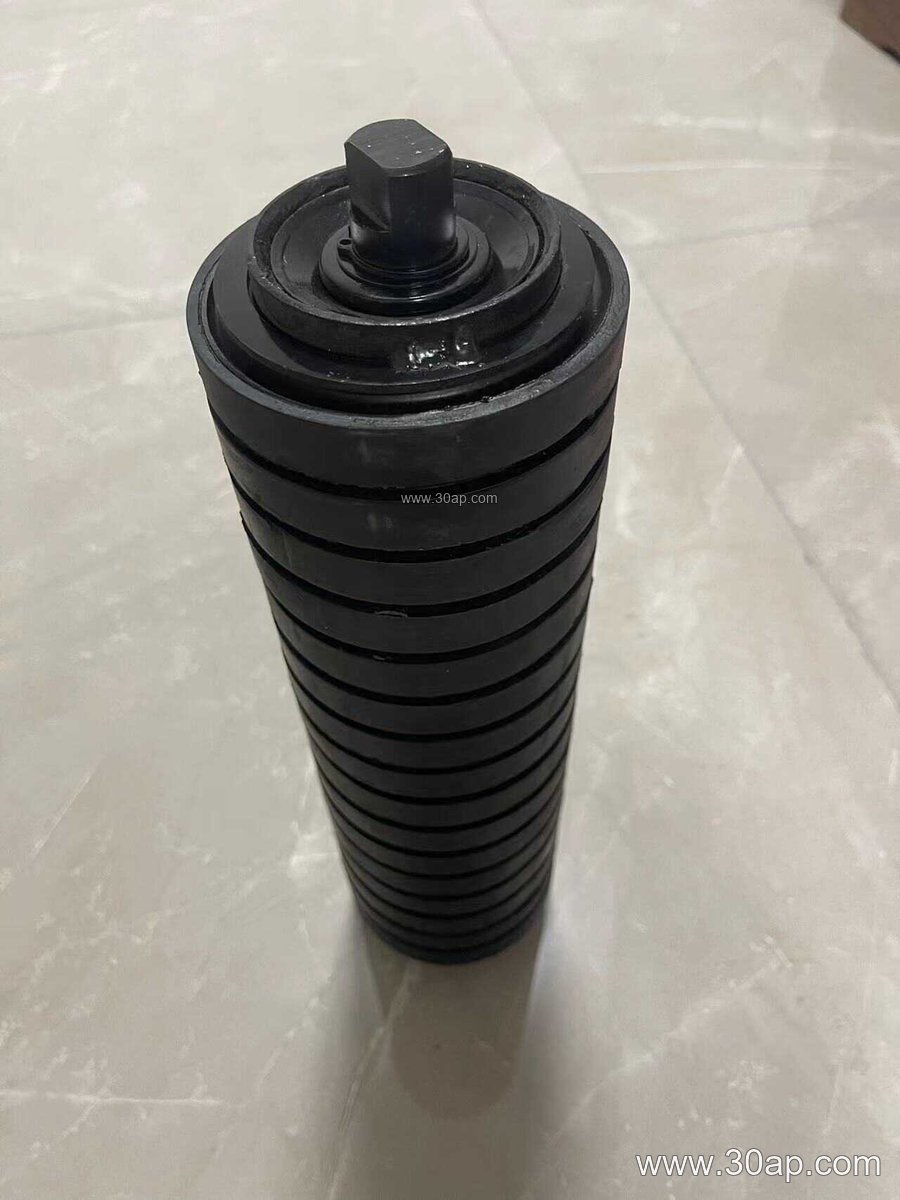
High-strength idlers appear in several arrangements depending on the conveyor section. Troughing sets with two or three rolls support the loaded belt; transition idlers ease the belt from flat to troughed profile near pulleys; impact or buffer idlers with rubber rings absorb shock at transfer points; and return idlers, including flat and V-type, support the empty belt. Roller diameters commonly range from Ø63 to Ø219, with heavier sections often using Ø127, Ø133, Ø159, or larger. Belt widths from B400 to B2400 are encountered, but the roller length and shaft size must be confirmed against the actual trough angle, roll arrangement, and load. The table below shows typical examples of roll length for three-roll troughing sets; these are reference values, not fixed pairings, and side rolls may differ from the centre roll.
| Belt width | Typical centre roll length (three-roll troughing) |
|---|---|
| B500 | 200 mm |
| B650 | 250 mm |
| B800 | 315 mm |
| B1000 | 380 mm |
| B1200 | 465 mm |
| B1400 | 530 mm |
| B1600 | 600 mm |
| B1800 | 670 mm |
| B2000 | 750 mm |
Trough angles of 20, 30, 35, and 45 degrees are common, and the choice affects material cross-section and spillage. For self-aligning or training applications, a slight forward tilt of about 1.5 to 2 degrees is sometimes used, but this is a design detail for specific idler types, not a universal rule.
Where High-Strength Idlers Are Used
These idlers are found in primary and secondary crushing plants, overland conveyors in quarries and limestone mines, coal handling systems at power stations, and raw material transport in cement plants. In a sand and gravel line, a high-strength troughing idler under the crusher discharge absorbs lumps and reduces belt damage; in a coal preparation plant, sealed heavy-duty return idlers limit dust ingress and keep the belt tracking. They also appear in port bulk terminals, sinter plants, and tunnel spoil removal, where continuous operation and minimal maintenance windows are critical.
Selection and Maintenance Notes
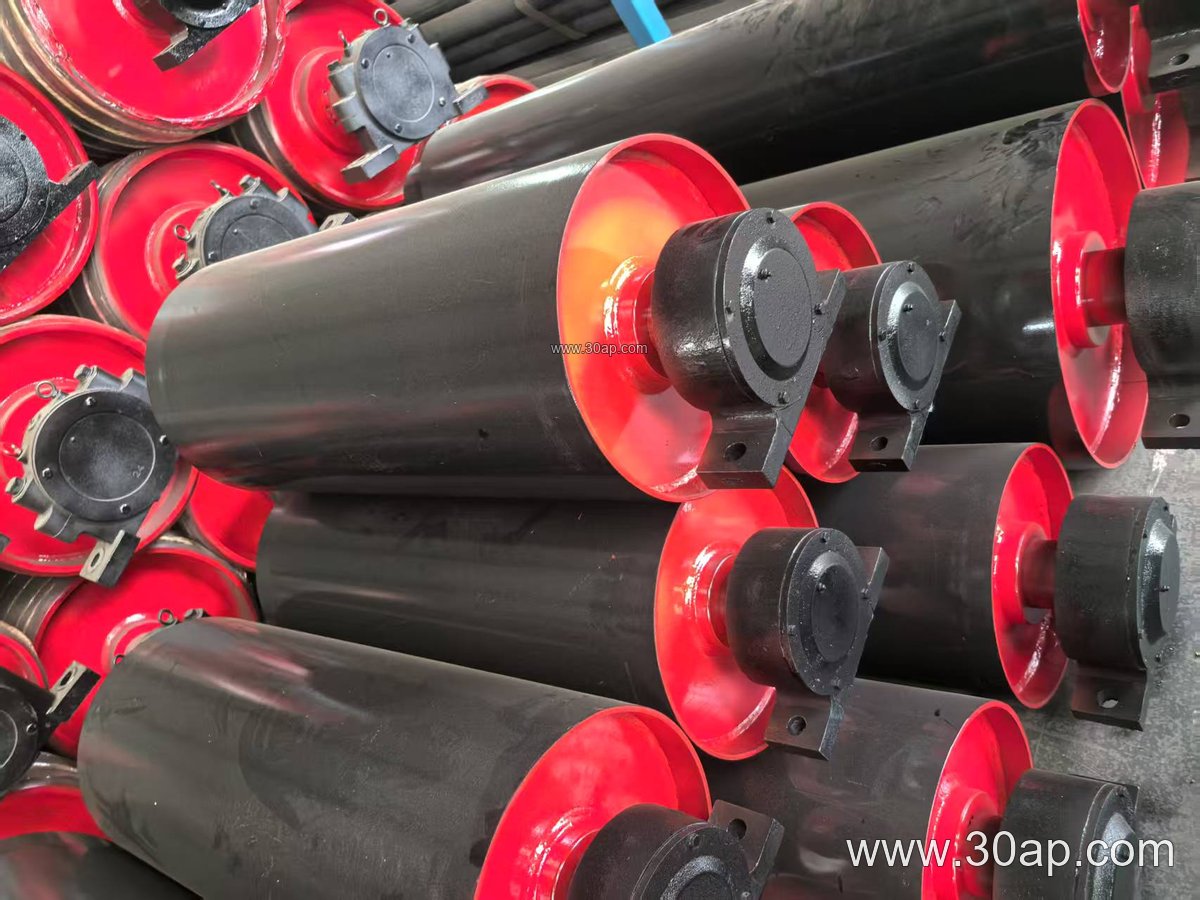
Buyers should match the idler to the belt width, trough angle, load per roll, and environmental conditions rather than choosing by diameter alone. Specify the shell thickness, bearing series, seal type, and surface form (plain steel, rubber ring, ceramic, or nylon) based on material abrasiveness and stickiness. Check that the conveyor bracket and frame dimensions suit the chosen idler set, and confirm shaft end fixing details. During operation, listen for squealing or rumbling, check for roller seizure, and inspect for material build-up on return idlers. Re-greasing only where grease nipples are provided, and replacing worn rolls in sets helps maintain belt alignment. A high-strength idler is not a substitute for a drive pulley, tail pulley, or bend pulley; those components perform different functions in the conveyor drive and tensioning system.