What Idler Processing Covers
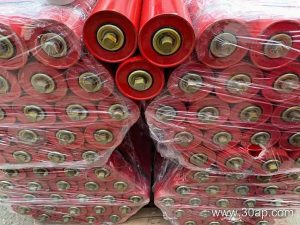
Idler processing is the manufacturing work that turns steel tube, shaft stock, bearing housings and seal components into finished carrying and return rollers for a conveyor belt. In a coal handling plant or a limestone quarry, these rollers sit under the belt for years, so the processing steps decide how freely they spin and how long they last. A finished idler roller is a small assembly, but every stage from tube cutting to final greasing affects the whole conveyor.
How an Idler Roller Is Built
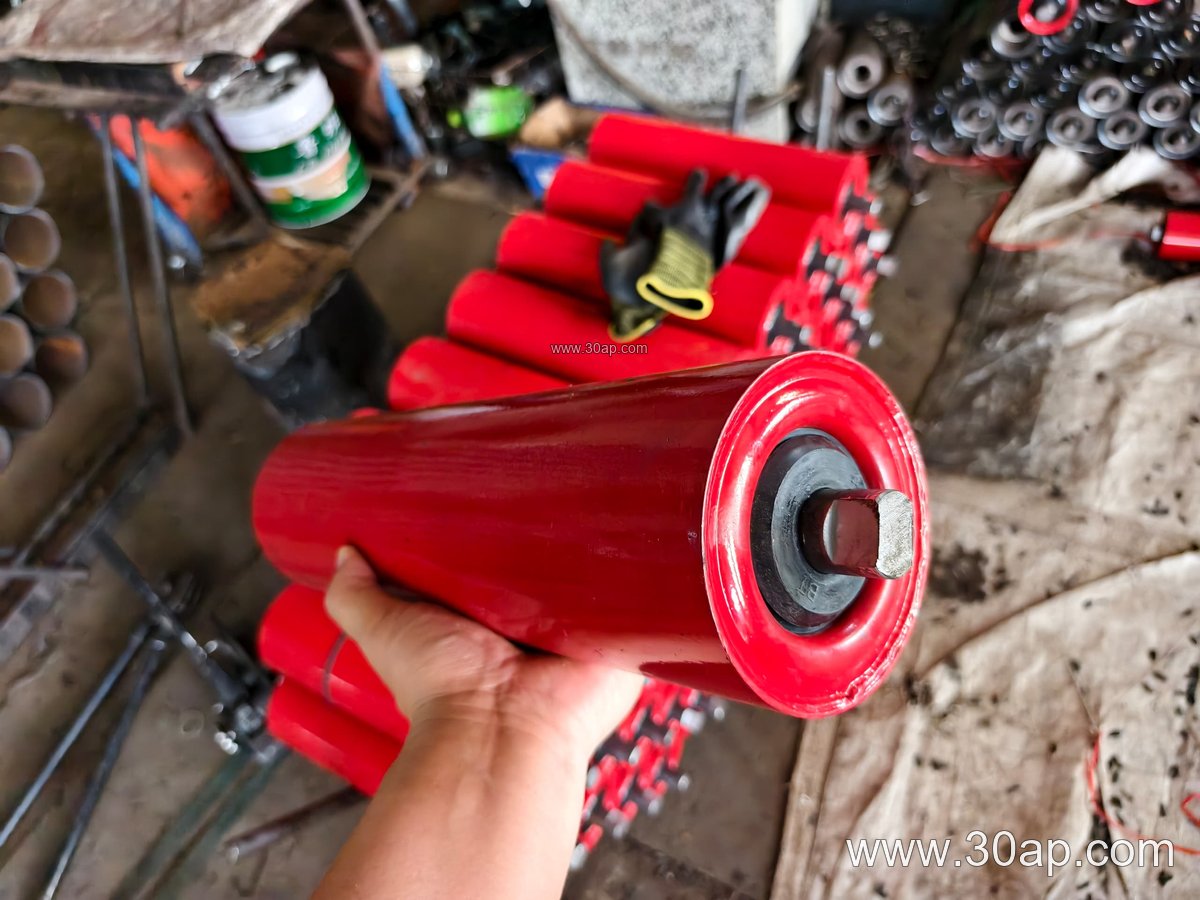
Processing usually starts with cutting the roller shell to length, then machining the bearing seats at each end. The shaft is turned to match, and bearing housings are pressed or welded into the tube. Sealing is the step that separates a long-service roller from a short-lived one, especially in dusty or wet conditions such as a wash box or an aggregate screening line.
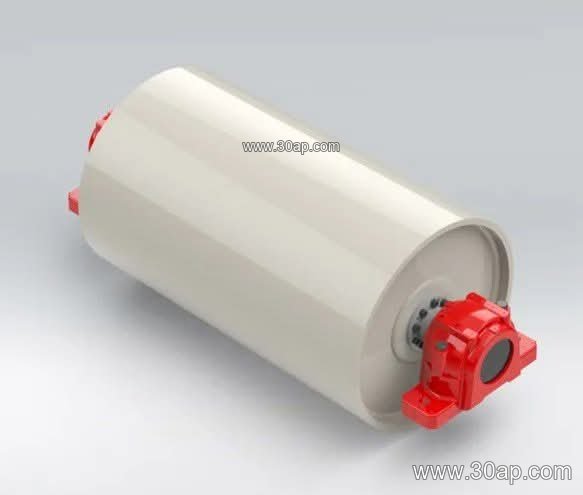
- Shell preparation: cutting, deburring and straightening the tube
- End machining: bearing seat tolerance and concentricity
- Bearing fit: pressing the bearing and checking rotation
- Sealing: labyrinth or contact seals to keep out dust and water
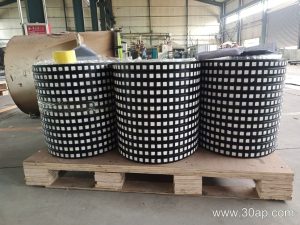
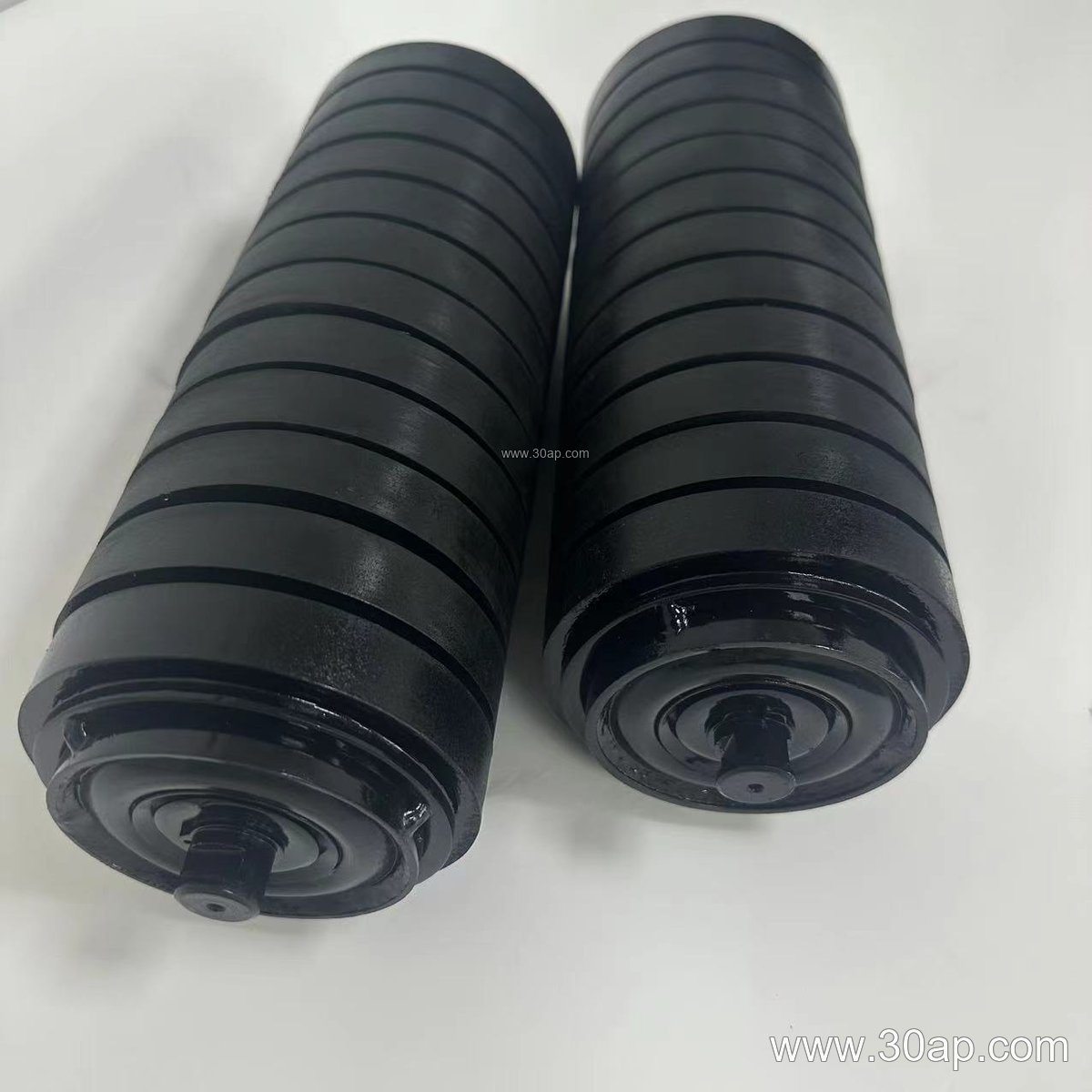
- Surface finishing: painting, or fitting a rubber ring, nylon or ceramic cover
- Final inspection: runout, starting torque and grease fill
Common Sizes and Surface Forms
Roller diameter and belt width are chosen together with the conveyor design, not from a single rule. The table below lists typical reference values that appear in idler processing work; actual dimensions follow the drawing for each project.
| Parameter | Common reference values |
|---|---|
| Roller diameter | Ø63, Ø76, Ø89, Ø102, Ø108, Ø127, Ø133, Ø159, Ø178, Ø194, Ø219 mm |
| Belt width | B400, B500, B650, B800, B1000, B1200, B1400, B1600, B1800, B2000, B2200, B2400 |
| Trough angle | 20, 30, 35, 45 degrees |
| Roller surface | Steel tube, nylon, ceramic, rubber ring |
| Bearing | 6204, 6205, 6305, 6306, 6308, 6310 |
Roller length changes with belt width and trough form. For a three-roll troughing set, common side-roll lengths are roughly 200 mm at B500, 250 mm at B650, 315 mm at B800, 380 mm at B1000, 465 mm at B1200, 530 mm at B1400, 600 mm at B1600, 670 mm at B1800 and 750 mm at B2000. These are examples only; centre rolls and side rolls can differ, and the drawing governs.
Where the Processing Matters Most
In a cement plant, fine dust works into every gap, so seal quality and bearing fit are the focus. In a copper mine or an iron ore crushing circuit, impact and abrasion push processors toward thicker shells and rubber-ring impact rollers at the loading point. A power station coal yard often needs smooth-running return rollers to keep belt friction low, while a sand and gravel line may favour ceramic or nylon covers where slurry and grit are present.
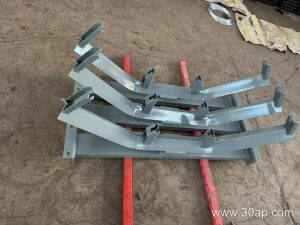
Processing also has to suit the position in the conveyor: troughing rollers carry the loaded belt, return rollers support the empty side, and self-aligning rollers correct belt drift. A transition roller near the tail pulley is shaped differently from a standard three-roll set, and the processing tolerances are adjusted accordingly.
What a Buyer Should Check
Before ordering, confirm the drawing details rather than assuming a size from belt width alone. Useful questions include:
- Which roller type and trough angle are required at each position?
- What shaft diameter and bearing number does the design specify?
- Is a rubber ring, nylon or ceramic surface needed for the duty?
- What seal arrangement suits the dust and moisture level?
- Are the rollers balanced for the belt speed involved?
Ask for the inspection record covering runout, rotation and grease fill, and keep a spare set of the most heavily loaded rollers. Good idler processing is invisible in daily operation, but it shows up in fewer stoppages and a conveyor belt that tracks cleanly through the plant.