What a Conveyor Bracket Is and Why Its Price Varies
A conveyor bracket is the structural support that holds the idlers under the belt line. On a quarry or cement plant conveyor, the bracket keeps the troughing idlers at the correct angle, carries the return idlers, and transfers load from the belt into the conveyor frame. When buyers ask about conveyor bracket price, they are usually comparing brackets that look similar but differ in steel grade, forming method, hole spacing, and coating. The bracket is a fabricated part, not a catalog commodity, so two brackets with the same belt width can still carry different prices.
The price is driven mainly by steel weight and fabrication steps. A bracket made from folded plate uses less material than one built from angle or channel steel, but it needs laser cutting and press braking. Welded brackets add labor and inspection time. Hot-dip galvanizing adds cost but extends service life in wet or dusty conditions. Buyers should compare brackets on material, finish, and dimensional accuracy rather than on a single unit figure.
How the Bracket Is Built
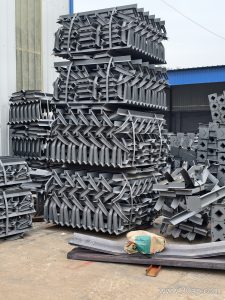
Most conveyor brackets are made from angle steel, channel steel, or folded steel plate. The common forms include troughing brackets, upper trough brackets, transition brackets, return brackets, flat return brackets, V-return brackets, impact bracket sets, self-aligning brackets, and adjustable brackets. Each form has its own fabrication route:
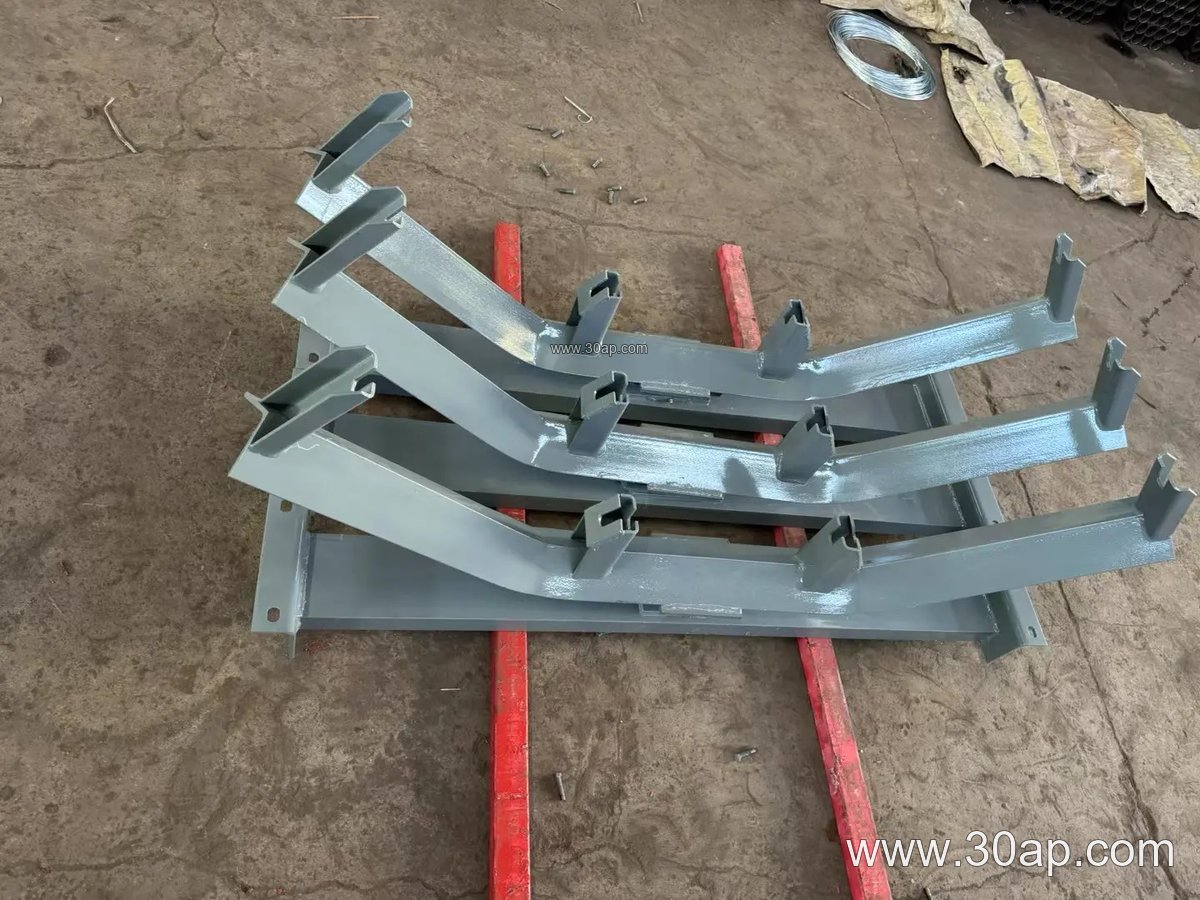
- Cutting to length and punching or drilling mounting holes
- Bending the trough angle on a press brake
- Welding the crossbeam to the end plates or gussets
- Surface treatment such as painting or galvanizing
Mounting hole spacing and crossbeam length change with belt width and trough angle. A B800 bracket and a B1200 bracket are not the same part, and a 35 degree bracket is not a drop-in replacement for a 45 degree bracket. This is why a quotation needs the belt width, trough angle, and idler diameter before the price can be firm.
Where Conveyor Brackets Are Used
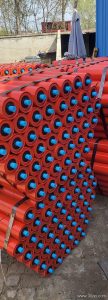
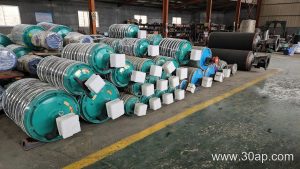
In a limestone quarry, troughing brackets support the carrying idlers on the main haulage conveyor and on the transfer conveyors between crushing and screening. In a cement plant, brackets hold idlers on clinker and raw material belts where dust and heat affect the frame. Coal handling in a power plant uses similar brackets, often with galvanized or painted finish. The bracket works together with the conveyor belt, idler roller, and conveyor pulley, but it does not replace any of them. A drive pulley, tail pulley, and bend pulley are different components and cannot be swapped for a bracket or for each other.
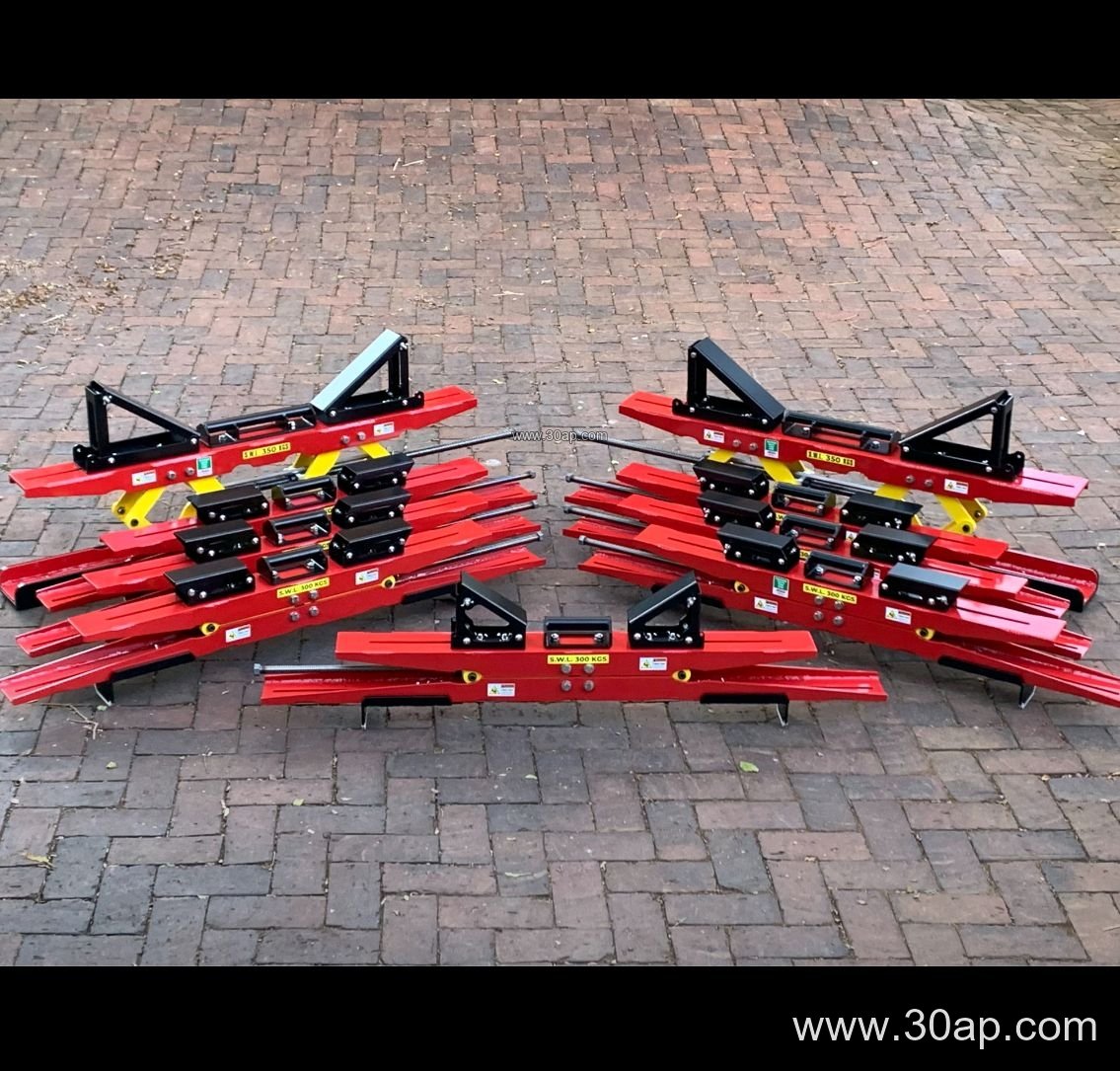
Bracket selection also depends on the duty. An impact bracket set under a loading point is heavier than a standard troughing bracket because it must absorb falling material. A self-aligning bracket carries extra linkage and costs more than a fixed bracket. A V-return bracket is used on the return run and is priced differently from a flat return bracket.
Common Reference Data for Bracket Selection
The table below lists typical reference values. These are common ranges, not fixed combinations, and the final specification is set by the conveyor design.
| Parameter | Common reference values |
|---|---|
| Belt width | B500, B650, B800, B1000, B1200, B1400, B1600, B1800, B2000, B2200 |
| Trough angle | 20, 30, 35, 45 degrees; adjustable brackets can move between these angles |
| Idler diameter | Ø89, Ø108, Ø133, Ø159, Ø194 |
| Bracket material | Angle steel, channel steel, folded steel plate |
| Forward tilt | About 1.5 to 2 degrees on forward-tilt brackets |
A bracket described as B800, 35 degree, Ø108 is a typical quarry specification, while B1200, 45 degree, Ø133 suits a wider belt with a deeper trough. These examples are not universal matches. Belt width does not fix one trough angle or one idler diameter, and shaft diameter is set by the idler design, not by the bracket alone.
Buyer Checklist Before Requesting a Price
Before asking for a conveyor bracket price, prepare the belt width, trough angle, idler diameter, bracket type, mounting hole spacing, and finish. State whether the bracket is fixed or adjustable and whether it sits on the carrying or return side. For a dusty cement plant or a wet quarry, ask about coating. For a coal yard, confirm the bracket fits the existing frame holes. Ask whether the price includes fasteners and whether the bracket is supplied as a set. A clear specification reduces rework and gives a more reliable comparison between suppliers.