What a PVC Conveyor Belt Is
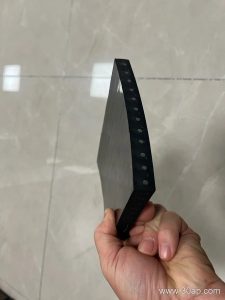
A PVC conveyor belt is a lightweight conveyor belt with a polyvinyl chloride cover and a textile carcass. It is often called a PVC belt or PVC conveyor belting, and it belongs to the same broad family as PVG belts, which use a PVC cover over a nitrile rubber blend. The PVC version is usually chosen where a smooth, easy-to-clean surface, moderate load capacity and resistance to water and many mild chemicals matter more than heavy-duty impact resistance.
The belt is not a single material. It combines a carcass that carries tension with a PVC cover that protects the fabric and provides the running surface.
Construction and Surface Options
Most commonly, the carcass is woven polyester or a polyester-cotton blend, supplied in 2 to 6 plies depending on the duty. The PVC cover is applied to one or both faces, and the belt edges may be cut or sealed. Buyers can request different surface forms for different jobs:
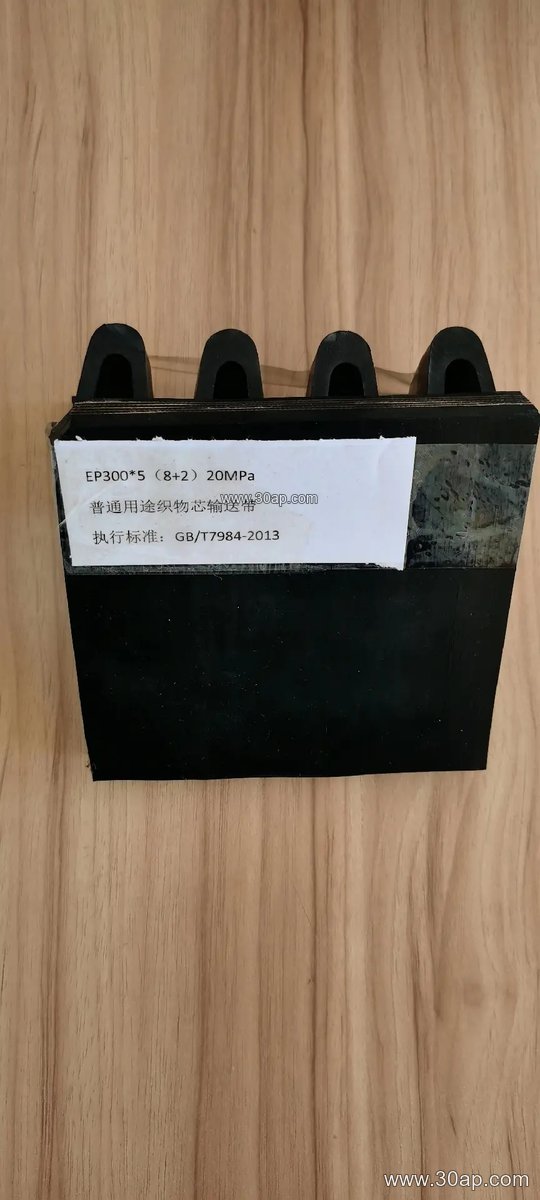
- Plain surface for general transport and slider-bed conveyors
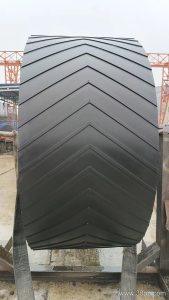
- Patterned or ribbed top for inclined sections and better grip
- Cleated or sidewall versions for steep inclines and material containment
- Anti-static and flame-retardant grades for dusty or enclosed areas
Cover thickness is usually stated as a pair of numbers, such as 3+1.5 mm or 4+2 mm, meaning top cover plus bottom cover. These are common reference values, not fixed requirements, and the final construction should follow the conveyor design.
Typical Duty and Belt Widths
PVC belting is common in food processing, packaging, light assembly, recycling lines and general factory transport. It also appears in sand and gravel plants and in cement plants on smaller or secondary conveyors where a heavy rubber belt is not necessary. Widths are usually selected from the conveyor frame and load, with common options including B500, B650, B800, B1000 and B1200. Wider belts are possible, but the support system and pulley sizes need to suit the application.
| Parameter | Common Reference Range |
|---|---|
| Carcass plies | 2 to 6 |
| Cover thickness | 3+1.5 mm, 4+2 mm, 5+2 mm |
| Belt width | B500 to B1200, wider by design |
| Surface | Plain, patterned, cleated, sidewall |
| Special grades | Anti-static, flame-retardant, oil-resistant |
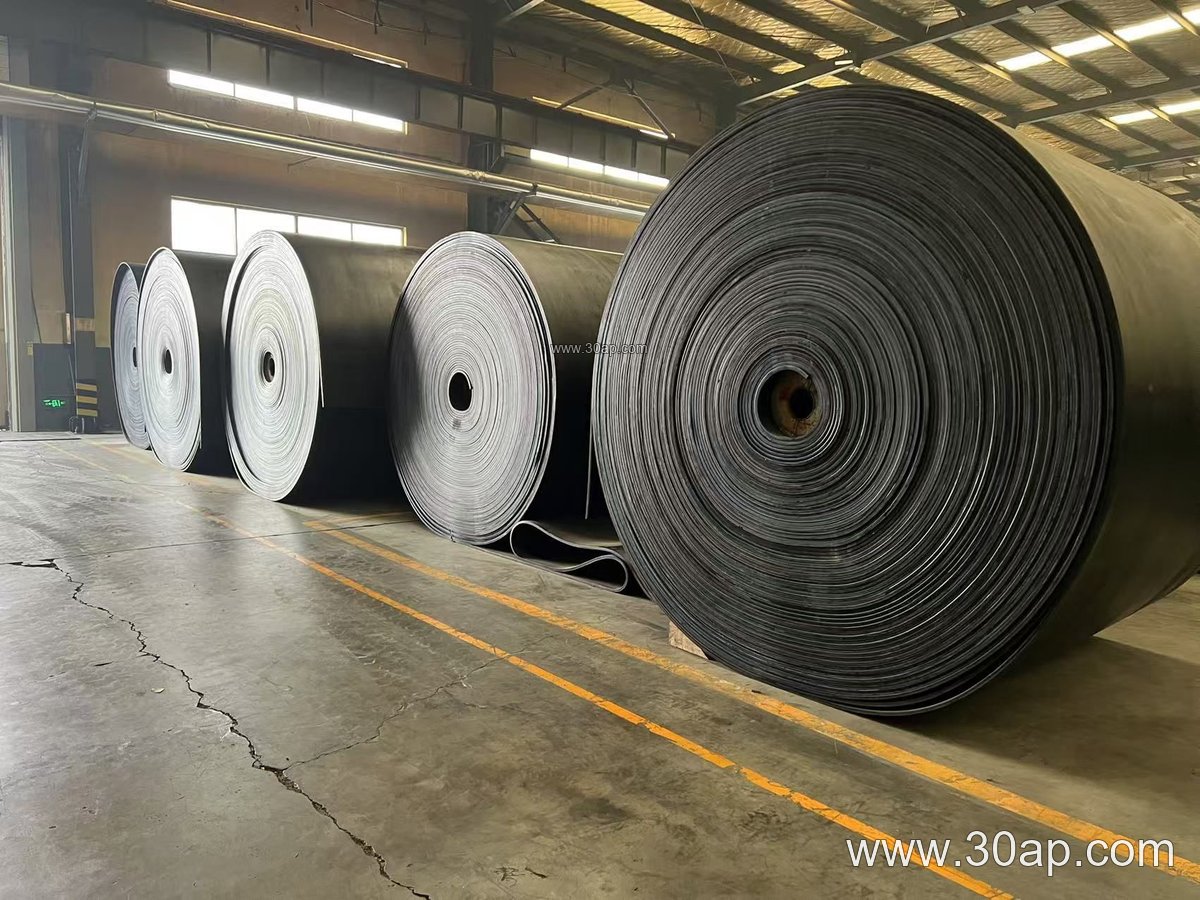
Unlike EP or steel cord belting, PVC belting is generally not rated by high tensile grades such as EP630 or EP1000. Its tension capacity comes from the number and type of plies, so the belt should be matched to the calculated operating tension rather than to a single headline number.
Pulleys, Idlers and Supporting Equipment
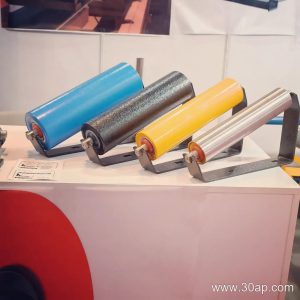
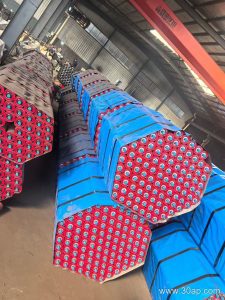
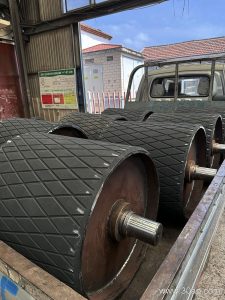
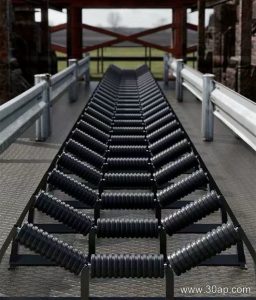
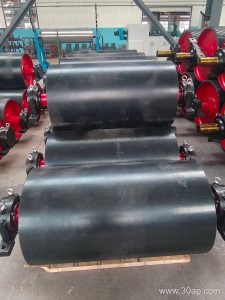
A PVC belt runs on a conveyor frame with a drive pulley, a tail pulley and, on longer or curved routes, bend pulleys. These are separate components with different duties and are not interchangeable. The drive pulley transmits power, the tail pulley sets the return point, and bend pulleys redirect the belt path. Carrying idler rollers support the loaded run, while return idlers support the empty side. Conveyor brackets hold the idlers and pulleys in alignment.
Because PVC belting is relatively thin and flexible, pulley diameters and idler spacing should be chosen to avoid sharp bends and excessive sag. A small pulley may be acceptable on a short packaging line but unsuitable for a longer aggregate conveyor. Belt width alone does not determine shaft diameter or pulley size; those come from the conveyor design and load calculation.
What Buyers Should Check
- Confirm the actual material, temperature and chemical exposure, since standard PVC has limited heat resistance.
- State the required surface: plain, patterned, cleated or sidewall, and the cleat height if applicable.
- Provide the conveyor layout, including pulley diameters and incline angle, so the belt can be specified correctly.
- Ask for the ply count and cover thickness in writing rather than relying on a general description.
- Check whether anti-static or flame-retardant behavior is needed in dusty or enclosed plants.
- Plan for belt tracking, edge condition and joint type, as these affect service life.
Maintenance Notes
Keep the belt clean and check that idler rollers turn freely. A seized roller can wear the cover quickly, and misaligned conveyor brackets can cause edge damage. Inspect the splice and edges regularly, and adjust tension only as recommended for the conveyor. In sand, cement or coal handling areas, remove buildup from pulleys so the belt does not run off-center. With correct matching to the conveyor and reasonable care, a PVC conveyor belt can provide dependable service in light and medium-duty handling.