Where a 500mm Diameter Conveyor Pulley Fits
A 500mm diameter conveyor pulley is a mid-size drum used to turn, tension, or redirect a conveyor belt in bulk material handling. In a limestone quarry or a sand and gravel line, this drum often appears at the discharge end or as a bend wheel where the belt has to change direction without stressing the carcass. It is not an all-purpose size, and it is not the same component as a drive pulley, tail pulley, or bend pulley; each position carries its own load profile and wrap angle, so the same shell diameter can serve quite different duties depending on where it is installed.
The 500mm figure refers to the outside diameter of the shell, usually measured over the lagging when rubber is fitted. A drum of this size pairs naturally with medium belt widths, but the pairing is a design decision rather than a rule. A B800 belt running at moderate tension may use a Ø500 drum, and so may a B1000 line with a long transition and generous take-up travel.
How the Drum Is Built
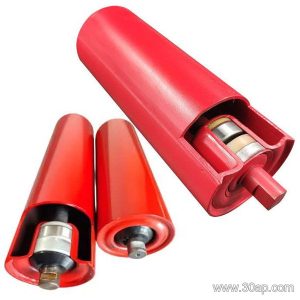
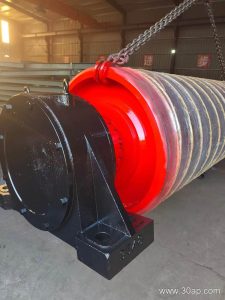
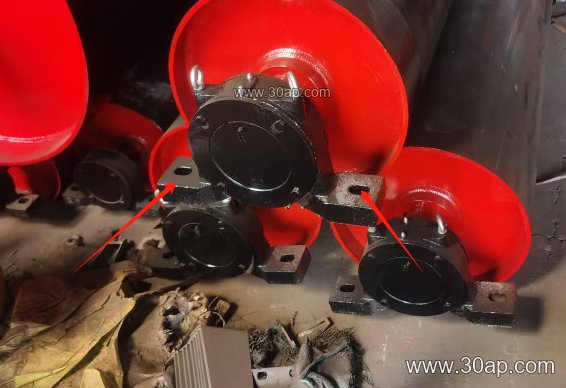
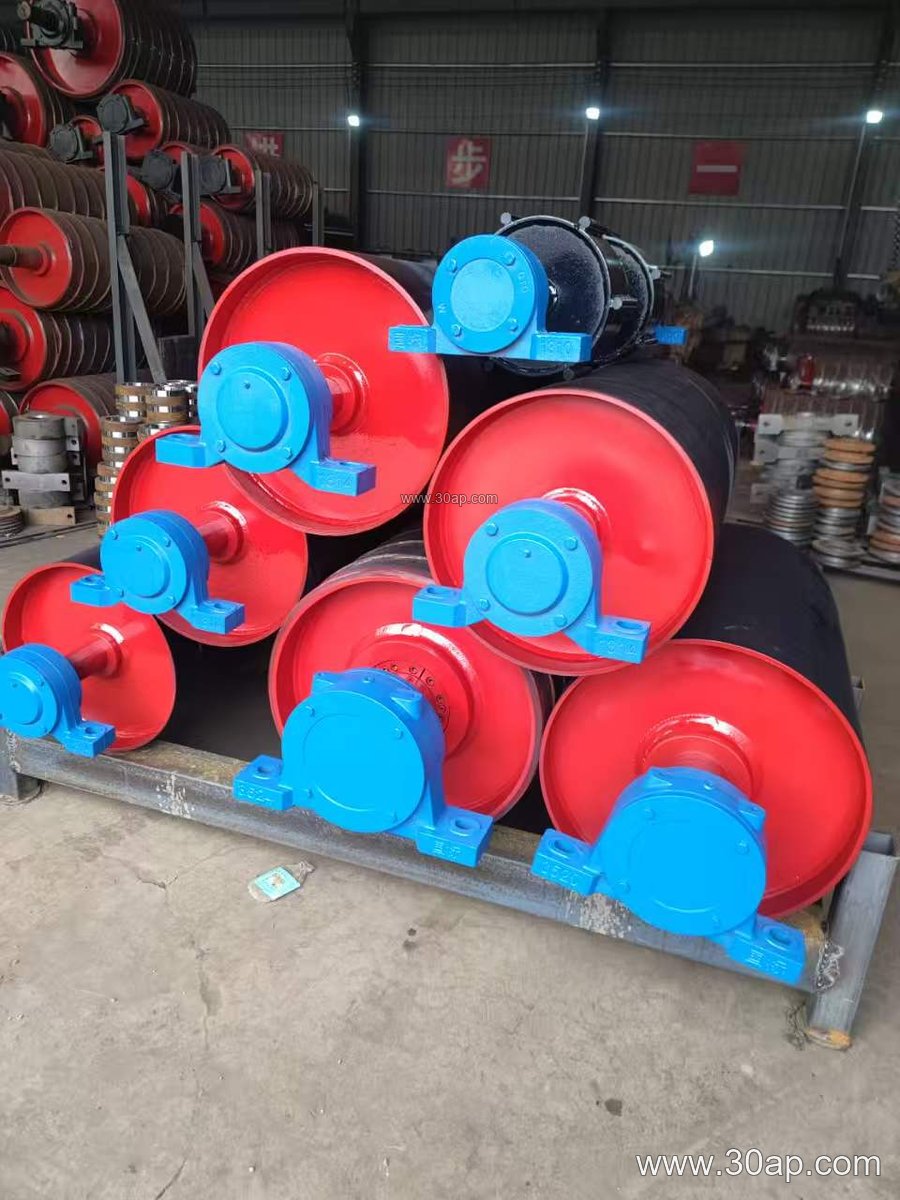
Most 500mm diameter conveyor pulleys are welded assemblies: a rolled steel shell, two end discs, a through-shaft or stub shafts, and a hub arrangement that transmits torque. The shell is machined or ground so the belt tracks without running off. Bearing housings sit in the end discs or in separate bearing blocks, and the whole unit is held by conveyor brackets bolted to the frame.
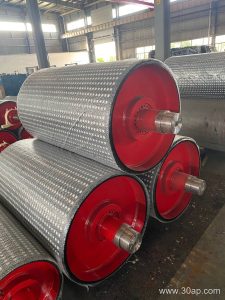
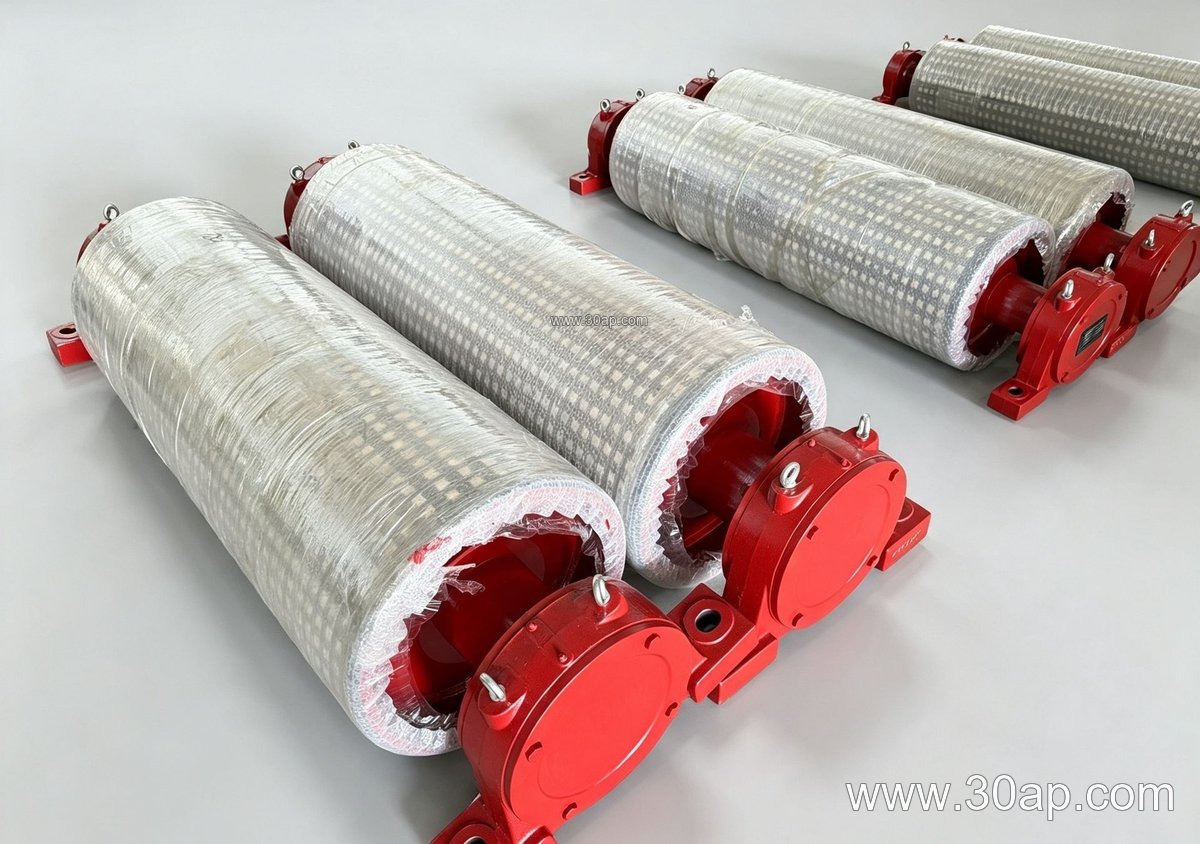
Surface finish matters as much as the shell itself. Plain finish suits clean, dry duties, while rubber lagging improves grip and sheds fines. Common surface forms include:
- Plain machined shell
- Diamond lagging for general grip and water drainage
- Herringbone lagging for better centering on reversing belts
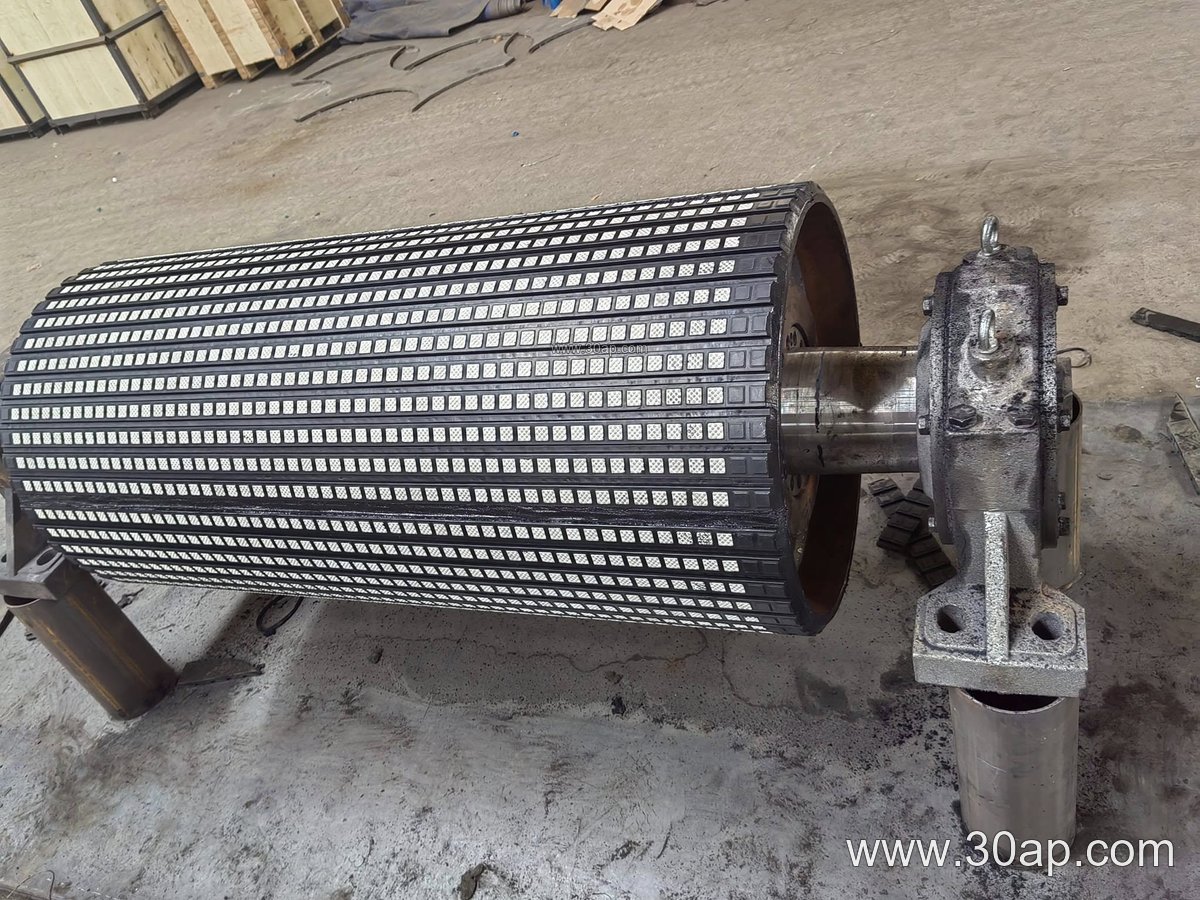
- Ceramic lagging for abrasive, wet, or high-slip conditions
- Cold-bonded or hot-vulcanized rubber in 8, 10, 12, 15, or 20 mm thickness
The shaft diameter is set by torque and bearing load, not by belt width. Typical shaft sizes in this class run from Ø80 to Ø160, and the final value comes from the drive calculation. A 500mm drum on a lightly loaded bend may use a smaller shaft than the same shell on a tensioned tail position.
Sizes and Reference Combinations
The table below gives reference values that appear in general conveyor design work. They are starting points for discussion, not fixed supply promises.
| Item | Common reference values |
|---|---|
| Shell diameter | Ø500 mm |
| Belt width range | B650, B800, B1000, B1200 |
| Face width (examples) | About 750 mm for B650; about 950 mm for B800; about 1150 mm for B1000; about 1400 mm for B1200 |
| Shaft diameter | Ø80, Ø90, Ø100, Ø120, Ø140, Ø160 (per torque calculation) |
| Lagging thickness | 8, 10, 12, 15, 20 mm |
| Bearing type | Spherical roller bearings in pillow blocks or housed units |
A B800 × Ø500 combination is common on short-to-medium conveyors, while B1200 × Ø500 may appear where belt tension is modest. Neither pairing is exclusive; the same belt width can run on Ø400 or Ø630 depending on wrap angle and available space.
Position Matters More Than the Number
A 500mm diameter conveyor pulley behaves differently at the head, the tail, and a bend station. At the head or discharge point, the drum sees high belt tension and must resist wear from abrasive material dropping off the belt. At the tail, it often runs in a dirty zone and benefits from lagging that resists buildup. As a bend or snub pulley, the wrap angle is smaller and the load is lighter, but alignment becomes critical because a small tracking error is amplified over the following run.
Where a drive function is needed, an electric drum or a separate drive pulley with a gearbox is used instead of a plain bend unit. That is a different component choice, not a substitution. The 500mm shell can still appear in a drive position, but the drive package, lagging pattern, and shaft design change accordingly.
What a Buyer Should Confirm
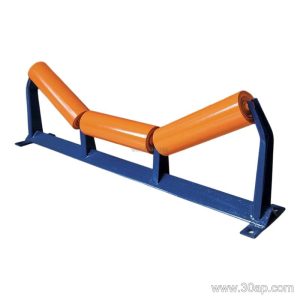
Before ordering, confirm the belt width, the actual face width required, the shaft diameter from the drive or tension calculation, the lagging type and thickness, and the mounting bracket dimensions. Ask how the pulley will be balanced and whether the bearing housings suit the available frame space. Check that the conveyor pulley matches the belt speed and the idler roller layout on the same run, because a mismatch in roll diameter can affect belt tracking.
In a coal preparation plant or a cement clinker line, dust and moisture shorten bearing life, so sealed housings and suitable lagging are worth specifying early. In a power plant coal handling system, a spare 500mm drum kept on site can shorten unplanned downtime. None of these choices are universal; they follow from the duty, the environment, and the belt tension the drum actually sees.