What a Sand and Gravel Plant Conveyor Pulley Does
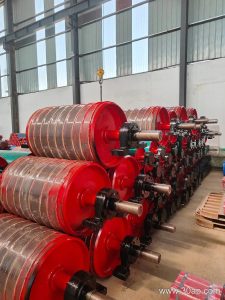
In a sand and gravel plant, the conveyor pulley is the rotating drum that turns the belt and keeps the load moving from the crusher to the screen deck and on to the stockpile. It is not a passive part. The drive pulley, also called the head pulley, transmits torque from the gearbox to the conveyor belt. The tail pulley at the loading end sets belt tension. Bend pulleys change the belt path around a take-up, while a snub pulley increases wrap angle on the drive. Each position has its own job, so a drive pulley, a tail pulley, and a bend pulley are not interchangeable.
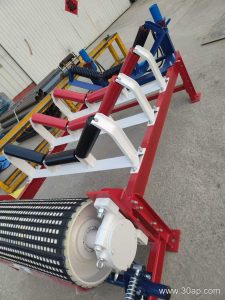
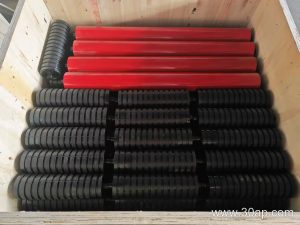
The same drum is often described as a conveyor roller in general conversation, but in a plant the drum that carries the belt at the head, tail, or bend is a pulley. Idler rollers support the belt along the carrying run; they are a different component with a different duty.
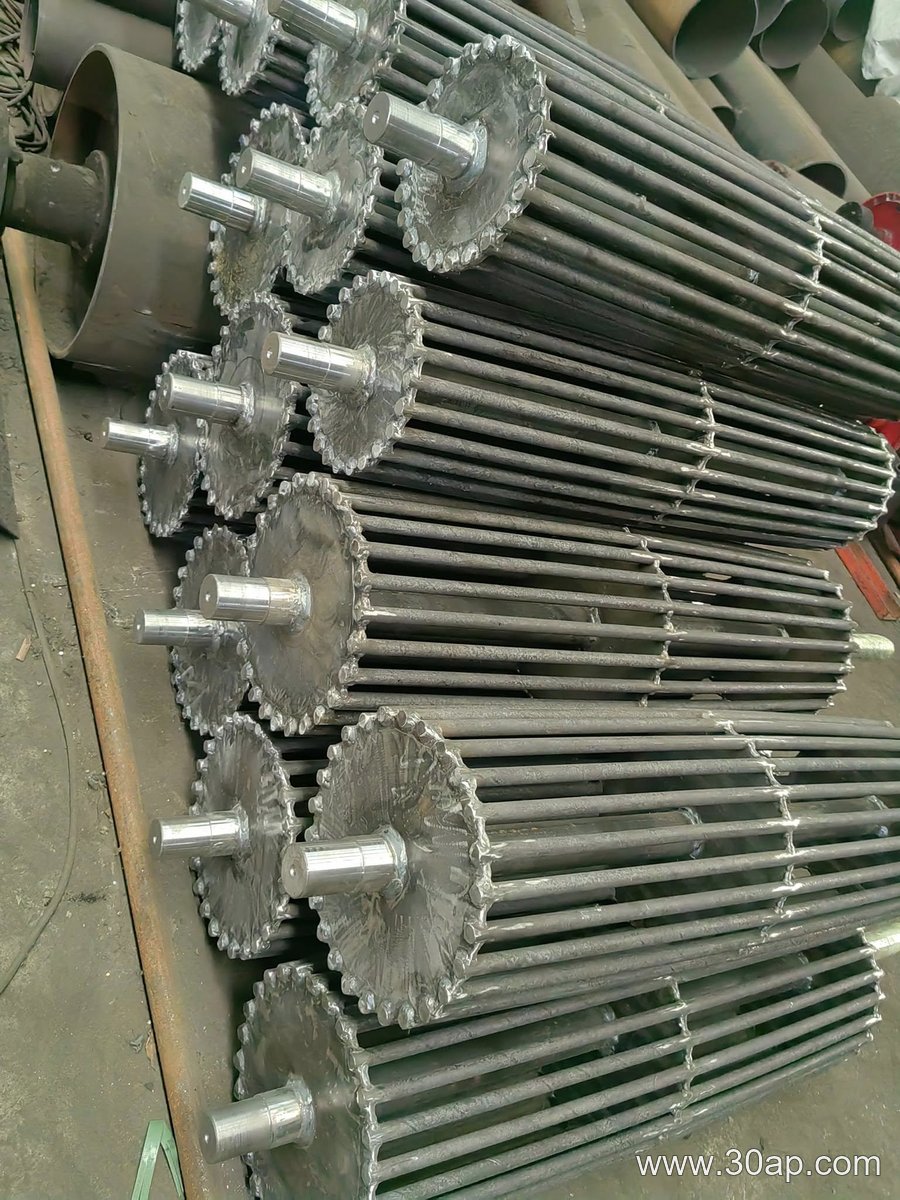
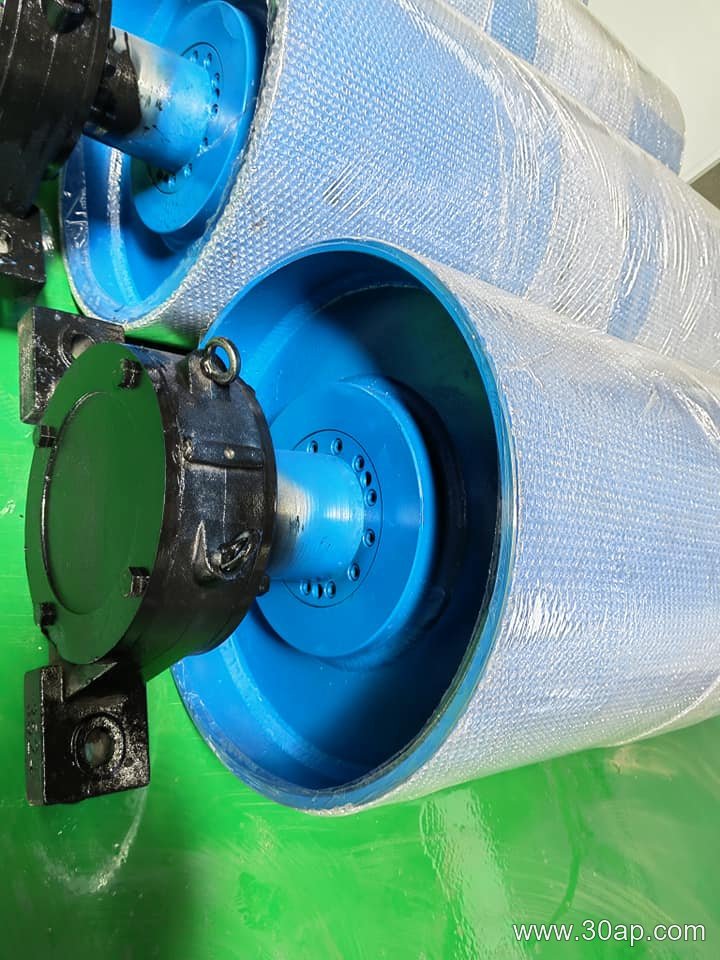
Construction Details That Matter
A typical sand and gravel plant conveyor pulley is built from a steel tube with welded end discs and a shaft. The shell may be machined to a crown for belt tracking. Shafts are sized by torque and load, not by belt width alone. Common shaft diameters include Ø50, Ø60, Ø70, Ø80, Ø90, Ø100, Ø120, Ø140, Ø160, Ø180, and Ø200 mm, but the final choice follows the drive calculation.
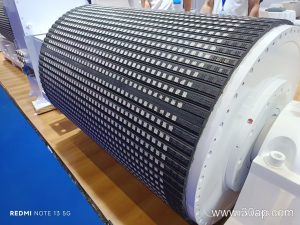
Surface form is a major decision. A plain finish suits some non-drive positions, while rubber lagging improves grip on the drive pulley. Options include cold-bonded rubber, hot-vulcanized rubber, diamond lagging, herringbone lagging, ceramic lagging, and plain rubber sheet. Lagging thickness is often 8, 10, 12, 15, or 20 mm. In a wet sand plant, diamond or ceramic lagging can help shed water and fines, while a smooth rubber surface may be enough on a bend pulley.
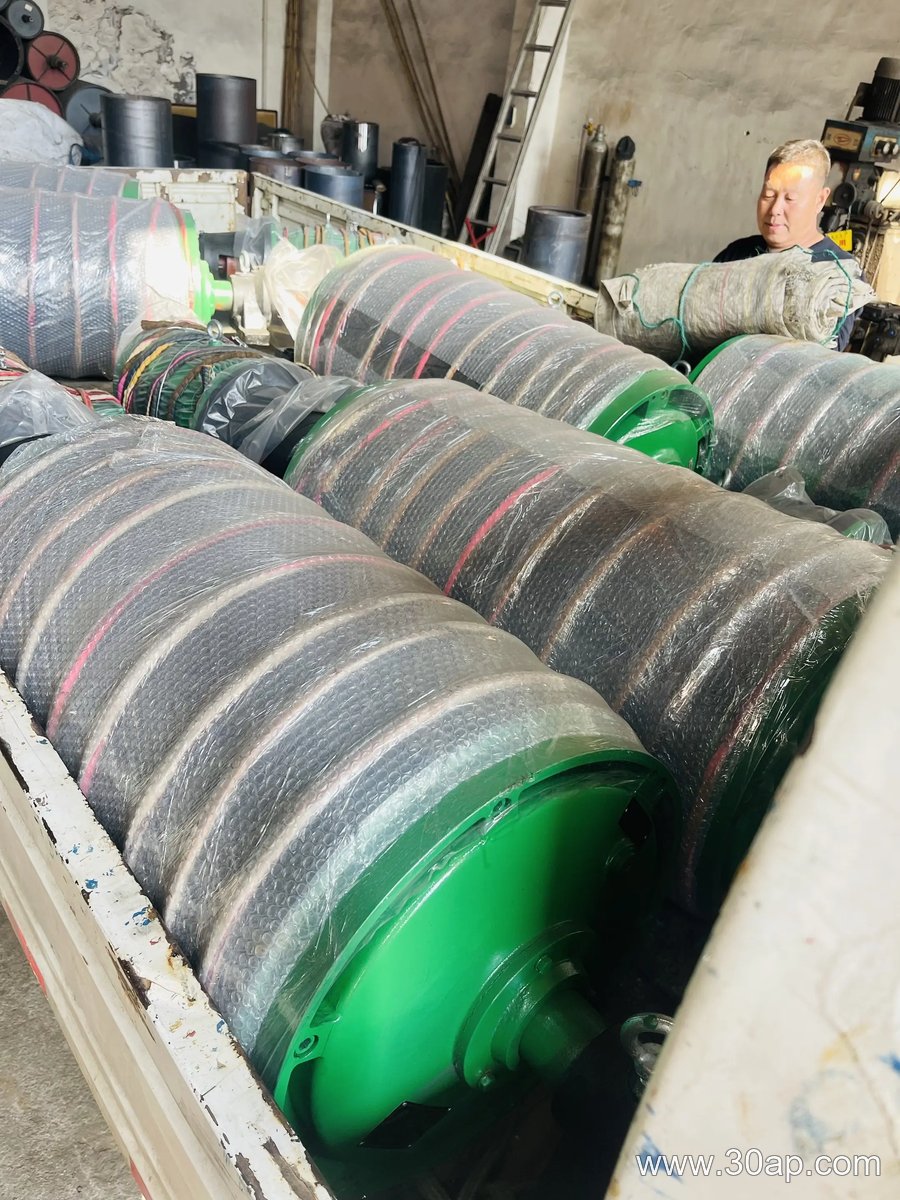
Typical Applications in Aggregate and Related Industries
These pulleys appear across quarry, limestone, iron ore, copper mine, coal preparation, cement clinker, and power plant coal handling systems. In a sand and gravel line, the head pulley on the primary discharge belt works with a conveyor belt that carries abrasive aggregate. The tail pulley sits under the loading chute, where fines and moisture can build up. A take-up bend pulley keeps tension steady as the belt stretches.
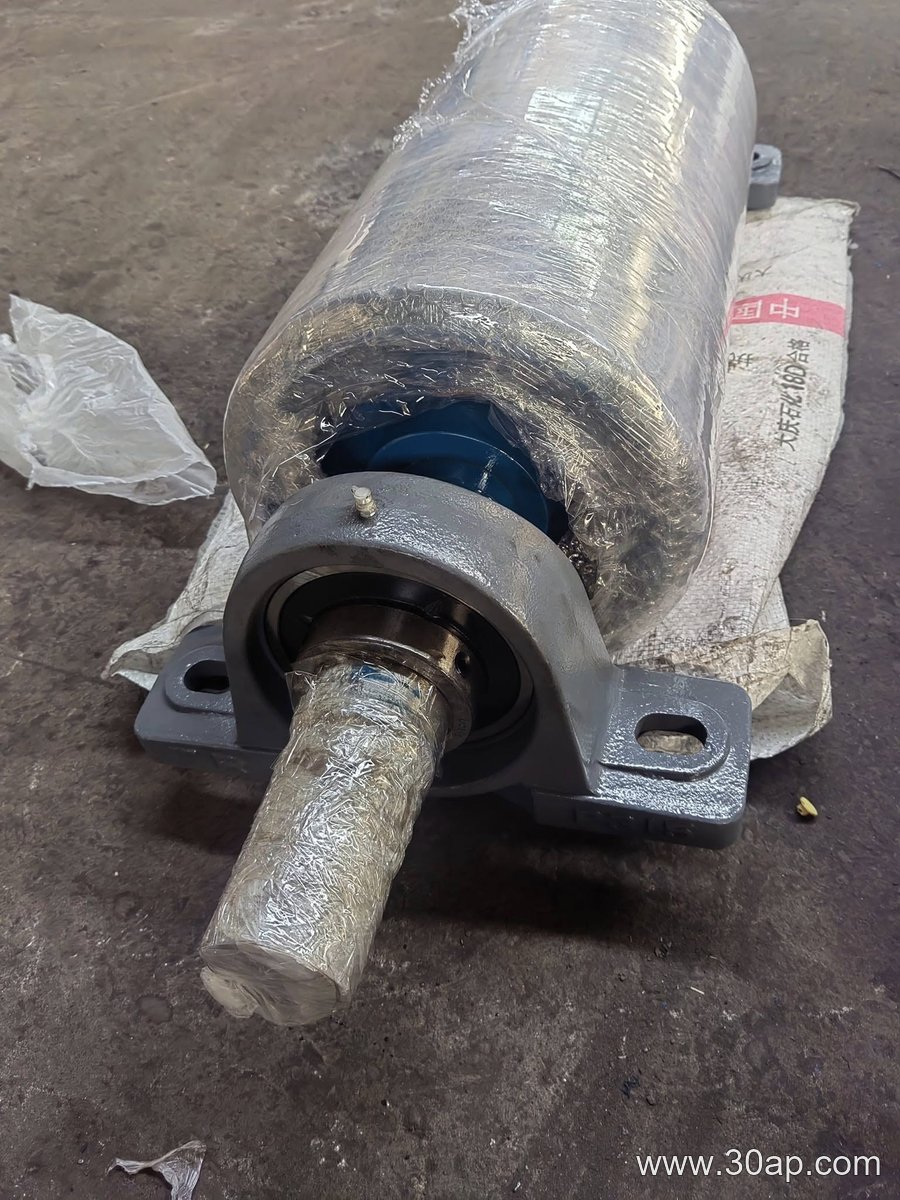
Other plants use the same basic drum in tunnel muck removal, port bulk handling, steel sintering, and concrete batching. The working conditions change, but the pulley still has to hold alignment, resist abrasion, and turn smoothly on its bearings.
Common Sizes and How They Are Paired
Belt width and pulley diameter are selected together, but no single diameter is fixed to one belt width. A B800 belt may run with a Ø500 mm drum in one plant and a Ø630 mm pulley in another, depending on belt speed, tonnage, and wrap angle. Face width is usually wider than the belt, for example B400 with about 500 mm face, B650 with about 750 mm, B1000 with about 1150 mm, and B1400 with about 1600 mm. Combinations such as B1200 × Ø1000 or B1400 × Ø800 are common references, not universal rules.
| Belt width | Typical face width | Example diameter range |
|---|---|---|
| B500 | about 600 mm | Ø320 to Ø500 |
| B800 | about 950 mm | Ø500 to Ø800 |
| B1000 | about 1150 mm | Ø630 to Ø1000 |
| B1200 | about 1400 mm | Ø800 to Ø1250 |
| B1600 | about 1800 mm | Ø1000 to Ø1600 |
What Buyers Should Check Before Ordering
- Confirm the pulley position: drive, tail, bend, take-up, or snub. Each has a different load and lagging requirement.
- Match the shaft diameter to the actual torque and bearing load. Do not assume a shaft size from belt width alone.
- Choose the lagging type for the material and moisture level. Wet sand and fine aggregate behave differently from dry clinker.
- Check the conveyor bracket and bearing housing dimensions so the new pulley fits the existing frame.
- Verify face width against the belt and the chute clearance, especially on the tail pulley.
A well-matched sand and gravel plant conveyor pulley keeps the belt centered, reduces slip at the drive, and lowers the chance of unplanned stops. The best result comes from reviewing the whole conveyor, not just the drum.