What a Conveyor Drive Pulley Does
A conveyor drive pulley is the powered drum that turns a conveyor belt and moves material from one point to another. It is often called the head pulley because it usually sits at the discharge end, but the defining feature is that a motor or gearbox turns it. The friction between the pulley surface and the belt pulls the belt forward. Without this component, the belt would simply sit still while the material piled up.
This article explains how a drive pulley is built, where it is used, and what buyers should check before ordering. The focus stays on the drive pulley. Other drums such as the tail pulley, bend pulley, and take-up pulley serve different roles and are not interchangeable with it.
How a Drive Pulley Is Built
A typical drive pulley has a cylindrical shell, two end discs, a hub, and a shaft. The shell carries the belt, while the shaft transfers torque from the drive unit. The shell is usually made from steel plate or seamless tube and machined to keep the surface true. The shaft is sized by torque and bending load, not by belt width alone. Common shaft diameters include Ø50, Ø60, Ø70, Ø80, Ø90, Ø100, Ø120, Ø140, Ø160, Ø180, and Ø200 mm, but the final value depends on the design calculation.
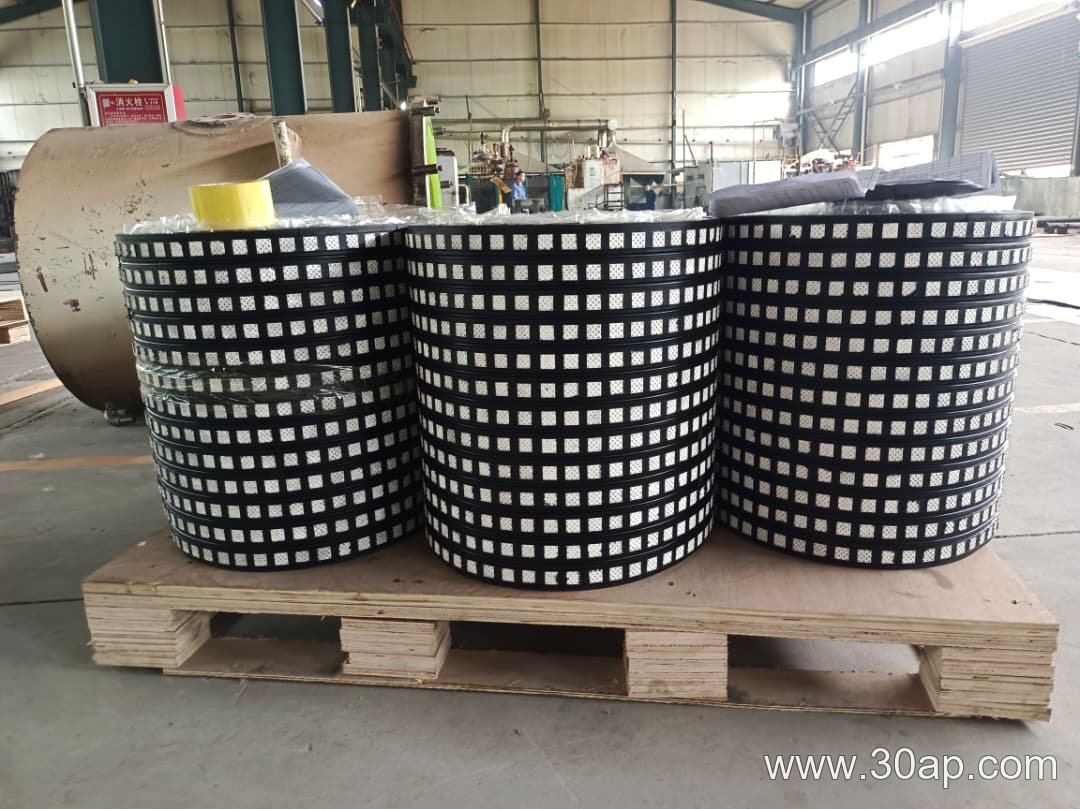
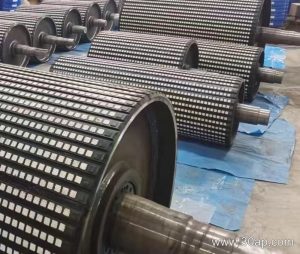
Surface treatment matters because the drive pulley must grip the belt. Plain steel is used for light duty. Rubber lagging improves friction and protects the shell. Common forms include plain rubber, diamond lagging, herringbone lagging, and ceramic lagging. Lagging thickness is often 8, 10, 12, 15, or 20 mm. In wet or dusty conditions, a lagged surface usually performs better than a smooth one.
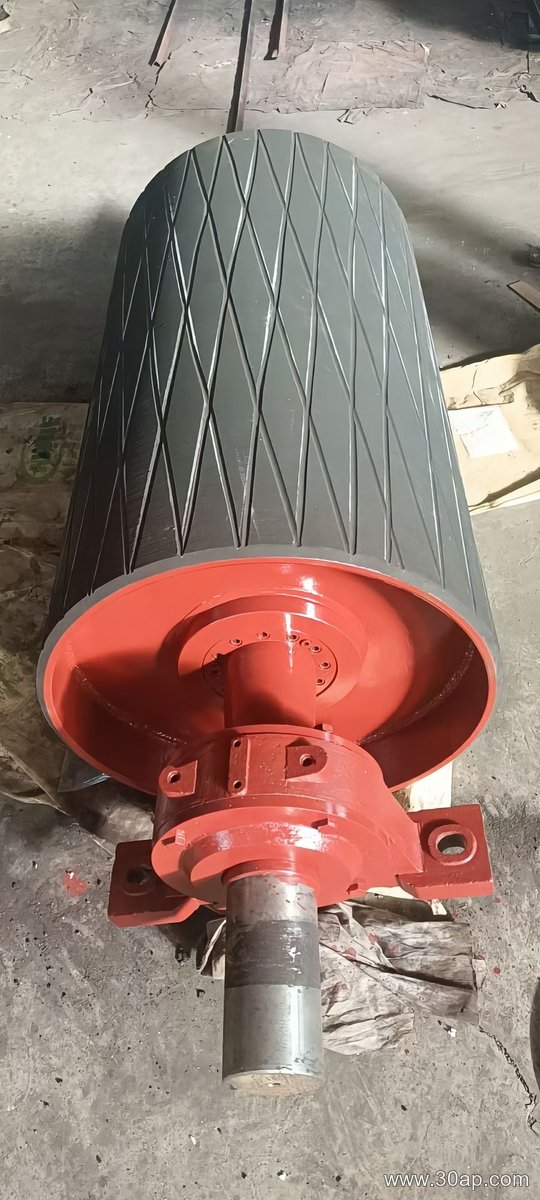
Common Surface and Diameter Reference
The table below shows reference values, not fixed matches. A drive pulley for a given belt width can use different diameters depending on belt speed, tension, and space.
| Belt width | Typical pulley face width | Common diameter range |
|---|---|---|
| B400 | about 500 mm | Ø200 to Ø400 mm |
| B650 | about 750 mm | Ø250 to Ø500 mm |
| B800 | about 950 mm | Ø315 to Ø630 mm |
| B1000 | about 1150 mm | Ø400 to Ø800 mm |
| B1200 | about 1400 mm | Ø500 to Ø1000 mm |
| B1400 | about 1600 mm | Ø630 to Ø1250 mm |
Face width is normally slightly larger than the belt width. For example, a B1200 belt often runs on a pulley with about 1400 mm face width. A combination such as B1200 × Ø1000 or B800 × Ø500 is common in some layouts, but it is not the only option.
Where Drive Pulleys Are Used
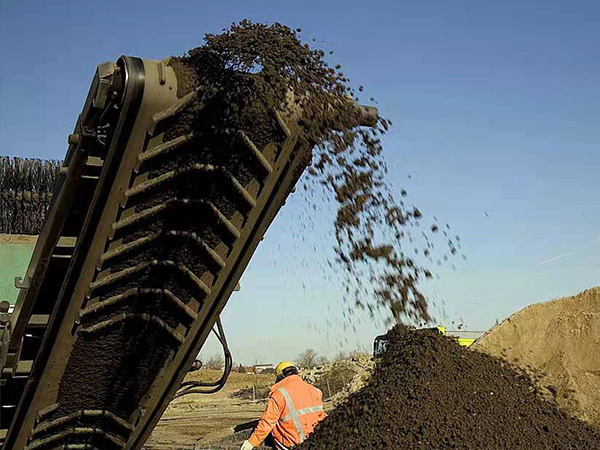
Drive pulleys appear in many bulk handling systems. In a quarry or sand and gravel line, a drive pulley at the head end discharges crushed rock onto a stockpile. In a coal washing plant, it moves coal along a belt that may be wet and abrasive, so lagging and a robust shaft are important. Other sites include cement plants, power station coal conveyors, and port bulk terminals.
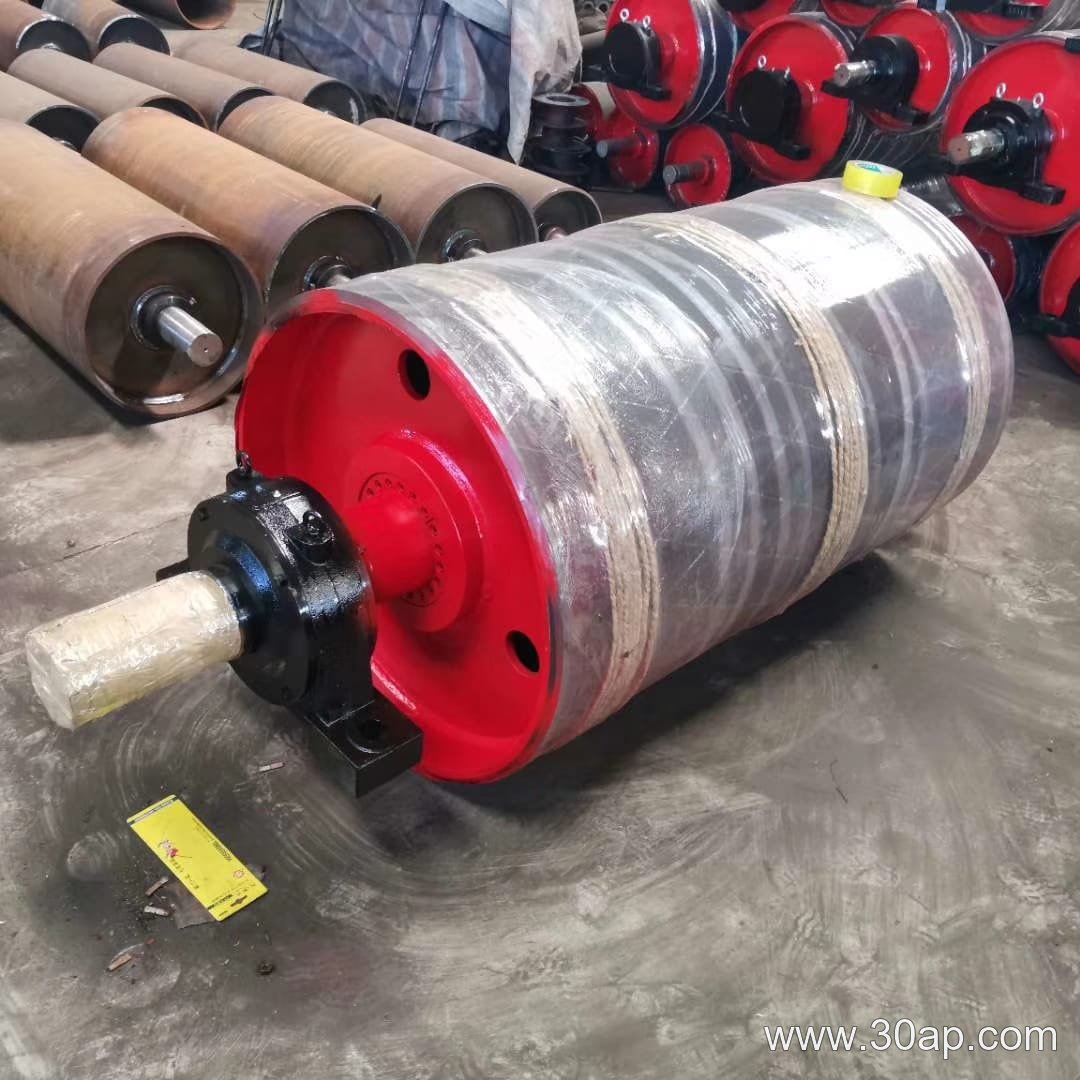
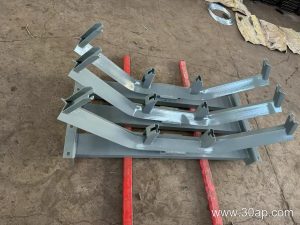
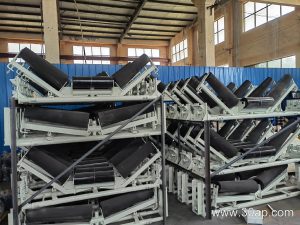
The drive pulley works together with the conveyor belt, idler rollers, and conveyor brackets that support the belt along the route. The tail pulley returns the belt, while bend pulleys change its direction. A drive pulley should not be replaced by a tail or bend pulley, because those drums are not designed to transmit drive torque.
What Buyers Should Check
- Belt width and face width: confirm the belt width and make sure the pulley face is wide enough. A B650 belt usually needs about 750 mm face width.
- Diameter: larger diameters reduce belt bending stress and can improve belt life, but they need more space. Do not assume one belt width matches only one diameter.
- Shaft size: shaft diameter follows torque and load. A Ø100 mm shaft may suit one duty and be too small for another at the same belt width.
- Lagging: choose plain, rubber, diamond, herringbone, or ceramic based on grip and wear. Wet or oily conditions often call for a patterned surface.
- Balance and machining: an unbalanced pulley can vibrate and damage bearings. Good machining and dynamic balance help at higher speeds.
- Connection to the drive: check the coupling, keyway, and locking assembly so the pulley fits the gearbox output.
Maintenance Notes
Check lagging for wear, cuts, or missing rubber. Worn lagging reduces grip and can cause belt slip. Inspect the shaft and hub for cracks, and keep the pulley clean. Align the drive pulley with the tail and bend pulleys so the belt tracks straight. A small misalignment can wear the belt edge and the lagging quickly.
Summary
A conveyor drive pulley is the powered drum that moves the belt. Its shell, shaft, and lagging must match the belt width, the load, and the working environment. Buyers should treat diameter, shaft size, and lagging as design choices rather than fixed pairs. When the drive pulley is selected well, the conveyor runs smoothly and the belt lasts longer.