What Conveyor Belt Tracker Dimensions Actually Describe
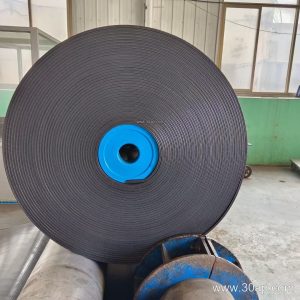
A conveyor belt tracker is a self-aligning idler assembly that senses belt drift and steers the belt back toward the centerline. When buyers ask about conveyor belt tracker dimensions, they usually mean the physical envelope of the unit: roller diameter and face length, frame width, mounting height, shaft or pivot size, and the space needed for lateral movement. These figures matter because a tracker that does not fit the frame cannot correct anything, no matter how well it is built. In a coal mine, a cement plant, or a quarry running an EP conveyor belt or a steel cord conveyor belt, the tracker is often the simplest defense against edge damage and spillage.
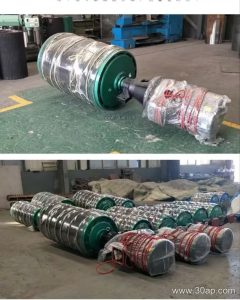
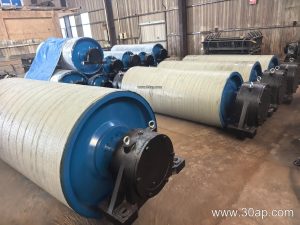
Note that drive pulleys, tail pulleys, and bend pulleys are separate components with their own sizing logic. They are not interchangeable names, and tracker dimensions should never be borrowed from pulley data.
How the Dimensions Are Built Up
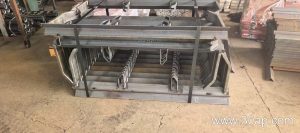
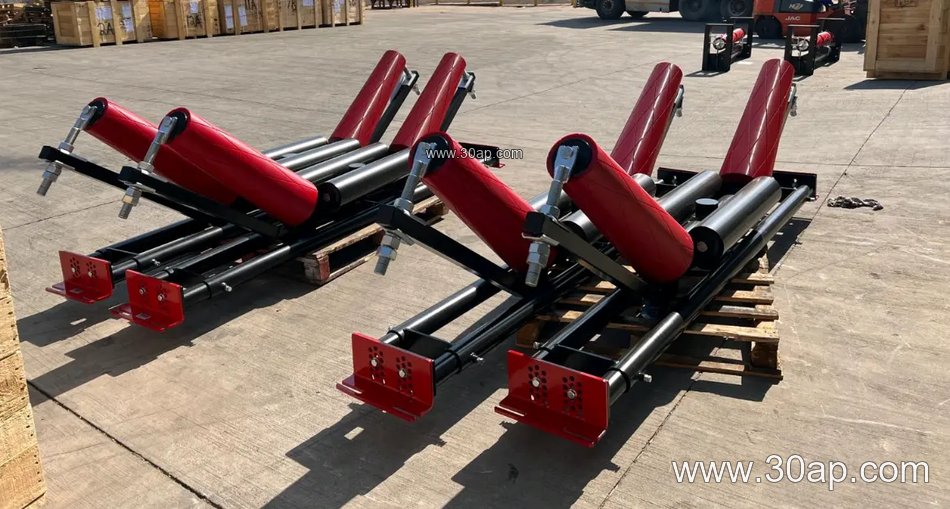
A typical tracker combines a central pivot, a pair of angled or offset rollers, and brackets that clamp to the conveyor stringer. Its working dimensions include:
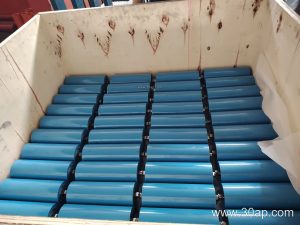
- Roller diameter and roller length, which must suit the belt width and the trough profile
- Overall frame width, which must clear the conveyor brackets and structural beams
- Pivot height and swing clearance, which allow the unit to rotate without striking the frame
- Shaft diameter and bearing seat, which carry the load and transfer steering force
These values are not fixed by belt width alone. A 1200mm wide conveyor belt may use different tracker roller diameters depending on load, belt speed, and available space, so the correct approach is to match the tracker to the actual frame drawing rather than to a single number.
Where Trackers Are Used
Trackers appear on the carrying side and the return side of bulk material conveyors. In a power plant coal handling line, a tracker on the return strand protects the tail pulley from belt wander. In an aggregate or crusher conveyor belt circuit, a tracker just after the loading point helps absorb the steering effect of off-center material. Underground mining conveyor belts and long overland lines carrying iron ore or copper ore often use several trackers at intervals, because small drift compounds over distance.
Selection should consider the belt construction as well. A heavy-duty mining conveyor belt, a heat resistant conveyor belt near a kiln discharge, or a flame retardant conveyor belt in a coal mining conveyor belt system all place different demands on the tracker’s rollers and bearings. The tracker does not replace good alignment of idler rollers, pulleys, and structure; it compensates for minor drift.
Dimension Check Before Ordering
A buyer should gather the belt width, belt type, trough angle, roller diameter and length currently in use, frame channel size, mounting hole spacing, and whether the tracker sits on the carrying or return run. Also confirm the running direction and whether the conveyor is reversible. Trackers for one-way service are not automatically suitable for two-way operation.
Installation and Maintenance Notes
Always stop and lock out the conveyor before inspecting or adjusting a tracker. Check that the pivot moves freely, that rollers turn without binding, and that material buildup is not forcing the belt off center. A tracker that is correctly sized but installed on a skewed frame will still fight the belt. For related components such as idler rollers, conveyor pulleys, and conveyor brackets, dimensions should be verified against the same drawing set. Buyers sourcing a 输送带纠偏器 alongside a fabric core conveyor belt or a chevron conveyor belt should request a dimensional drawing and confirm compatibility before shipment.