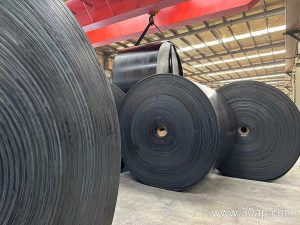
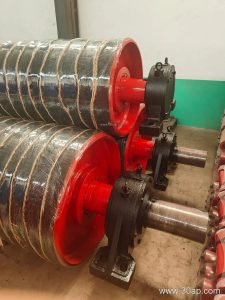
What a Tail Bend Pulley Does
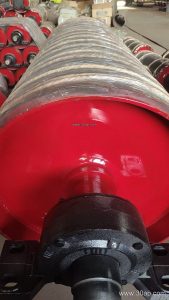
A tail bend pulley is a direction-changing component mounted near the tail end of a belt conveyor. It is not the drive pulley that transmits power, and it is not the tail pulley that carries the belt at the loading point. Instead, the tail bend pulley guides the conveyor belt through a required wrap angle, usually to increase contact with the tail pulley or to route the belt cleanly into the return run. In a typical arrangement, the belt passes around the tail pulley, then around the tail bend pulley, before heading back along the carrying side. This makes the tail bend pulley a positioning and tension-control device rather than a primary drive element.
The term is sometimes shortened to bend pulley in general conversation, but in a conveyor bill of materials the location matters. A bend pulley at the head end, a take-up bend pulley, and a tail bend pulley serve different positions and should not be ordered interchangeably. Recognizable in English as a tail bend pulley or tail-end bend pulley, the product is always a conveyor pulley subtype, distinct from drive pulleys and tail pulleys.
Construction and Surface Options
Most tail bend pulleys are built as welded steel cylinders with a shaft, bearing housings, and a lagged or plain shell. The shell diameter is selected according to belt thickness, belt stiffness, and the allowable bending stress in the carcass. Common diameters include Ø200, Ø250, Ø315, Ø400, Ø500, Ø630, and Ø800, with larger sizes available for high-tension installations. The face width usually exceeds the belt width so that the belt is fully supported. For example, a B800 belt may run on a pulley face of about 950 mm, and a B1200 belt on roughly 1400 mm. These are reference relationships, not fixed rules.
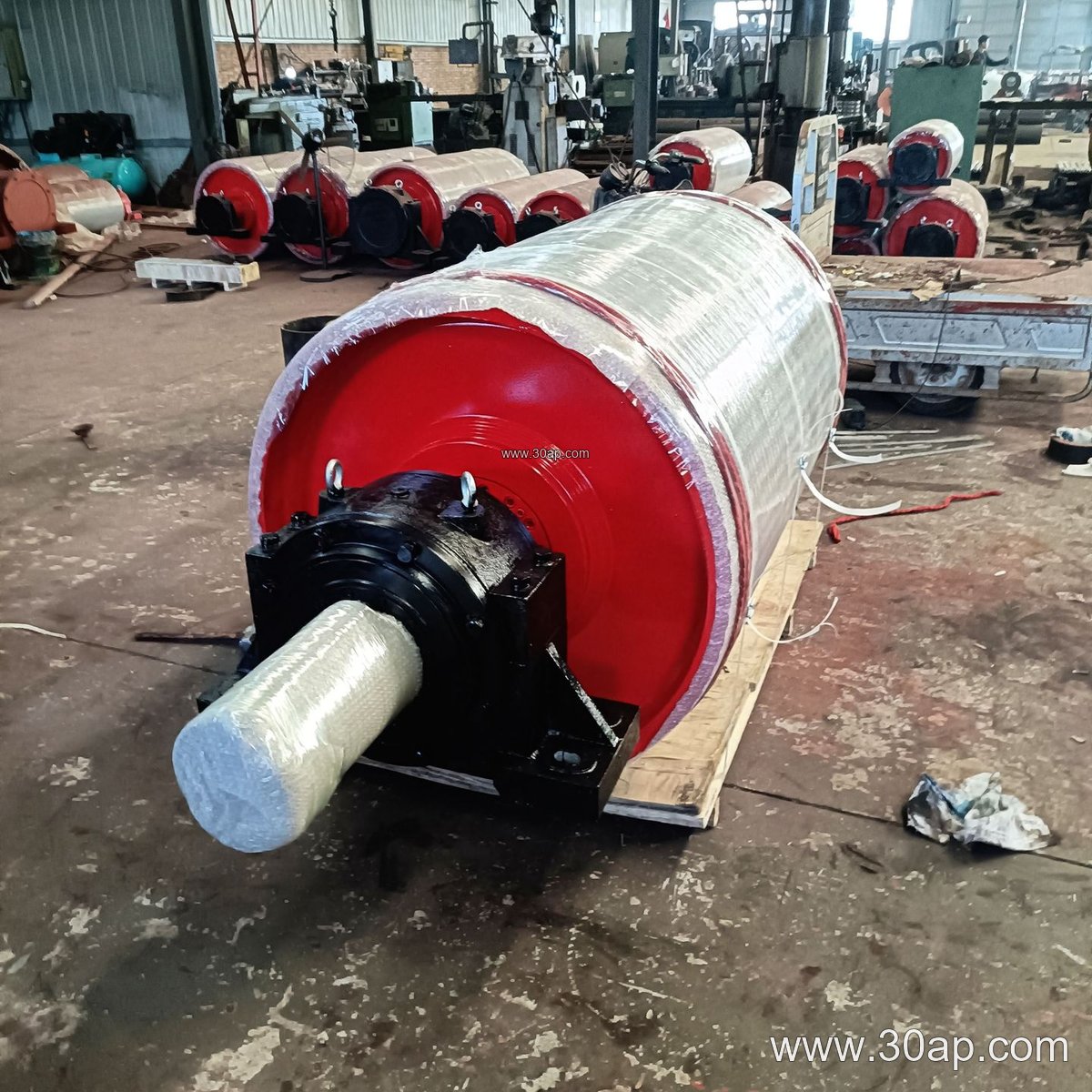
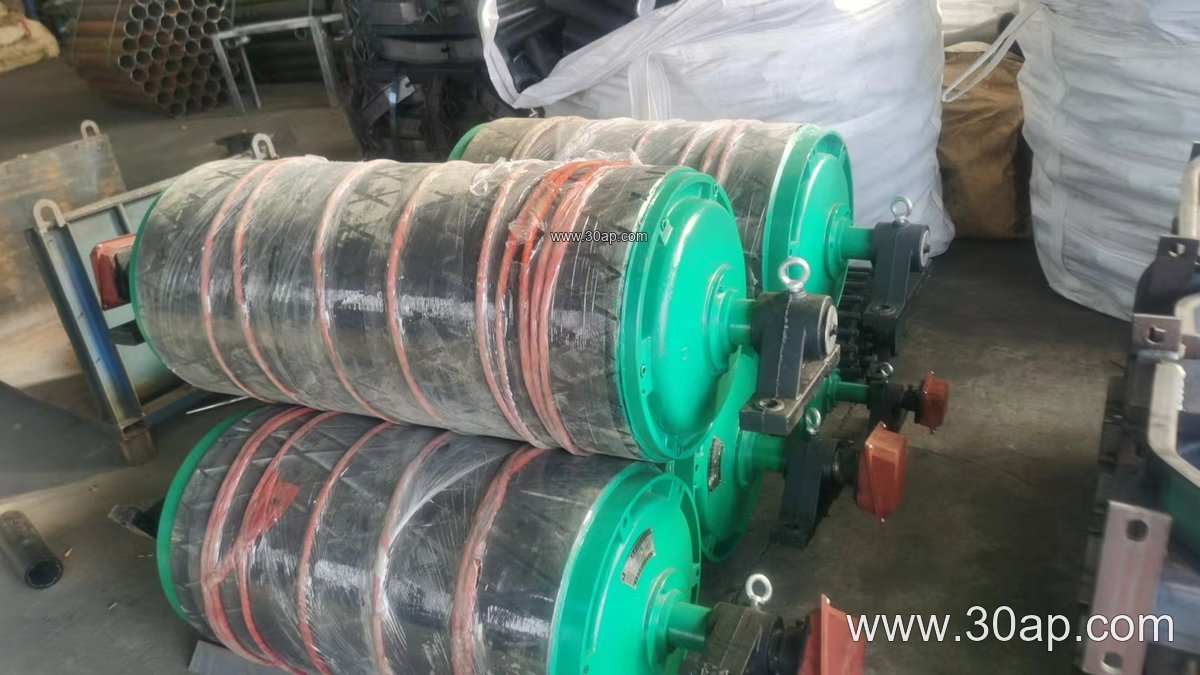
Surface finish affects traction and belt life. Plain steel is common where the pulley only changes direction and does not need extra grip. Rubber lagging — applied by cold bonding or hot vulcanizing — improves friction and protects the shell. Diamond grooved lagging helps shed water and fines, while ceramic lagging is chosen for high-wear positions. Lagging thickness is commonly 8, 10, 12, 15, or 20 mm. Shaft diameter is determined by torque and load, with common sizes such as Ø80, Ø100, Ø120, Ø140, and Ø160. A buyer should not assume a shaft size from belt width alone.
Where It Fits in the Plant
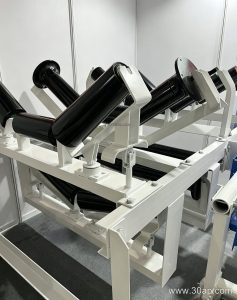
Tail bend pulleys appear in bulk handling circuits across many industries. In a quarry or sand and gravel line, they help route the belt around the tail pulley after a crusher discharge. In a coal washing plant or underground coal mining conveyor, they maintain belt wrap in confined spaces. Cement plants use them on clinker and raw material belts, and power plant coal handling systems rely on them to keep the return strand aligned. The pulley works alongside the conveyor belt, idler roller, and conveyor bracket, but its job is specifically to guide the belt at the tail end.
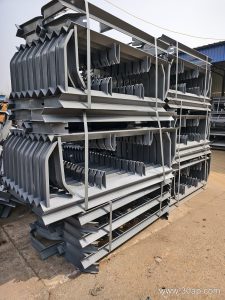
Because the tail bend pulley often sits in a dusty or wet area, maintenance access matters. A simple inspection hatch or a removable conveyor bracket can make bearing checks easier. In cold climates, ice buildup on the return side can affect tracking; a smooth or grooved lagging may help, but the root cause is usually belt training and drainage.
Matching the Pulley to the Belt
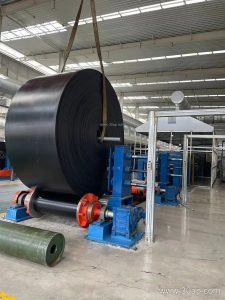
The tail bend pulley should be selected together with the conveyor belt, not in isolation. A heavy-duty mining conveyor belt with a thick carcass, such as an EP200 or ST1250 steel cord belt, needs a larger pulley diameter to limit bending stress than a thin EP100 belt. Fabric core belts — EP, NN, or multi-ply — generally tolerate smaller diameters than steel cord belts. The table below shows common reference combinations; actual selection depends on belt tension, duty, and space.
| Belt Width | Common Pulley Face | Typical Diameter Range | Example Combination |
|---|---|---|---|
| B500 | About 600 mm | Ø200–Ø315 | B500 × Ø250 |
| B650 | About 750 mm | Ø250–Ø400 | B650 × Ø315 |
| B800 | About 950 mm | Ø315–Ø500 | B800 × Ø500 |
| B1000 | About 1150 mm | Ø400–Ø630 | B1000 × Ø500 |
| B1200 | About 1400 mm | Ø500–Ø800 | B1200 × Ø1000 |
| B1400 | About 1600 mm | Ø630–Ø800 | B1400 × Ø800 |
These combinations are illustrative. A B1200 belt can run on a range of pulley diameters depending on tension and belt construction. Similarly, a B800 belt is not limited to Ø500. The buyer should provide the belt type, belt width, belt thickness, maximum tension, and shaft load to the pulley supplier.
Buyer Checklist
- Confirm the position: tail bend pulley, not drive pulley or tail pulley.
- Specify belt width, belt type (EP, NN, steel cord, PVC/PVG), and belt thickness.
- State the required wrap angle and the distance to the tail pulley.
- Choose lagging only if traction or shell protection is needed; otherwise plain finish may suffice.
- Check shaft diameter against actual torque and bearing load, not against belt width alone.
- Plan for inspection of bearings and lagging wear, especially in dusty or wet service.
In short, the tail bend pulley is a small but position-critical part of a conveyor. Getting the diameter, face width, lagging, and shaft size right — and keeping the name distinct from other pulley subtypes — helps avoid misordering and premature belt wear.