What a Plain Lagged Pulley Does
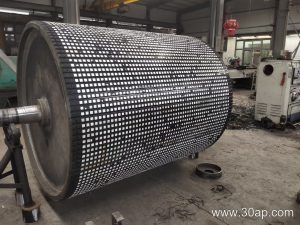
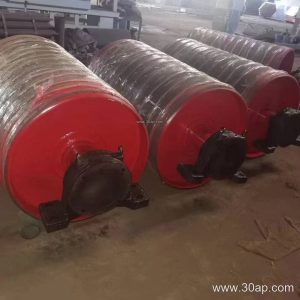
A plain lagged pulley is a conveyor pulley whose shell carries a smooth rubber or polymer lagging without any groove, diamond or chevron pattern. It is the workhorse of the drive section in a belt conveyor: the lagging raises friction between the shell and the belt, so torque can be transmitted with less slip under normal loads. In many plants the same plain lagged pulley design is also used on tail and tension positions, where a clean, flat surface helps the belt track without collecting material.
The name is descriptive rather than decorative. "Plain" refers to the unpatterned lagging surface, and "lagged" means the shell has been covered with a sacrificial layer. Buyers sometimes call it a smooth lagged drum or a flat rubber lagged pulley; all three describe the same component.
Construction and Surface Options
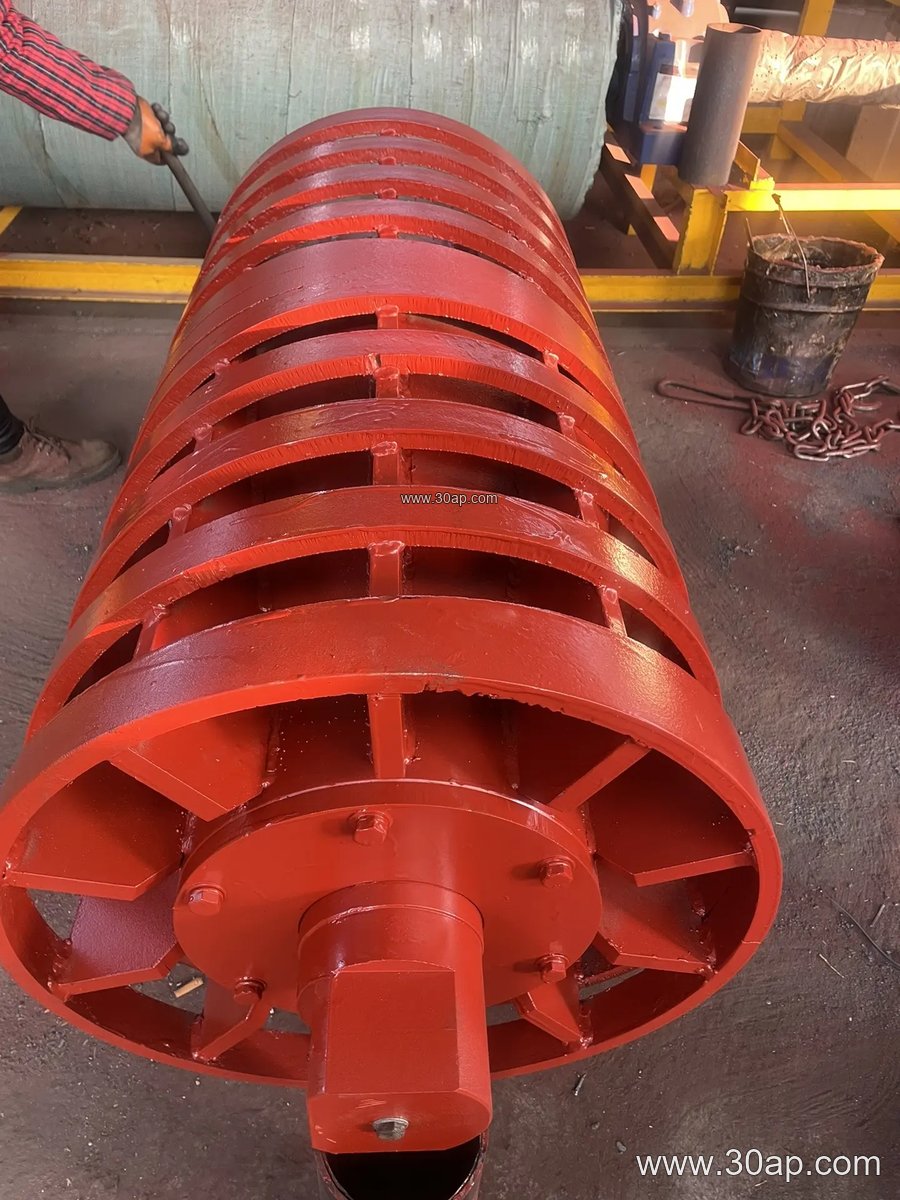
A typical unit is built from a rolled steel shell, welded end discs, a shaft, and bearing housings. The lagging is bonded to the shell by cold bonding, hot vulcanizing or casting, depending on the duty. Plain lagging is usually supplied in thicknesses of 8, 10, 12, 15 or 20 mm. Thicker layers suit high-torque drives and abrasive service; thinner layers keep the pulley diameter compact.
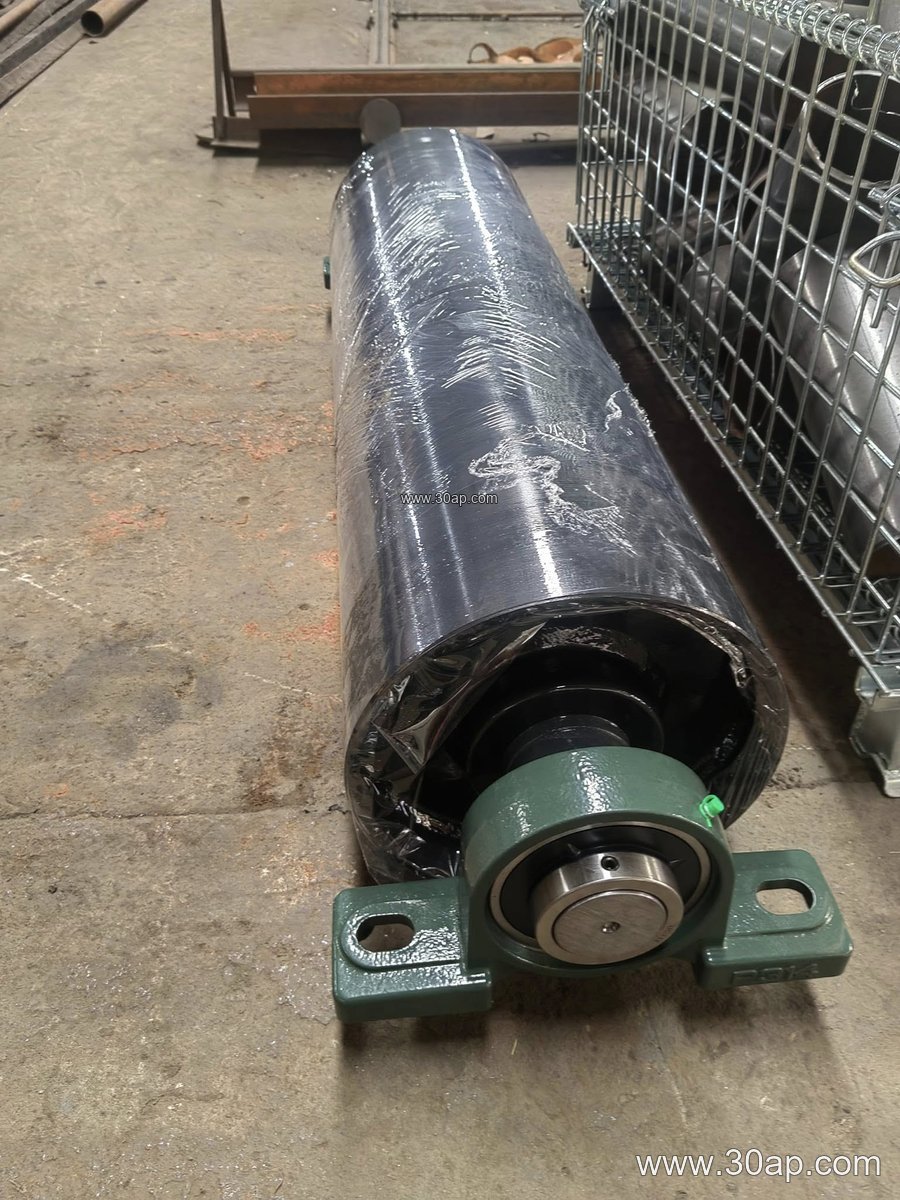
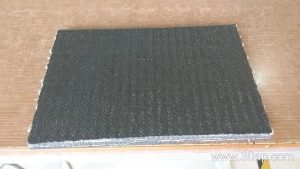
Because there is no pattern, the surface stays easy to clean and does not trap fines. That matters in dusty circuits and in plants handling sticky material. Where extra grip is needed on a wet drive, a patterned lagging may be compared, but it is a different surface form and not a substitute for the plain version described here.
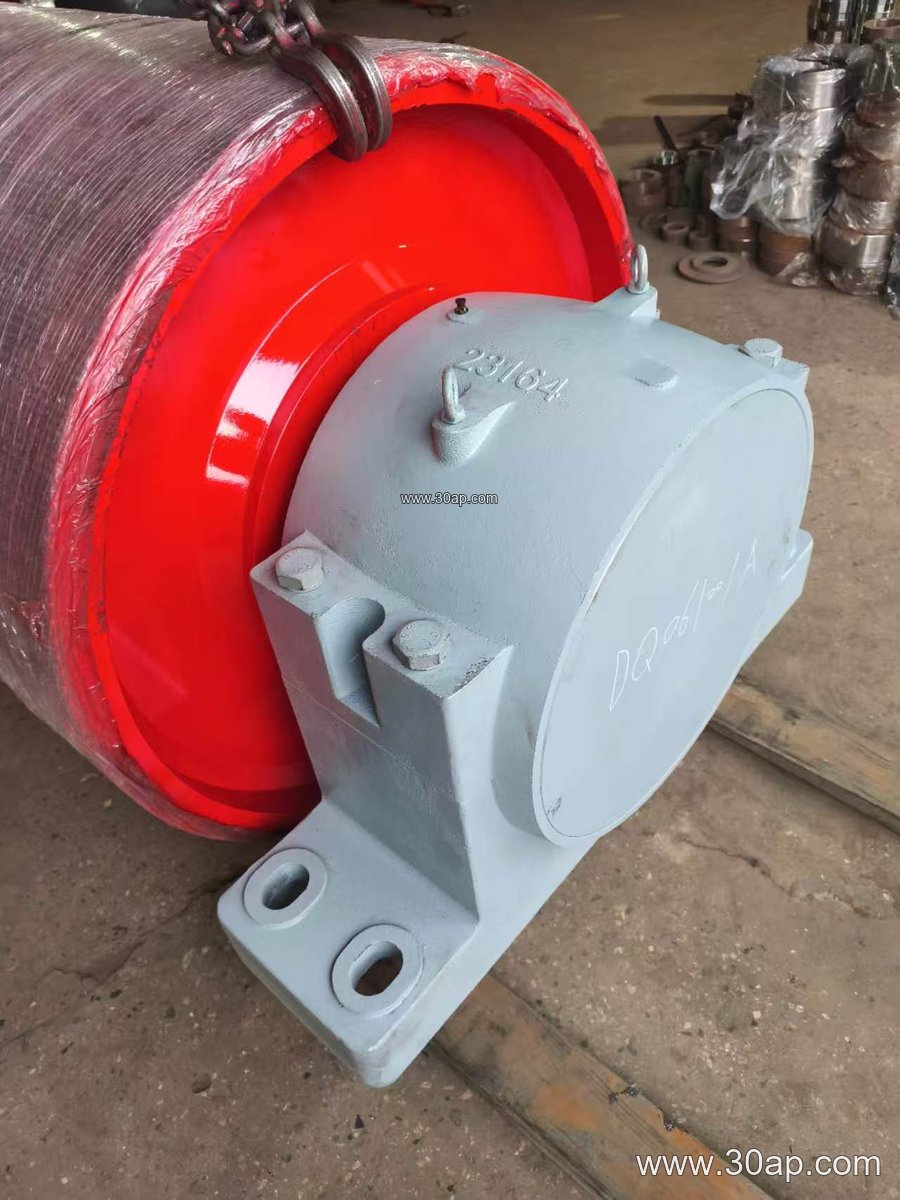
Where It Fits in the Conveyor
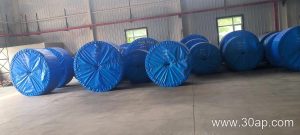
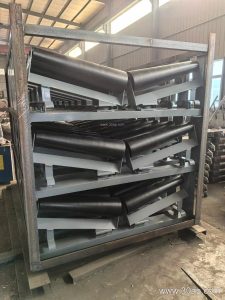
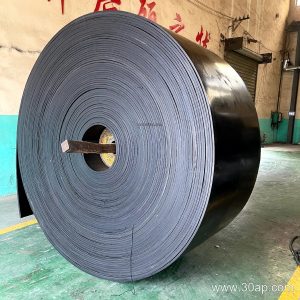
The plain lagged pulley is most often the drive or head pulley at the discharge end. In a quarry or aggregate line it pulls a heavy-duty conveyor belt loaded with crushed stone; in a coal handling system it may drive a flame retardant conveyor belt; in a cement plant it can sit on a clinker or raw meal circuit. At a power plant coal yard the same drum works with an abrasion resistant conveyor belt and a set of conveyor idler rollers along the carry side.
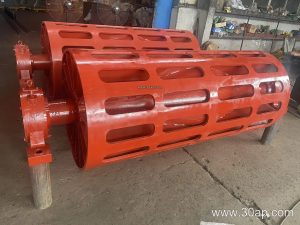
Tail and tension positions also use plain lagging when the priority is a flat, forgiving surface. There the drum may run with a fabric core conveyor belt or a steel cord conveyor belt, and the lagging protects the shell from wear while keeping the belt centered. A conveyor bracket and sturdy bearing housing complete the assembly.
Common Size Reference
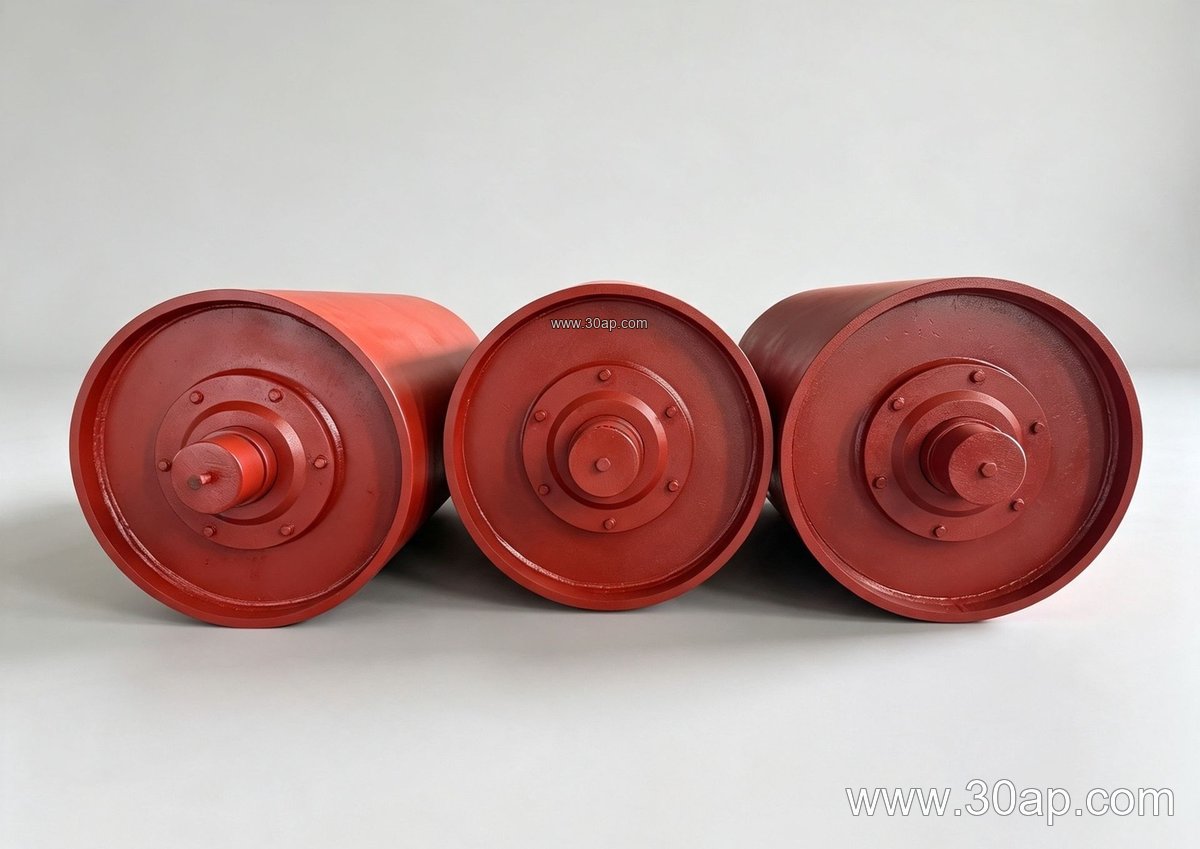
The table below shows indicative combinations; final dimensions follow the conveyor design and the load case.
| Belt width | Typical shell face | Example diameter | Example shaft |
|---|---|---|---|
| B500 | about 600 mm | Ø315 mm | Ø60 mm |
| B650 | about 750 mm | Ø400 mm | Ø80 mm |
| B800 | about 950 mm | Ø500 mm | Ø90 mm |
| B1000 | about 1150 mm | Ø630 mm | Ø100 mm |
| B1200 | about 1400 mm | Ø800 mm | Ø120 mm |
| B1400 | about 1600 mm | Ø1000 mm | Ø140 mm |
Note that belt width does not fix pulley diameter, and shaft size is set by torque and bearing load, not by width alone. A B1200 × Ø1000 plain lagged pulley and a B800 × Ø500 version can both be correct for different duty levels.
Buyer Checklist
- Confirm the drive position and whether the drum is a head, tail or tension pulley.
- State belt type and tension so the lagging thickness and shell can be sized.
- Check lagging hardness, thickness and bonding method for the environment.
- Review shaft diameter, keyway and bearing type against the calculated load.
- Ask about balance grade and runout for high-speed drives.
- Plan a spare lagging kit if the drum runs in abrasive dust.
Maintenance is straightforward: inspect the lagging for wear and glazing, check bolts and bearing condition, and keep the belt cleaner so fines do not build up on the smooth surface. A well-chosen plain lagged pulley, matched to its belt and load, keeps a conveyor driving steadily in mines, cement works, power stations and aggregate plants alike. For related components such as belt, idler and pulley assemblies, compare suppliers on data rather than on a single dimension.