What Idler Procurement Covers
Idler procurement is the process of sourcing the rollers that support and guide a conveyor belt along its run. These rotating components sit between the belt and the frame, carrying the load on the carrying side and supporting the empty belt on the return side. A buyer is not simply ordering cylinders; they are matching roller diameter, length, bearing fit, and mounting style to a specific conveyor structure and duty. The same purchasing exercise usually includes conveyor brackets, the frames that hold each roller assembly at the correct height and angle.
Getting this right matters in any bulk handling operation, whether the line moves limestone at a quarry, coal at a power plant, clinker in a cement works, or ore at a crushing and screening circuit. Poorly matched rollers cause belt tracking problems, premature bearing failure, and unnecessary downtime.
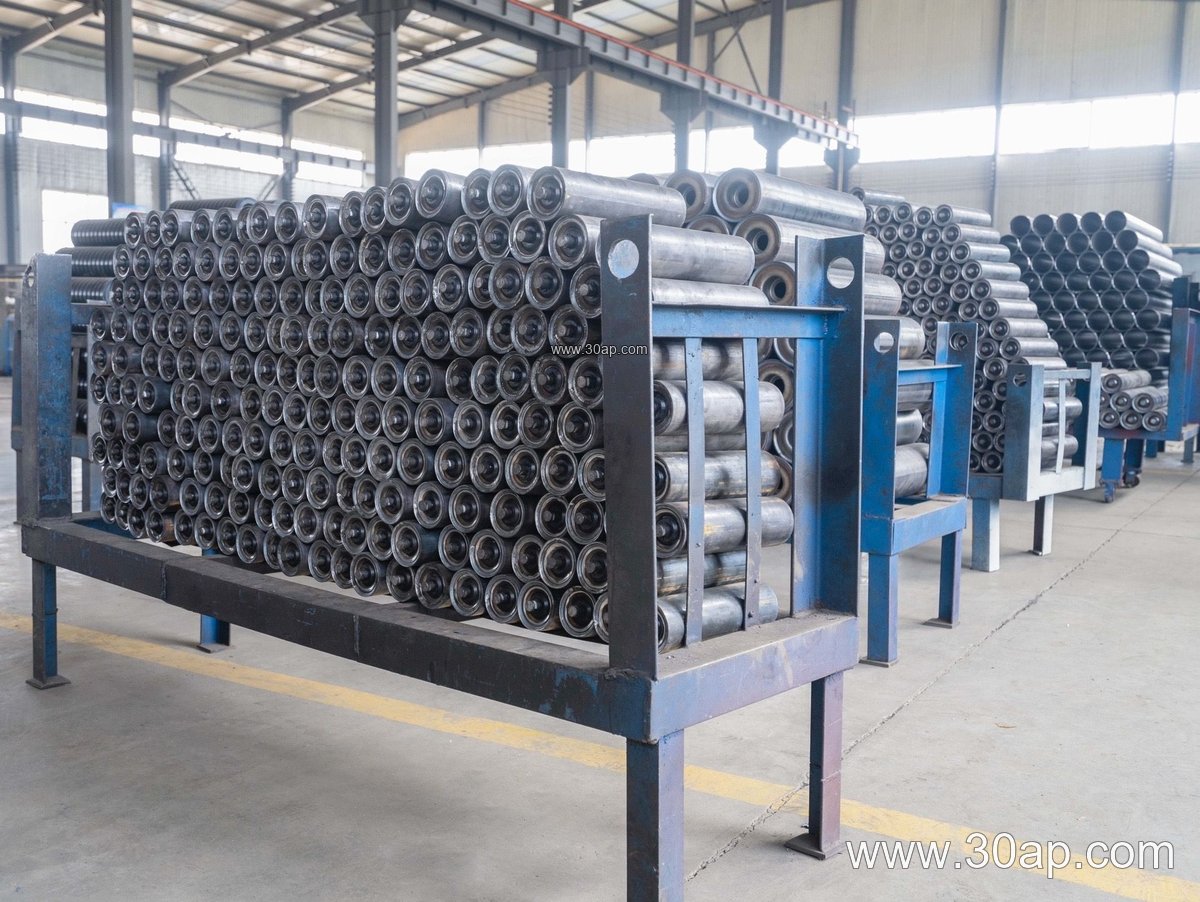
How an Idler Roller Is Built
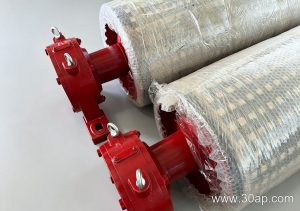
A typical idler roller has a steel tube shell, end caps, a shaft, and bearings sealed inside. The shell may be plain steel, nylon-coated, ceramic-covered, or fitted with rubber rings for impact absorption. Bearing selection is usually based on load and speed rather than belt width alone; common sizes include 6204, 6205, 6305, 6306, 6308, and 6310. Sealing quality is often the deciding factor in dusty conditions, because fine material ingress is what destroys bearings first.
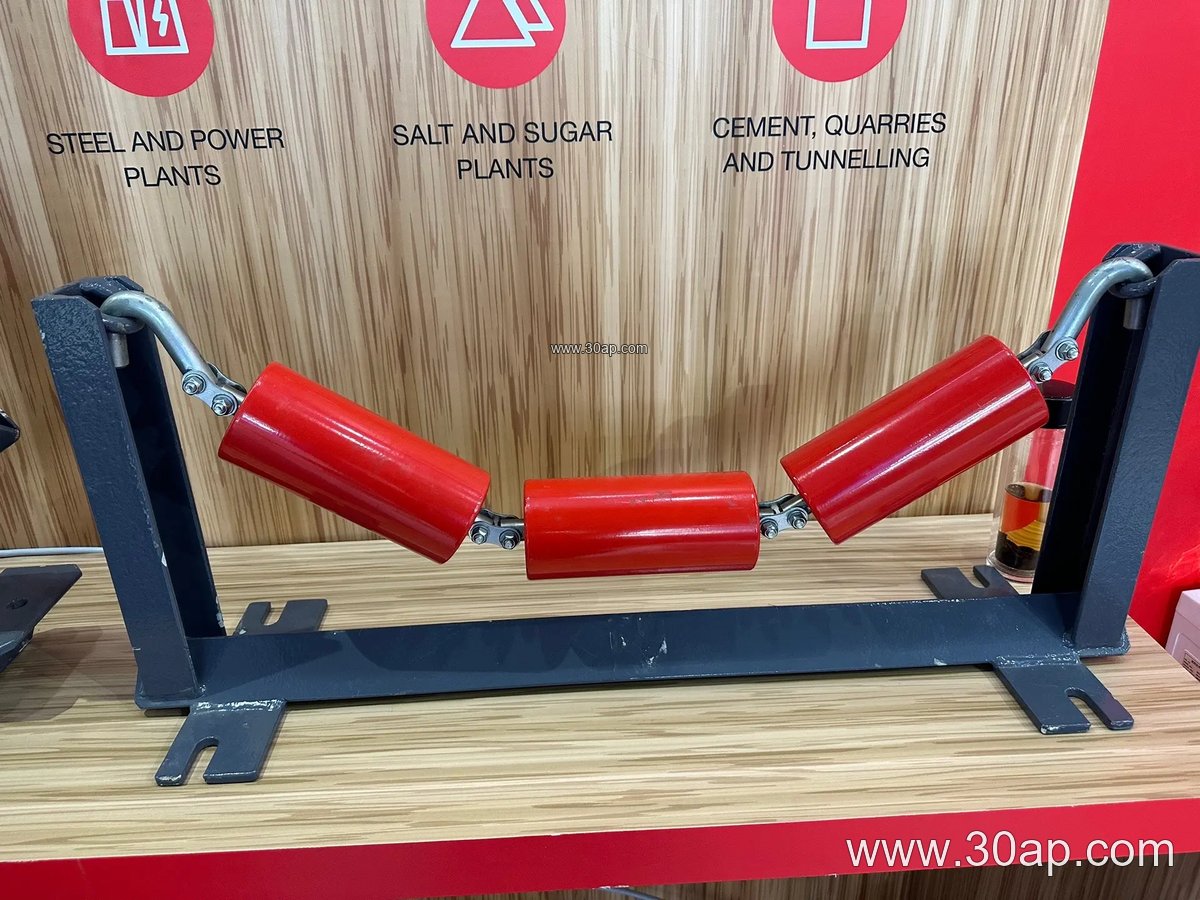
- Shell: steel tube, often with protective coating or rubber rings
- Bearing housing: pressed end caps with labyrinth or contact seals
- Shaft: fixed to the frame through the bracket, flattened or threaded at the ends
- Surface options: plain steel, nylon, ceramic, rubber ring
Matching Roller Diameter and Belt Width
Roller diameter and belt width are related but not locked together. A wider belt generally needs longer rollers, while diameter follows load and belt speed. Common diameters run from about Ø63 up to Ø219. Belt widths in service range from B400 through B2400, and roller length changes with width, trough angle, and the roller set configuration.
For a three-roll troughing set, typical roller lengths are roughly 200 mm at B500, 250 mm at B650, 315 mm at B800, 380 mm at B1000, 465 mm at B1200, 530 mm at B1400, 600 mm at B1600, 670 mm at B1800, and 750 mm at B2000. These are common examples only; side rollers and centre rollers can differ, and the final figure should come from the conveyor design. Do not assume a single belt width dictates one shaft diameter.
Trough Angle and Load Behaviour
Trough angles of 20, 30, 35, and 45 degrees are common. A steeper trough holds bulk material more centrally and increases capacity, but it also raises the load on the side rollers. For a plant handling abrasive aggregate or heavy ore, the angle and the roller set form should be reviewed together with the belt specification, such as an abrasion resistant conveyor belt or a heavy-duty mining conveyor belt.
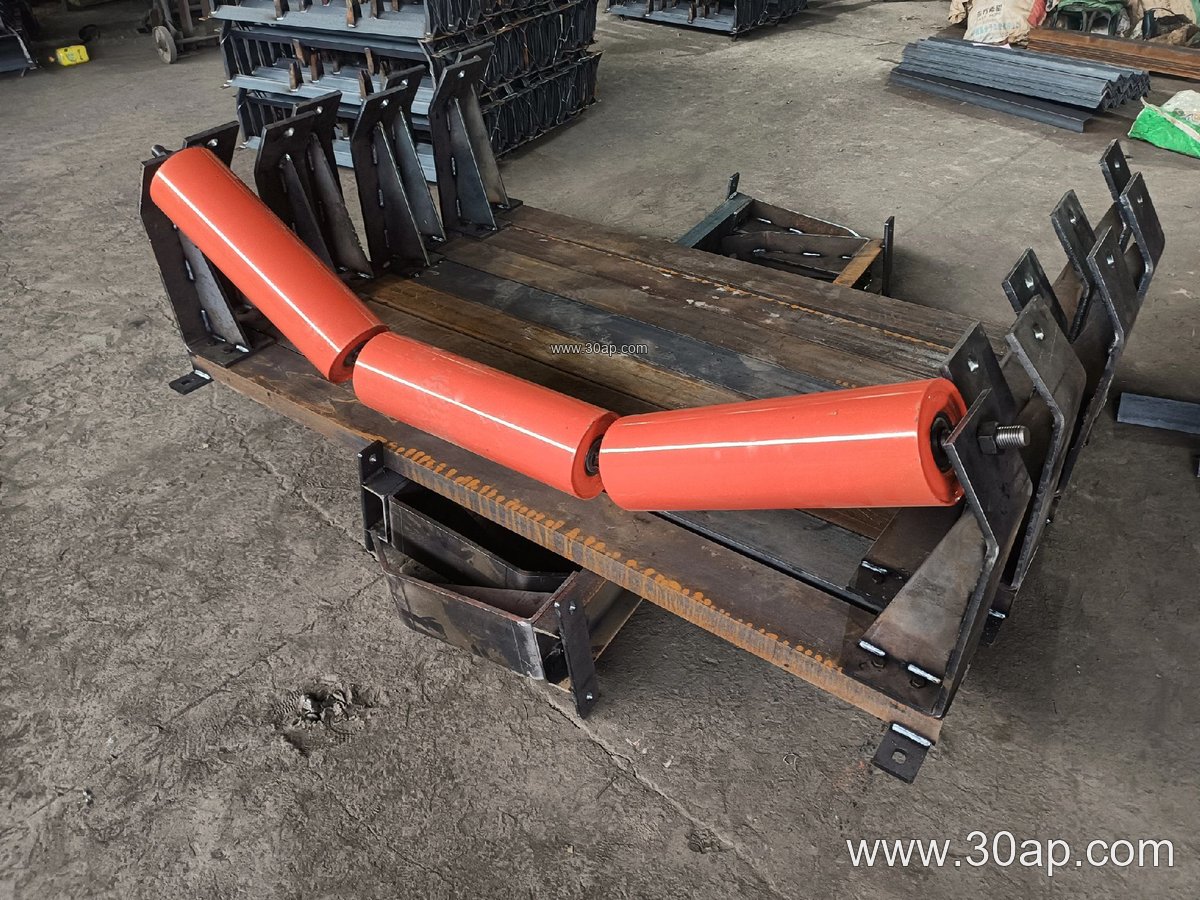
Choosing the Right Idler Type for Each Position
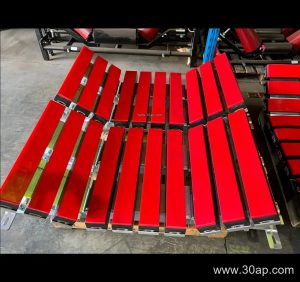
Carrying side rollers are usually troughing idlers in single, two-roll, or three-roll sets. At the loading point, impact idlers with rubber rings absorb the drop energy from a crusher or transfer chute. On the return side, flat or V-return rollers support the empty belt, and self-aligning idlers help correct tracking on long runs. Transition idlers ease the belt from flat to troughed profile near the head and tail.
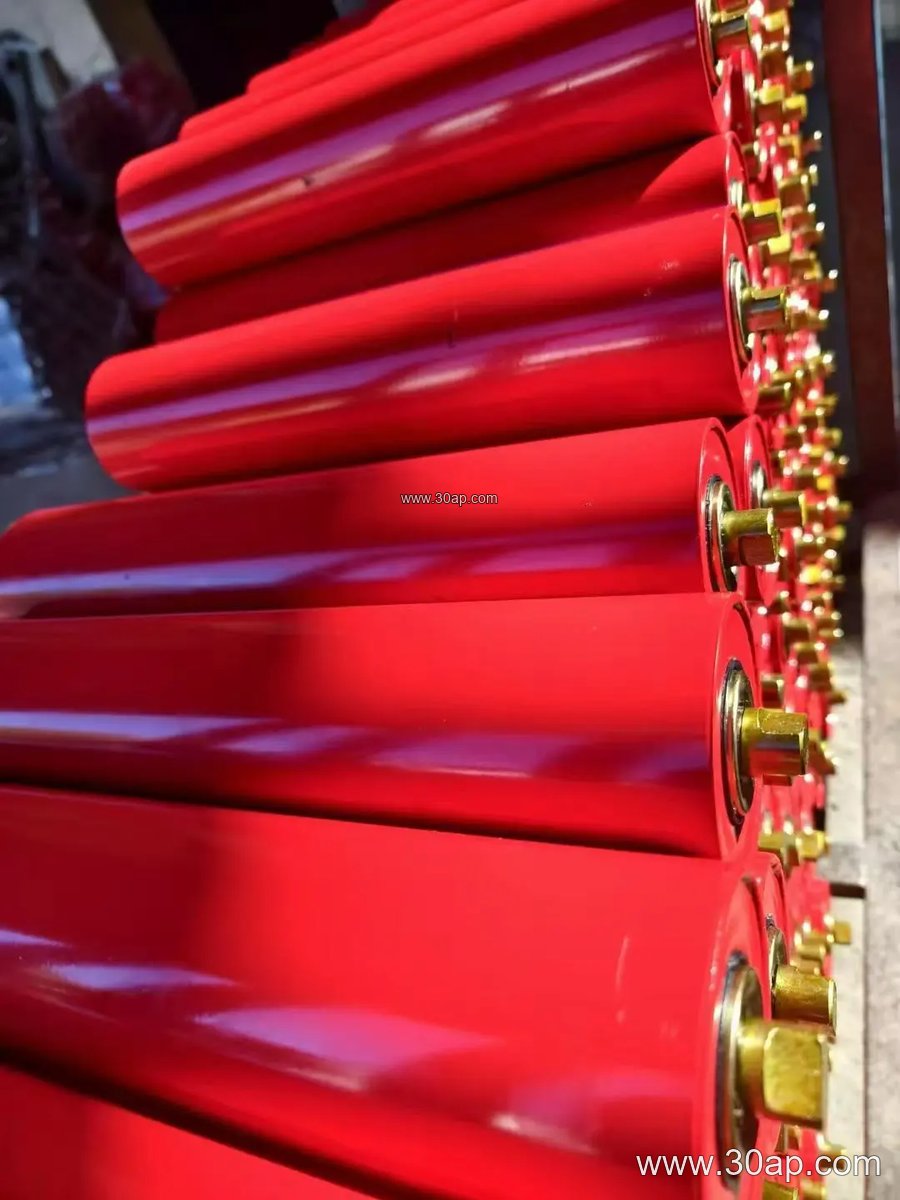
Idler procurement should specify position clearly, because a return roller is not a substitute for a carrying roller, and a troughing set cannot be swapped for a self-aligning assembly without checking the frame. When the conveyor also uses a conveyor pulley at the drive or tail end, the roller selection must still respect the belt path and the take-up arrangement.
Procurement Checklist for Buyers
Before requesting quotations, gather the belt width, roller diameter, roller length, trough angle, bearing size, and mounting bracket dimensions. Confirm the environment: coal dust, cement powder, salt spray at a port, or high temperature near a sinter plant each point to different sealing and surface choices. Note the belt type in use, since an EP conveyor belt, a steel cord conveyor belt, or a flame retardant conveyor belt may call for different roller spacing and impact protection.
| Parameter | Common Reference |
|---|---|
| Roller diameter | Ø63 to Ø219 |
| Belt width | B400 to B2400 |
| Trough angle | 20, 30, 35, 45 degrees |
| Bearing | 6204, 6205, 6305, 6306, 6308, 6310 |
| Surface | steel, nylon, ceramic, rubber ring |
Finally, agree on inspection criteria and spare parts quantities. Keeping a stock of the most wearing roller positions, plus matching conveyor brackets, reduces emergency orders. For more on rollers and belt matching, visit conveyoridlerpro.com and review the idler roller range before finalising the purchase order.