What a Large-Diameter Pulley Is and Why It Matters
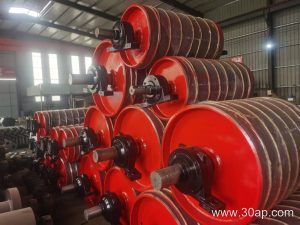
A large-diameter pulley is a conveyor pulley whose shell diameter is sized well above the minimum needed for a given belt width. In heavy-duty bulk handling, these pulleys are often the drive, head, or tensioning units that carry the highest loads and must maintain belt wrap without excessive bending stress. You will find them in quarry pits, limestone mines, coal preparation plants, and cement clinker lines where conveyor belts move abrasive rock, ore, or hot aggregate around the clock.
The larger the pulley diameter, the lower the bending fatigue on the conveyor belt carcass. This is particularly important with steel cord conveyor belt and thick multi-ply fabric core conveyor belt, where repeated flexing over a small pulley can shorten service life. A well-matched large-diameter pulley also reduces slip and improves traction when the belt is wet or heavily loaded.
Construction and Surface Options
A typical large-diameter pulley starts with a welded steel shell, reinforced end discs, and a shaft sized by torque and radial load rather than belt width alone. Common shaft diameters include Ø50, Ø60, Ø70, Ø80, Ø90, Ø100, Ø120, Ø140, Ø160, Ø180, and Ø200, with final selection based on drive power and bearing life. Shell diameters commonly range from Ø630 up to Ø1800 for large units, and face widths are usually wider than the belt — for example, a B1200 belt often runs on a pulley face around 1400 mm, and a B1400 belt on roughly 1600 mm face width.
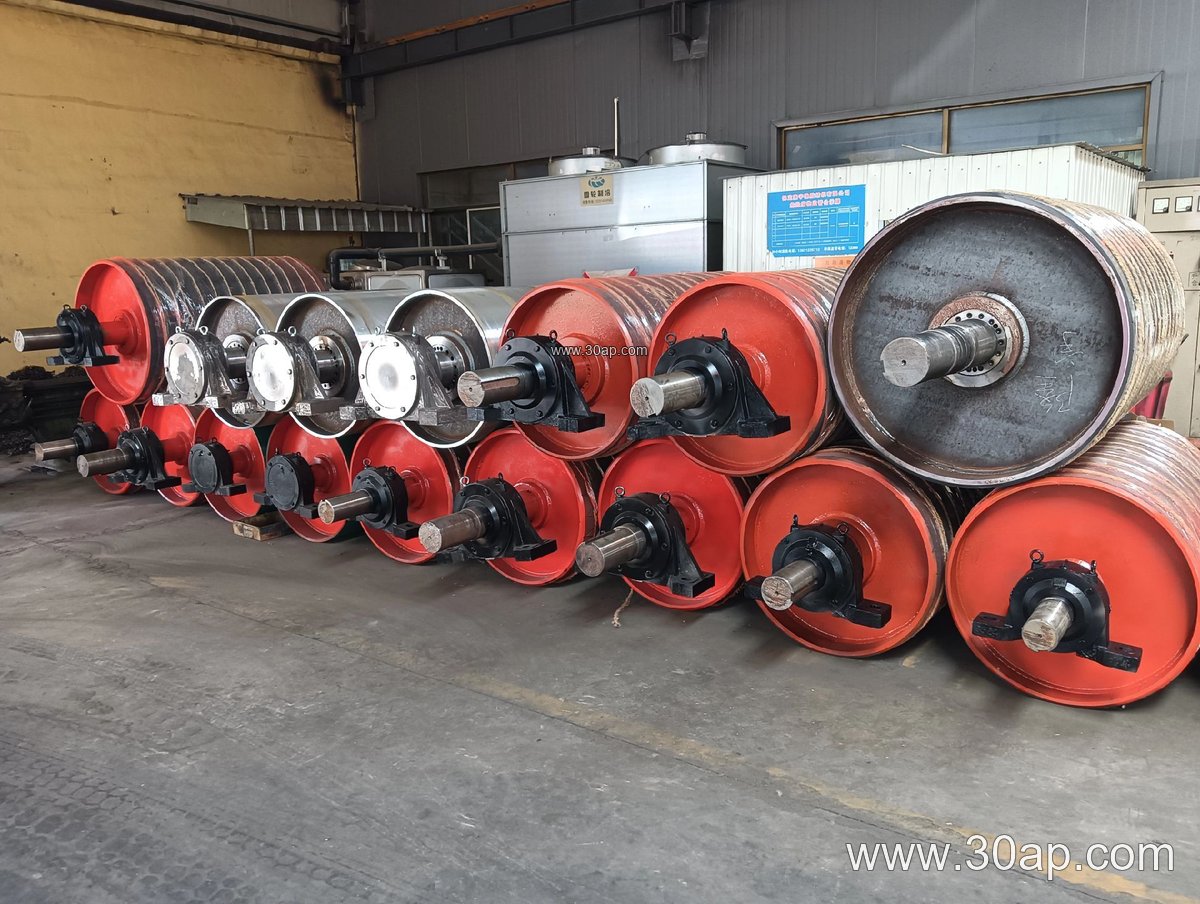
Surface treatment depends on the duty. Plain steel shells suit light abrasive service, while rubber lagging — applied by cold bonding or hot vulcanization — improves grip. Diamond lagging and herringbone lagging help shed water and fines; ceramic lagging is chosen where abrasive slip is a constant problem. Lagging thickness commonly falls between 8 mm and 20 mm. For comparison, a bend pulley in the same conveyor may use a thinner plain rubber cover, but the main drive or head pulley usually needs the heavier lagging to transmit torque reliably.
Where Large-Diameter Pulleys Are Used
These pulleys appear at the head end of overland conveyors, at tensioning stations, and as drive pulleys on high-capacity lines. In a limestone quarry, a Ø1000 pulley may drive a 1200mm wide conveyor belt carrying crushed stone to the primary stockpile. In a coal preparation plant, flame retardant conveyor belt and anti-static conveyor belt run over large head pulleys where safety standards demand controlled surface resistance. Cement plants use heat resistant conveyor belt on clinker lines, and the pulley lagging must tolerate warm fines without losing grip.
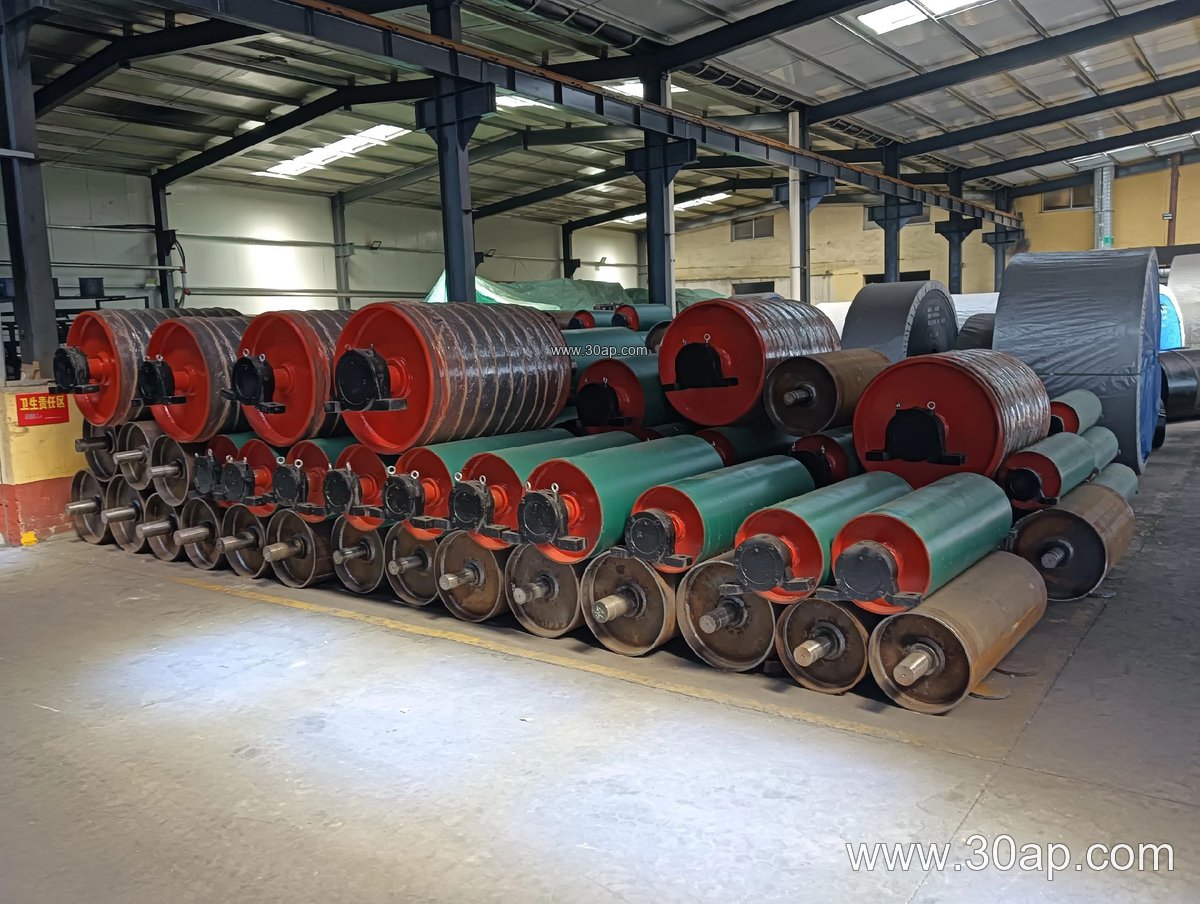
The same principle applies in iron ore and copper ore operations, where heavy-duty mining conveyor belt moves dense, sharp material. A large-diameter pulley reduces point pressure on the belt and keeps the carcass from flexing too sharply. At the tail end, a smaller tail pulley may handle the return side, but the main drive still relies on the large-diameter unit to deliver torque without belt slip.
Matching Pulley Diameter to Belt and Duty
There is no single diameter for a given belt width. A B800 conveyor belt might run on a Ø500 pulley in a short transfer, or on a Ø800 pulley where the belt is thick and the duty is continuous. A B1200 system could use Ø1000 or larger depending on belt tension and available space. The key is to check the belt manufacturer’s minimum pulley diameter for the specific carcass — steel cord belt, EP conveyor belt, and NN conveyor belt each have different flex requirements.
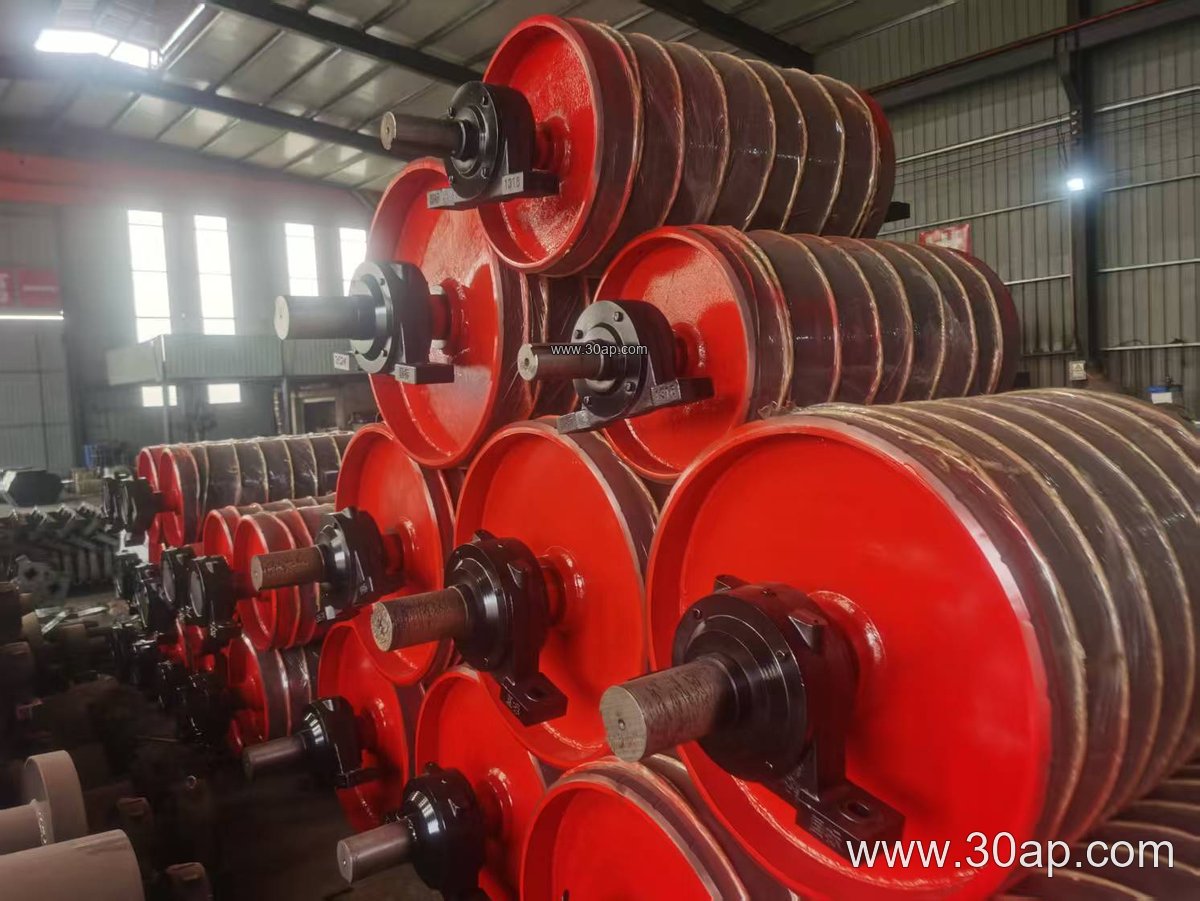
Buyers should also consider:
- Belt tension and the resulting shaft load
- Lagging type and thickness for the environment
- Bearing size and accessibility for maintenance
- Whether the pulley is a drive, head, tail, or tensioning unit
For example, a B1400 × Ø800 large-diameter pulley with 12 mm diamond lagging is a common combination in aggregate plants, but it is not a universal rule. A B1600 belt may call for Ø1000 or Ø1250 depending on the conveyor profile.
Buyer Checklist
Before ordering, confirm the pulley’s role in the conveyor — drive, head, tail, or take-up — because the required lagging and shaft design differ. Check that the pulley face width exceeds the belt width by a suitable margin, and verify that the selected diameter meets the belt maker’s minimum. Ask for the lagging thickness and pattern in writing, and confirm the shaft diameter is calculated from torque and load, not copied from a belt width table.
Large-diameter pulleys are not interchangeable with bend pulleys or tail pulleys in function; each position has its own load profile. A well-specified large-diameter pulley, paired with the right conveyor belt and conveyor pulley package, keeps a bulk handling line running with fewer belt changes and less downtime.