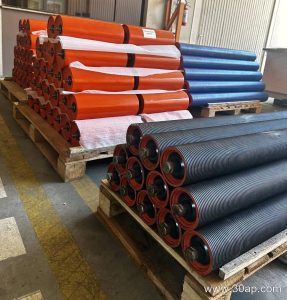
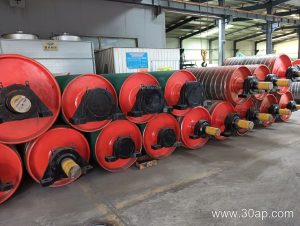
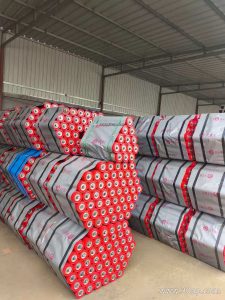
What a Ceramic Lagged Pulley Does
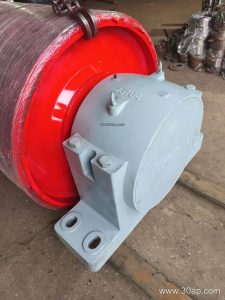
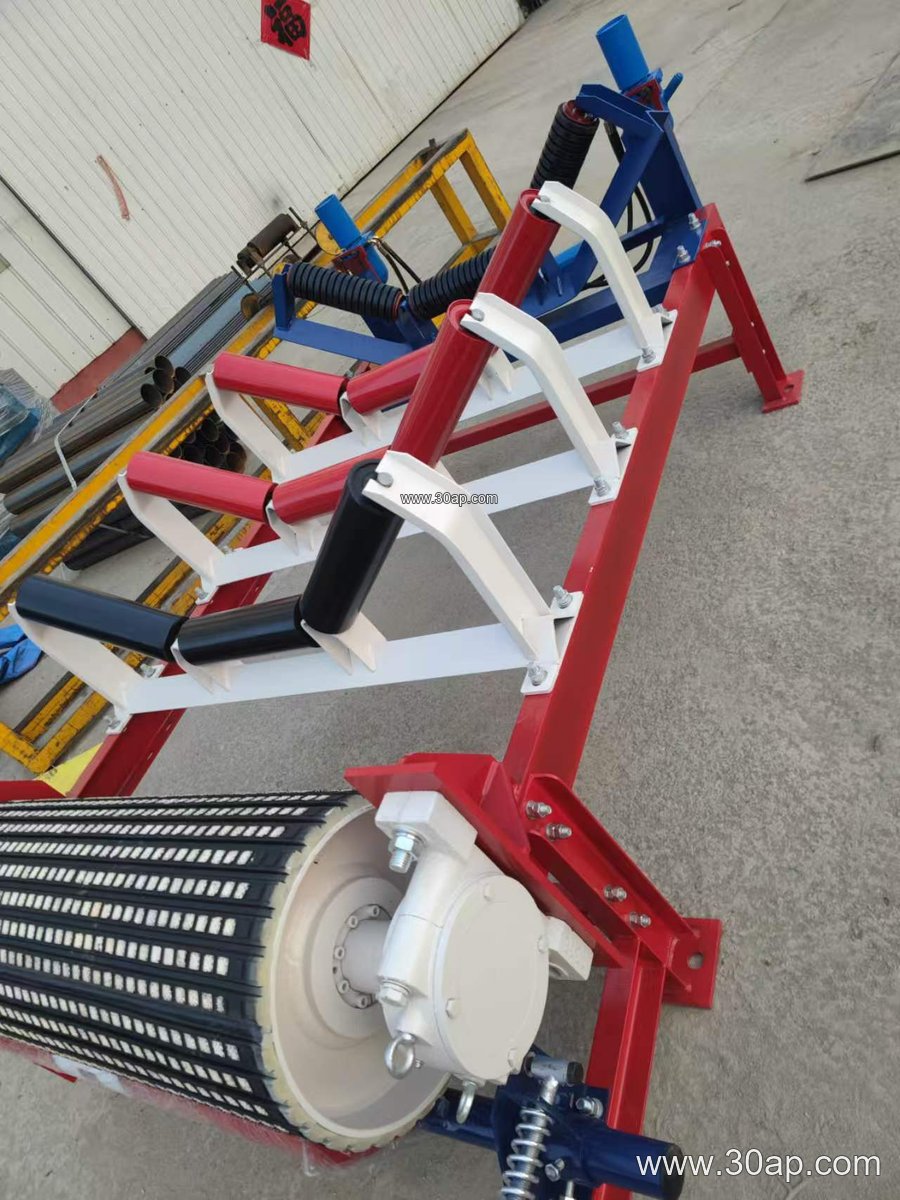
A ceramic lagged pulley is a conveyor pulley whose shell is covered with a rubber backing embedded with hard ceramic tiles. The tiles sit slightly proud of the rubber, so the surface bites into the belt instead of polishing smooth like plain steel. On a drive pulley, that extra grip is what converts motor torque into belt motion without slipping. In a quarry or an iron ore plant, where the belt may be wet, dusty, or coated in fines, a ceramic lagged pulley often keeps traction when a smooth or rubber-covered shell would start to slide.
The same ceramic covering also protects the shell. Abrasive material that works its way between belt and pulley tends to wear rubber quickly; the ceramic tiles take that wear instead. This is why the product is common on heavy-duty conveyors handling rock, ore, clinker, and coal.
How the Ceramic Cover Is Built
A ceramic lagged pulley usually starts as a steel drum with welded end discs and a machined face. The lagging is applied as tiles set into a rubber layer, either bonded in a workshop or supplied as pre-formed strips. Tile shapes vary: square, rectangular, and dimpled patterns are all used, and some designs include raised ribs or grooves to help water and fines escape from the contact area.
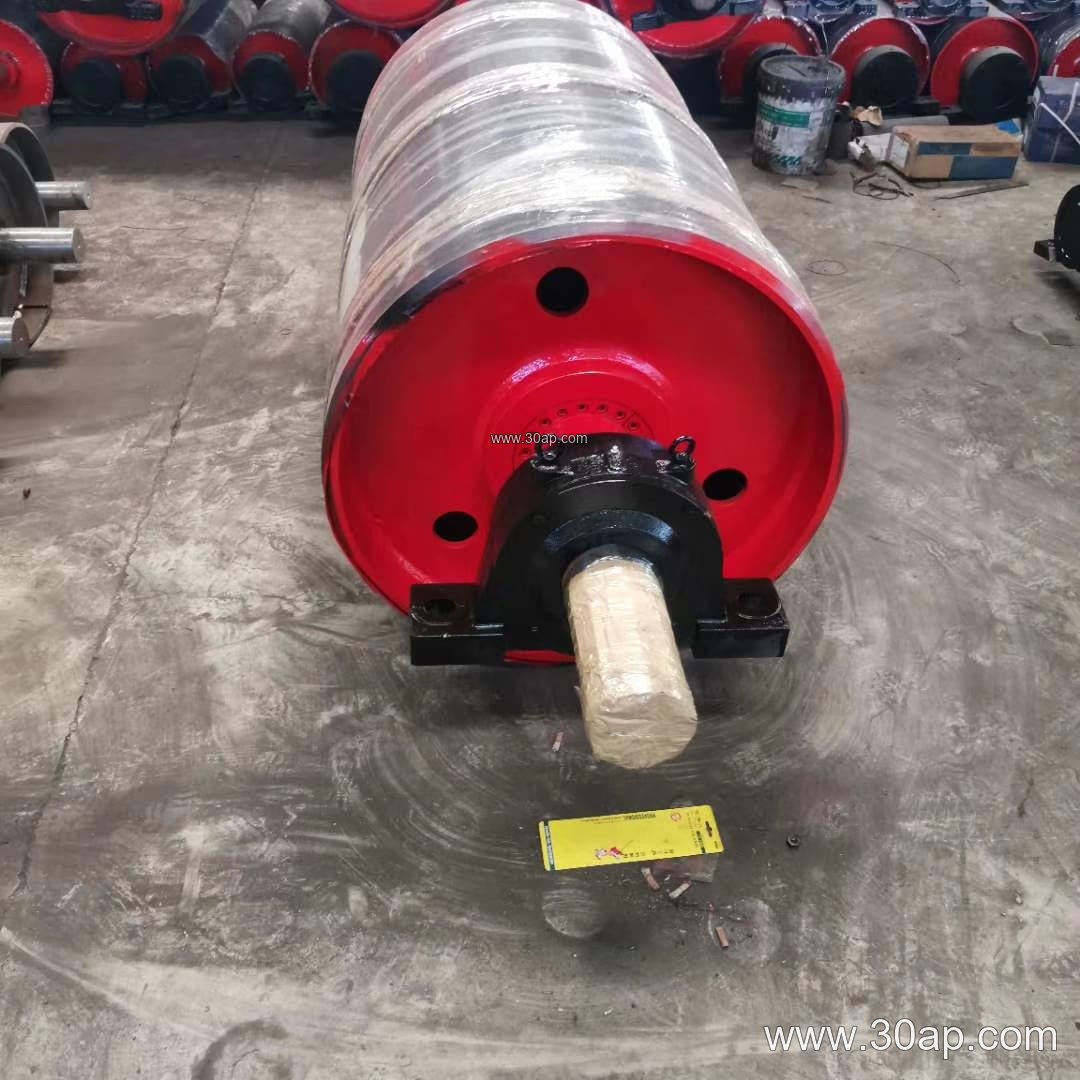
Common lagging thicknesses are 8, 10, 12, 15, and 20 mm, with the ceramic layer sized to match the duty. A typical build sequence looks like this:
- Shell preparation and cleaning before bonding
- Rubber base layer applied to the shell
- Ceramic tiles pressed into the uncured rubber
- Vulcanization or cold bonding to finish the surface
- Final machining of the face and balancing
Because the tiles are harder than the rubber, the finished surface is a mix of gripping rubber and wear-resistant ceramic. That combination is the whole point of the design.
Where It Fits on the Conveyor
Ceramic lagging is most often specified for the drive pulley, where torque transfer matters most. It can also appear on a bend pulley or tail pulley in abrasive service, but the drive position is the classic application. On a long overland conveyor in a copper mine, or a coal mining conveyor feeding a wash plant, the drive pulley is the component that decides whether the belt tracks steadily under load.
The pulley works together with the rest of the system. A properly tensioned conveyor belt, well-aligned idler rollers, and rigid conveyor brackets all reduce the load on the lagging. If the belt is mistracking or the take-up is too loose, even a ceramic lagged pulley will struggle. Matching the pulley to a suitable belt grade matters too: an abrasion resistant conveyor belt or a heavy-duty mining conveyor belt is a natural partner for ceramic lagging, while a steel cord conveyor belt may call for a different balance of grip and carcass stiffness.
Sizes and Configurations Buyers Should Check
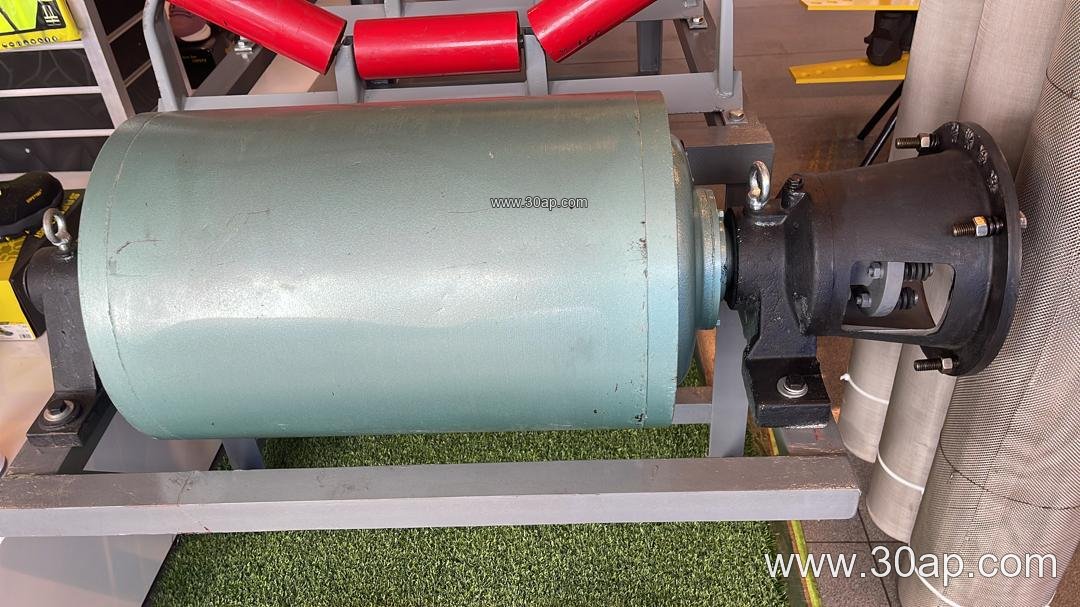
Ceramic lagged pulleys are made across a wide range of belt widths and diameters. The table below shows representative combinations; final values come from the conveyor design, not from a fixed rule.
| Belt width | Typical pulley face width | Common diameter range |
|---|---|---|
| B500 | about 600 mm | Ø250 to Ø400 |
| B650 | about 750 mm | Ø315 to Ø500 |
| B800 | about 950 mm | Ø400 to Ø630 |
| B1000 | about 1150 mm | Ø500 to Ø800 |
| B1200 | about 1400 mm | Ø630 to Ø1000 |
| B1400 | about 1600 mm | Ø800 to Ø1250 |
| B1600 | about 1800 mm | Ø1000 to Ø1400 |
Shaft diameter is set by torque and bearing load. Common shaft sizes run from Ø50 up to Ø200, but no belt width dictates one shaft size on its own. A B1200 × Ø1000 drive pulley and a B800 × Ø500 tail pulley are both realistic combinations in different duties.
Selection and Maintenance Notes
Buyers should confirm the pulley position, the belt speed, the expected wrap angle, and the material being carried. Ceramic lagging is a good fit for wet, gritty conditions; in clean, light-duty service a plain rubber lagging may be enough. Check that the tile pattern suits the belt: aggressive patterns grip well but can wear a thin belt cover faster.
Inspection is simple. Look for missing or cracked tiles, lifted edges, and rubber undercutting. Replace damaged sections before the bare shell is exposed. Keep the belt clean and the conveyor brackets tight, and the lagging will usually last through long service intervals in cement plants, power plant coal handling, and aggregate operations.