What an Aggregate Conveyor Idler Does on a Crushing Line
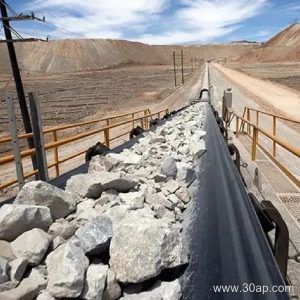
An aggregate conveyor idler is the rotating roller assembly that supports the loaded conveyor belt between the head and tail of a machine. On a sand and gravel line, a quarry floor, or a concrete batching plant, these idlers carry the weight of crushed stone, sand, and screened product while keeping the belt tracking in a stable path. The idler is a wear part rather than a structural member, so matching its construction to the duty cycle matters more than choosing the heaviest option available.
How the Roller Is Built
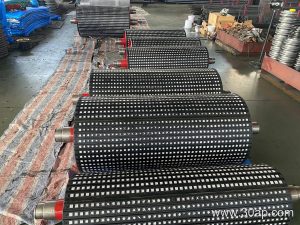
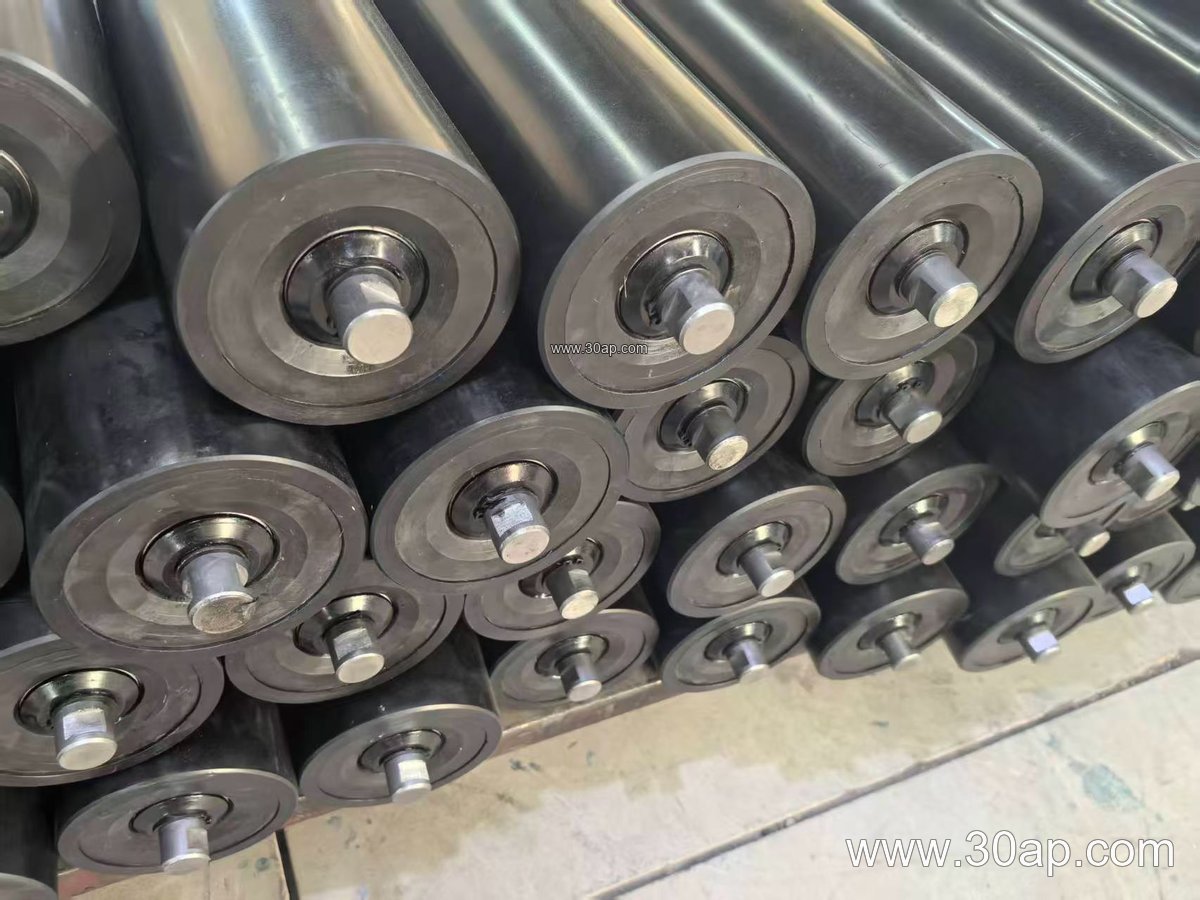
A typical idler roller consists of a steel tube shell, a shaft that runs through the center, bearing housings at each end, and a sealing arrangement that keeps dust and water away from the bearing. The shell may be plain steel, nylon-coated, ceramic-covered, or fitted with rubber rings where impact is heavy. Bearing seats are machined to hold common sizes such as 6204, 6205, 6305, 6306, 6308, or 6310, but the bearing number alone does not define the roller; wall thickness, shaft diameter, and seal design all contribute to service life.
Sealing is often the deciding factor in aggregate service. Fine rock dust and wash-down water attack bearings from both directions, so a labyrinth seal combined with a contact lip is common on quality rollers. A well-sealed idler may cost more at purchase but reduce stoppages on a busy crusher conveyor.
Idler Types and Where They Sit
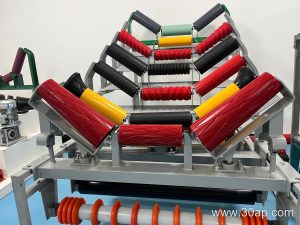
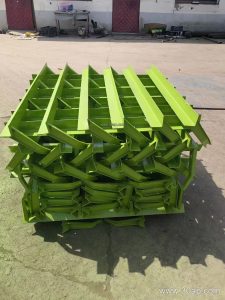
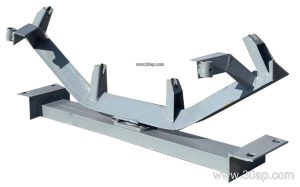
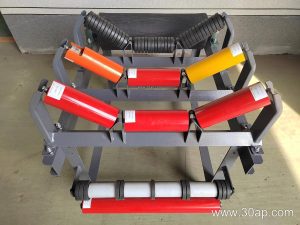
The carrying run usually uses three-roll troughing sets, while the return run uses flat or V-return rollers. Transition idlers are placed near the head and tail to ease the belt from flat to troughed profile. Impact idlers with rubber rings sit under the loading point, and self-aligning idlers correct belt drift on long spans. Spiral rollers are sometimes used on the return side to shed sticky material. Each position has its own load and wear pattern, so mixing types along one conveyor is normal practice.
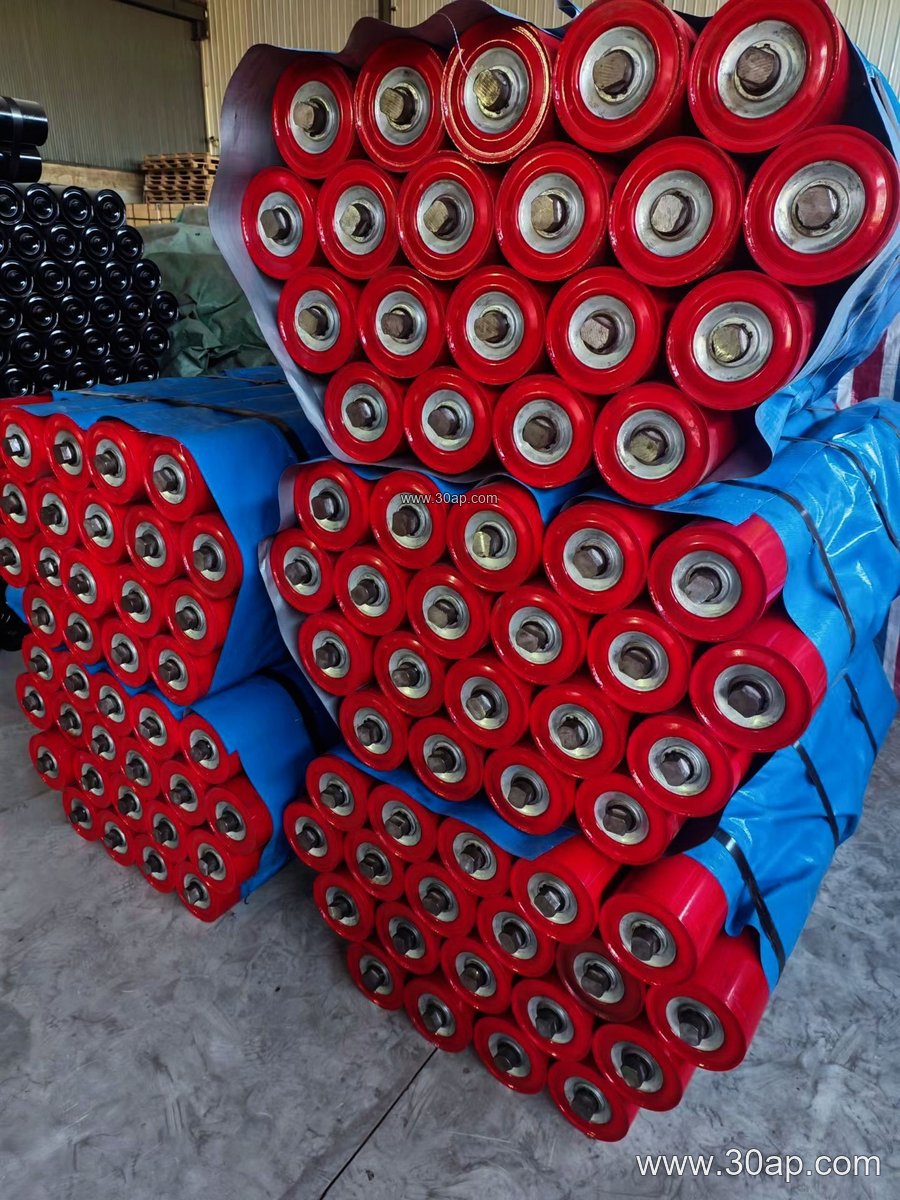
- Troughing idler set: three rolls, commonly at 20, 30, 35, or 45 degrees trough angle
- Impact idler: rubber-ringed rolls beneath the feed chute
- Return idler: flat or V-shaped roll supporting the empty belt
- Self-aligning idler: conical or friction type for belt training
Common Dimensions and How They Relate
Roller diameter and belt width are linked by design, not by a fixed rule. Heavier belts and higher speeds generally call for larger diameters to keep bearing speed and flexing within reasonable limits. The table below lists common reference values; actual selection follows the conveyor design and the material being carried.
| Reference item | Common values |
|---|---|
| Roller diameter | 63, 76, 89, 102, 108, 127, 133, 159, 178, 194, 219 mm |
| Belt width | B400, B500, B650, B800, B1000, B1200, B1400, B1600, B1800, B2000, B2200, B2400 |
| Trough angle | 20, 30, 35, 45 degrees |
| Roll surface | Steel tube, nylon, ceramic, rubber rings |
| Bearing reference | 6204, 6205, 6305, 6306, 6308, 6310 |
Roll length changes with belt width, trough angle, and set configuration. As an example, a three-roll troughing set might use rolls around 200 mm long for B500, 250 mm for B650, 315 mm for B800, 380 mm for B1000, 465 mm for B1200, 530 mm for B1400, 600 mm for B1600, 670 mm for B1800, and 750 mm for B2000. Side rolls and center rolls can differ, so these figures are guides rather than fixed pairings.
Matching the Idler to the Belt and the Job
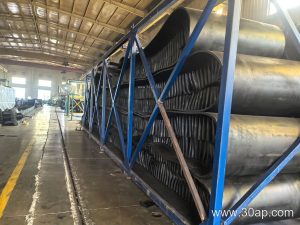
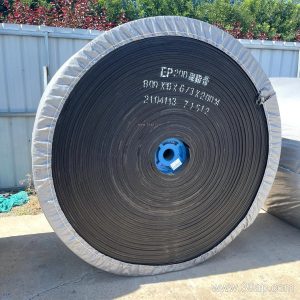
The belt itself influences idler choice. A heavy-duty mining conveyor belt or a high abrasion resistant conveyor belt running at high tension benefits from larger roll diameters and robust bearings. Where a chevron conveyor belt or corrugated sidewall conveyor belt is used, the idler face must clear the raised profile, and disc or split rollers may be needed on the return side. On a pipe conveyor belt, the idler arrangement is entirely different and should not be confused with conventional troughing sets.
Environment also matters. A heat resistant conveyor belt in a cement plant kiln area may need idlers positioned away from radiant heat. A flame retardant conveyor belt in a coal mining conveyor or underground mining conveyor calls for idlers with suitable antistatic and fire-safe components. In a port or ship loading conveyor, salt air makes corrosion-resistant coatings worthwhile.
Buyer Checklist
Before ordering, confirm the belt width, the trough angle, the set type, the roller diameter, the shaft size, and the mounting bracket dimensions. Check that the conveyor bracket spacing matches the idler frame, and confirm whether the application needs impact, return, or training rolls. Ask about seal type and shell thickness rather than relying on a single number. For aggregate work, abrasion resistance and dust exclusion usually matter more than nominal load rating alone.
Spare parts planning is also practical. Keeping a small stock of the most heavily loaded troughing and impact rolls can prevent a crusher line from sitting idle while a replacement travels. Records of roller diameter, bearing number, and frame type make reordering straightforward and help avoid mismatched parts across conveyors of different widths.