What the Conveyor Carrying Bracket Does
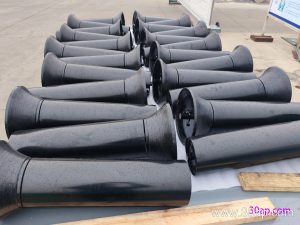
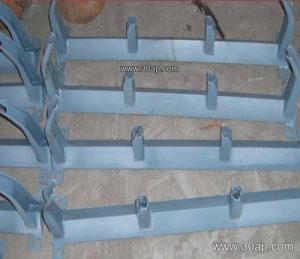
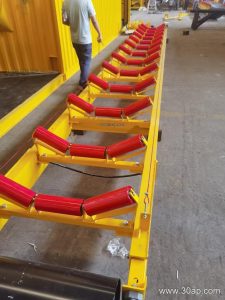
The conveyor carrying bracket is the steel support that holds the troughing idlers on the load side of a belt conveyor. On a typical stone crushing line or a coal handling system, the belt rides on three idlers arranged in a trough, and those idlers sit in the carrying bracket. The bracket keeps the rollers at the correct angle, transfers the weight of the belt and material into the conveyor frame, and keeps spacing consistent along the run. Without a stable bracket, the idlers shift, the belt misaligns, and spillage increases.
This part is also called a troughing idler bracket or carrying roller support. It is not the same as a return bracket, which supports the belt on the empty side, and it should not be confused with a bend pulley or tail pulley. Those are different components with different jobs.
How It Is Built
Most carrying brackets are fabricated from angle steel, channel steel, or folded steel plate. The frame has mounting slots or holes where the idler shafts drop in, and the side arms are bent or welded to set the trough angle. Fixed brackets hold one angle, while adjustable brackets allow the angle to be changed across a range.
Common materials are painted carbon steel and galvanized steel. In dusty or wet conditions, such as a wash plant or a port terminal, galvanized or coated versions are often preferred. The bracket should be rigid enough that it does not flex when a heavy load passes, but it also needs to be light enough to handle during installation.
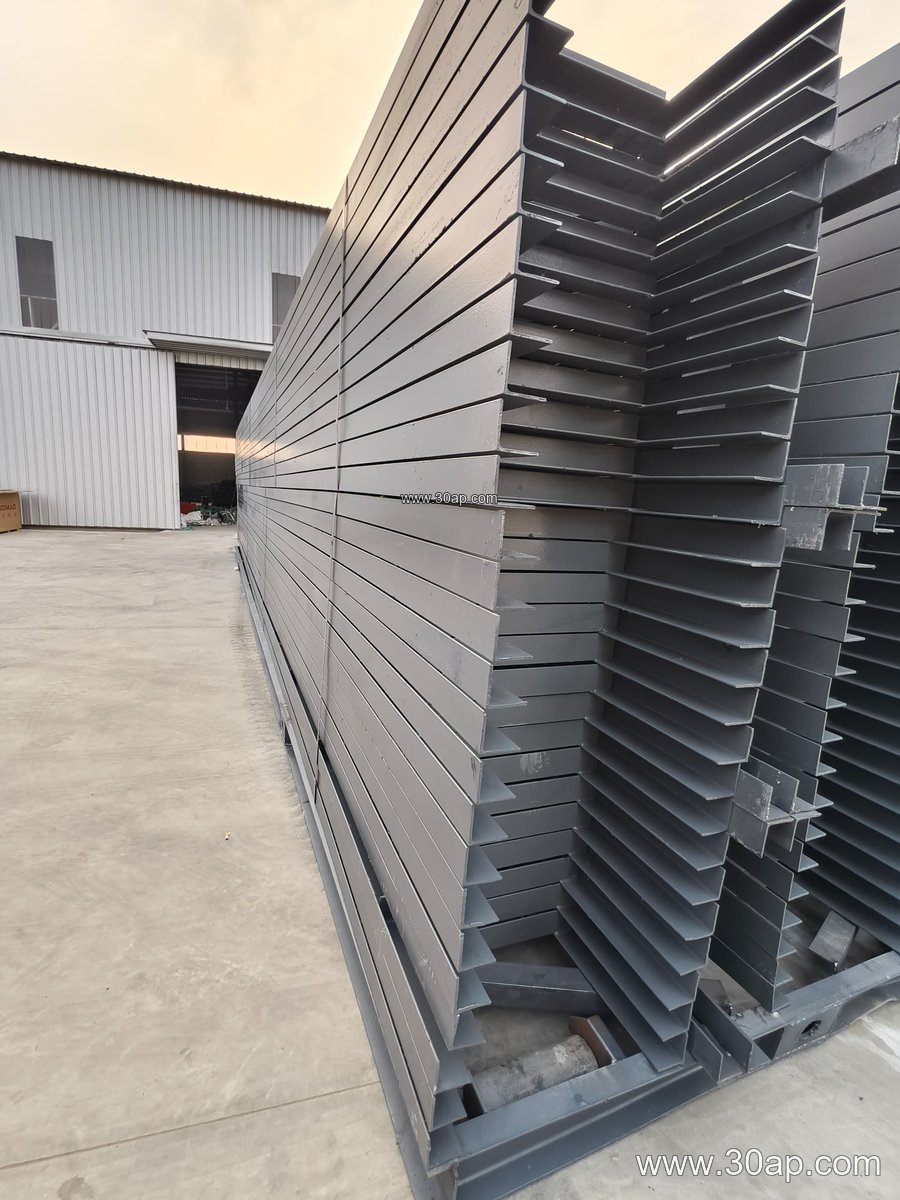
Typical Configurations
Carrying brackets appear in several forms, and the right one depends on the belt width, the material, and the conveyor layout.
- Troughing bracket with 20, 30, 35, or 45 degree angle
- Transition bracket near the loading point
- Impact bracket under a crusher discharge or transfer chute
- Self-aligning bracket for belt tracking
- Forward-tilted bracket, usually about 1.5 to 2 degrees
- Hanging bracket for special frame designs
A 35 degree trough is common on bulk material conveyors, while a 45 degree angle may suit a wider belt carrying a deep load. A 20 degree bracket is often used where the belt is narrow or the material is easy to contain.
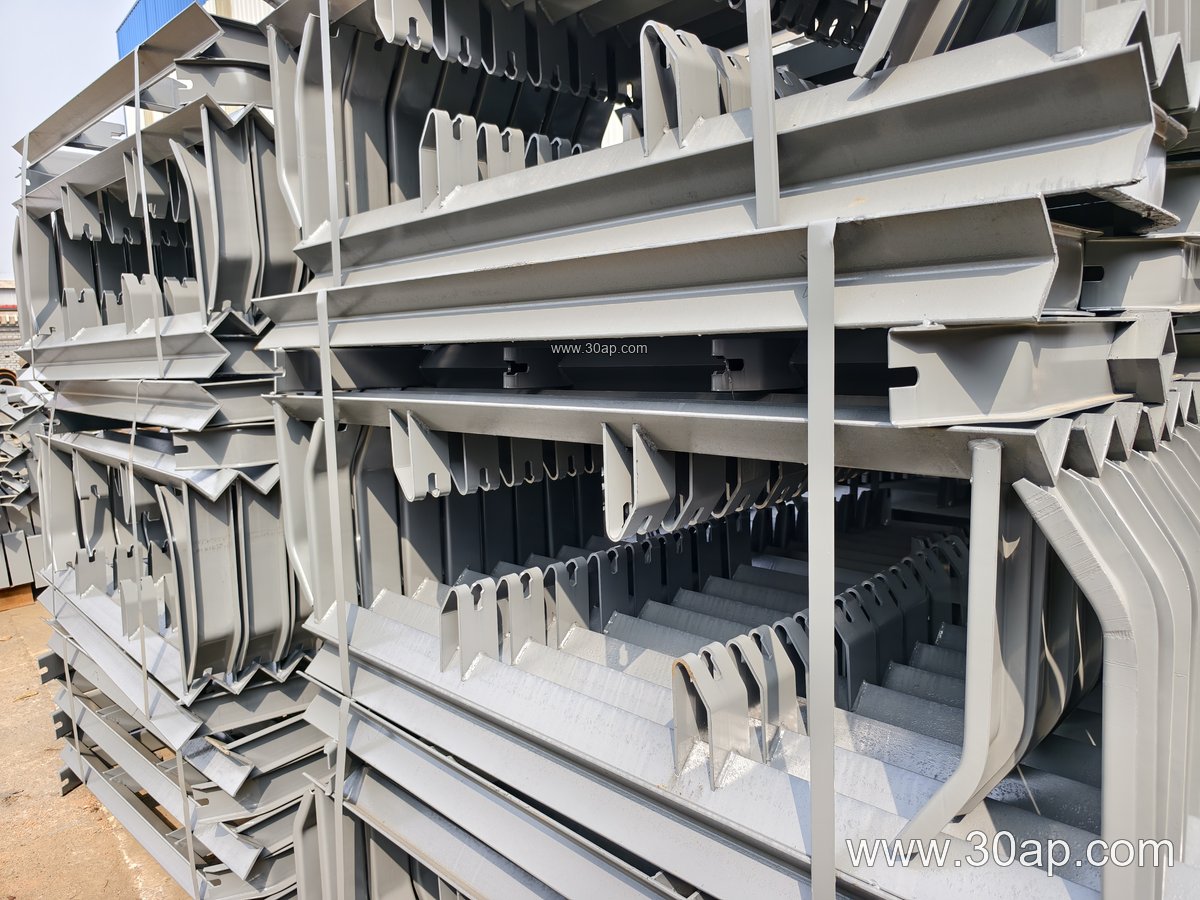
Matching Belt Width and Roller Diameter
Buyers often ask which bracket fits a given belt width. The answer is not a single fixed pairing. A B800 belt can run with different roller diameters and trough angles depending on the load, belt speed, and frame design. A B1200 conveyor may use a 35 degree bracket with 133 mm rollers, or a 45 degree bracket with a larger roller, depending on the engineering calculation.
The table below shows common reference combinations. These are examples, not mandatory matches.
| Belt Width | Trough Angle | Roller Diameter | Typical Use |
|---|---|---|---|
| B500 | 20-30 degrees | 89 mm | Small aggregate lines |
| B650 | 30 degrees | 89-108 mm | Sand and gravel |
| B800 | 35 degrees | 108 mm | Cement plant transfer |
| B1000 | 35 degrees | 108-133 mm | Coal handling |
| B1200 | 35-45 degrees | 133 mm | Iron ore and quarry |
| B1400 | 35-45 degrees | 133-159 mm | Power plant coal |
| B1600 | 35-45 degrees | 159 mm | Heavy bulk material |
| B1800 | 35-45 degrees | 159-194 mm | Large port conveyors |
Installation hole spacing and crossbeam length change with belt width and trough angle. They should be confirmed from the conveyor drawing rather than assumed from the belt width alone.
Where It Is Used
The conveyor carrying bracket is found wherever a belt conveyor moves bulk material. In a limestone quarry, it supports the troughing idlers under a crusher conveyor belt. In a coal-fired power plant, it carries the idlers on the coal feed line. In a cement plant, it appears on clinker and raw material conveyors. In a port or ship loading system, it holds the idlers under a wide belt moving at high tonnage.
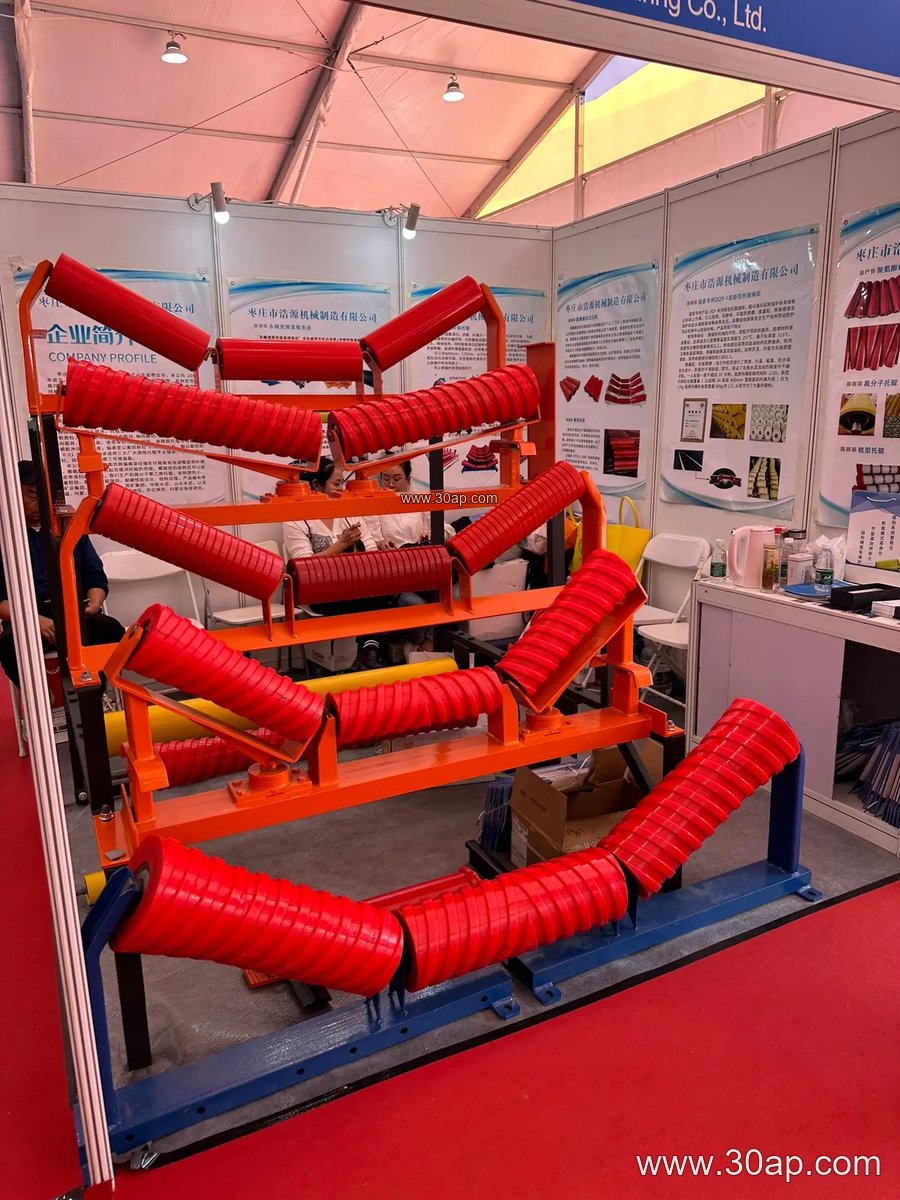
The bracket also works alongside related parts such as the idler roller, conveyor pulley, and conveyor bracket assemblies at the head and tail. A well-matched bracket and idler set reduces belt wear and helps the belt stay centered.
What a Buyer Should Check
Before ordering, confirm the belt width, the required trough angle, the roller diameter, and the mounting hole pattern. Ask whether the bracket is fixed or adjustable, and check the steel thickness and surface treatment. For a mine or a dusty plant, consider a heavier frame and a corrosion-resistant finish. If the conveyor uses a steel cord conveyor belt or a heat resistant conveyor belt, the bracket still follows the same dimensional rules, but the load and temperature may call for a stronger design.
Ordering by belt width alone is risky. A bracket that fits the frame but does not match the idler shaft will not seat properly. A bracket with the wrong trough angle can cause material spillage or belt edge wear. Confirming the drawing and the idler details before purchase avoids these problems.
Maintenance Notes
Inspect carrying brackets for bent arms, loose bolts, and worn mounting slots. A bent bracket can tilt the idlers and cause the belt to run off center. Replace damaged brackets in sets where possible so the trough line stays even. Keep the area around the bracket clear of buildup, since packed material can lift the idler and change the belt path.