What a Fixed Conveyor Bracket Does
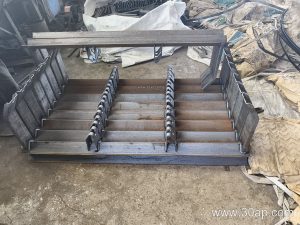
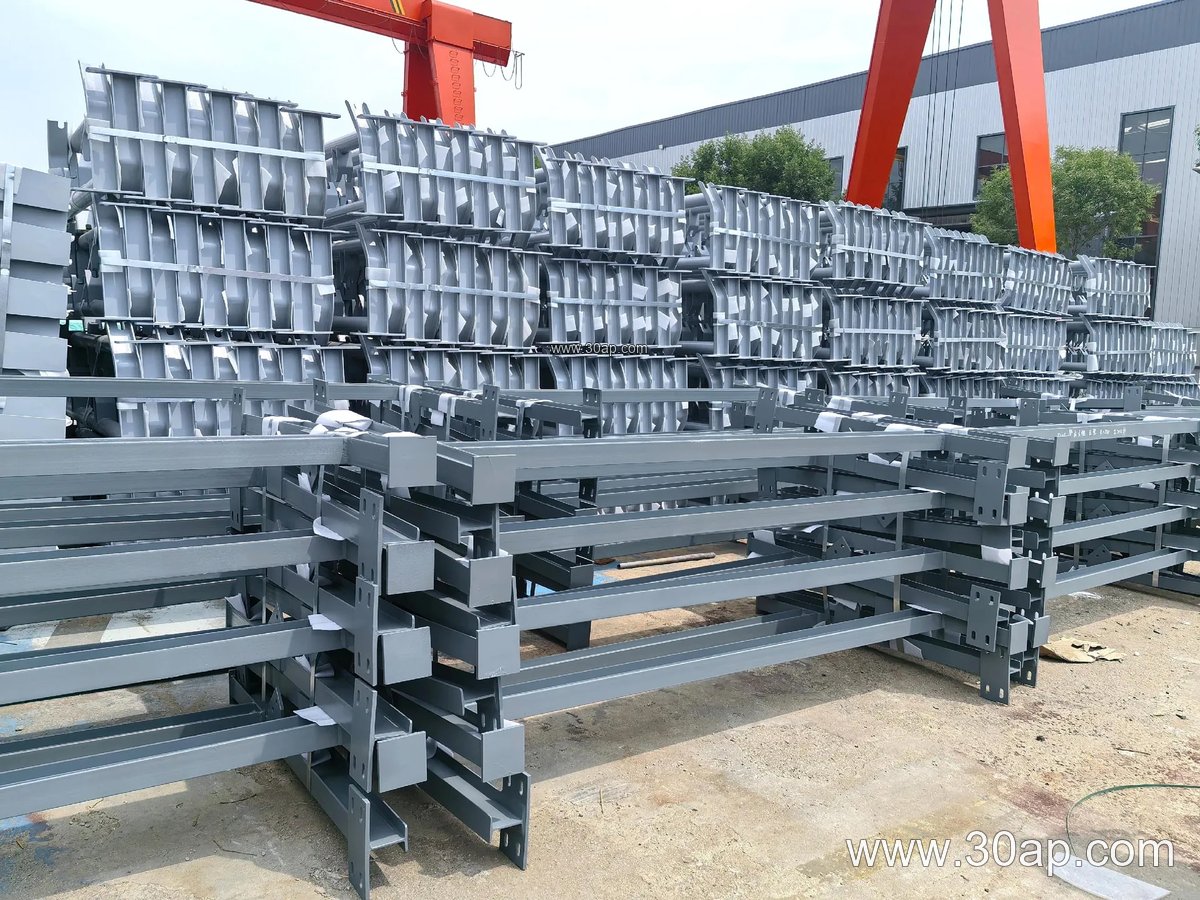
A fixed conveyor bracket is the stationary support frame that holds idler rollers in position along a conveyor line. Instead of adjusting with the belt, it is bolted or welded in place so the roller axis stays at a set height and angle. On a typical troughing section, this bracket carries three idlers and sets the trough angle that shapes the belt into a channel for bulk material. Because the bracket does not move, it gives the conveyor belt a predictable path and keeps the load centered.
Buyers often meet this part under its equivalent name, the stationary idler support frame. Both terms describe the same fixed bracket, and neither refers to a drive pulley, tail pulley, or bend pulley. Those pulleys transmit power or change belt direction, while the fixed bracket simply holds rollers.
How the Bracket Is Built
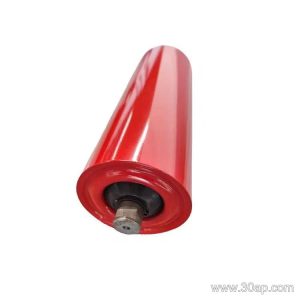
Most fixed brackets are fabricated from angle steel, channel steel, or folded steel plate. The crossbeam length and mounting hole spacing follow the belt width and trough angle, so they are set by design rather than by a single universal number. A bracket for B800 at 35 degrees will differ from one for B1200 at 45 degrees, and a B650 frame at 30 degrees is smaller again. Roller diameters such as Ø89, Ø108, Ø133, Ø159, and Ø194 are matched to the bracket’s end supports and to the load the conveyor carries.
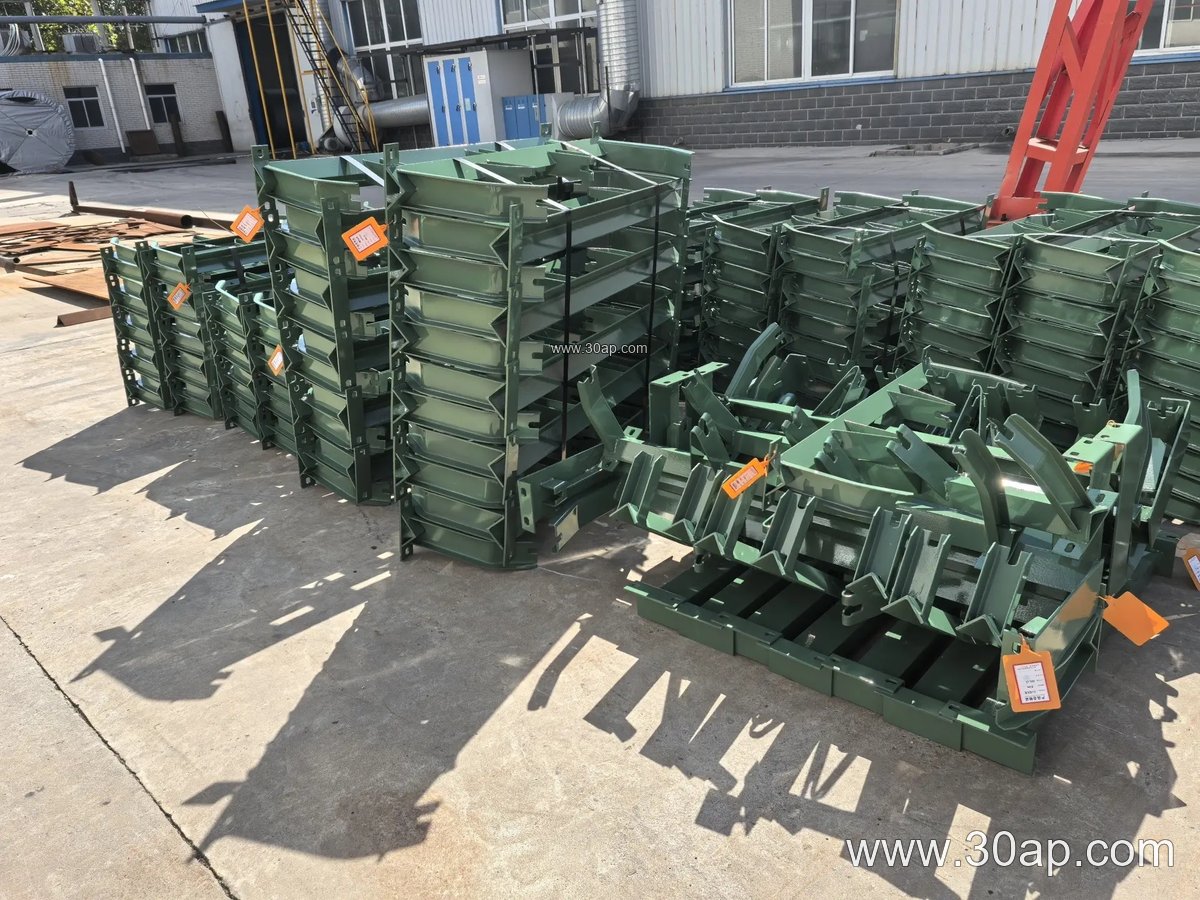
- Troughing bracket for carrying idlers on the loaded side
- Return bracket or V-return bracket beneath the belt
- Transition bracket near pulleys to ease the belt from flat to troughed
- Impact bracket with cushion rollers under a loading point
- Self-aligning bracket to correct belt drift
The fixed version is often compared with an adjustable bracket, which can be reset between common trough angles such as 20, 30, 35, and 45 degrees. A fixed frame trades that flexibility for rigidity and simpler maintenance. Forward-leaning designs, usually around 1.5 to 2 degrees, are a separate detail and should not be confused with the adjustable type.
Where Fixed Frames Are Used
These supports appear wherever the belt route is stable and the material load is steady. In a limestone quarry, fixed troughing brackets hold idlers under a crusher conveyor belt that carries blasted rock. In a coal washing plant, they support the conveyor belt on the raw coal line, often paired with a flame retardant conveyor belt for safety. Cement plants use them on clinker and raw meal routes, while power plant coal yards rely on them for long straight runs. Sand and gravel lines, port loading systems, and steel plant sinter conveyors all use the same principle.
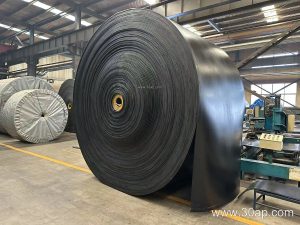
Heavy-duty mining conveyor belts and abrasion resistant conveyor belts put more load on the rollers, so the bracket must be stiff enough to resist deflection. A rubber conveyor belt or an EP conveyor belt running over well-aligned idlers will track better and wear more evenly.
Matching Brackets to Belt and Rollers
Selection starts with belt width, then trough angle, then roller diameter. The table below shows common reference combinations; actual values are confirmed by design.
| Belt Width | Typical Trough Angle | Common Roller Diameter |
|---|---|---|
| B500 | 20-30 degrees | Ø89 |
| B650 | 30 degrees | Ø89-Ø108 |
| B800 | 35 degrees | Ø108 |
| B1000 | 35 degrees | Ø108-Ø133 |
| B1200 | 45 degrees | Ø133 |
| B1400 | 35-45 degrees | Ø133-Ø159 |
| B1600-B2000 | 35-45 degrees | Ø159-Ø194 |
No single belt width is limited to one angle or one roller size. A wide belt can run a shallow trough for fragile material or a deep trough for high capacity. What matters is that the bracket, idler roller, and belt are specified together.
Buyer Checklist
- Confirm belt width, trough angle, and roller diameter before ordering.
- State the mounting hole spacing and crossbeam length required by the conveyor frame.
- Choose the material finish for the site: dusty, wet, or corrosive conditions.
- Check whether the position needs a fixed frame or an adjustable one.
- Plan inspection access so idlers can be replaced without removing the bracket.
A correctly chosen fixed conveyor bracket keeps the belt stable, reduces spillage, and extends roller life. For related components such as conveyor idlers and pulleys, buyers can review options at www.example.com/conveyor-bracket and match the frame to the full conveyor layout.