What a Fire Resistant Conveyor Belt Is
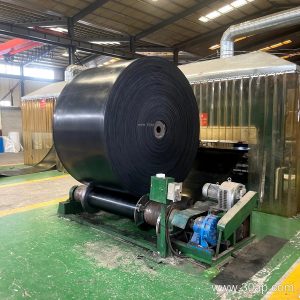
A fire resistant conveyor belt is a rubber conveyor belt designed so that, if a fire source reaches the belt, flame spread is limited and the belt tends to stop burning once the source is removed. It is also called a flame retardant conveyor belt, and the two names are often used for the same product family in mining and bulk handling. The belt still carries material on a normal conveyor structure, running over idler rollers and around a head pulley, tail pulley and bend pulleys, but its rubber compounds and construction are chosen for fire safety as well as strength.
Fire resistance is not a single property. Buyers usually care about flame spread after ignition, electrical conductivity to avoid static sparks, and continued mechanical performance under load. That is why a fire resistant belt is often also an anti-static conveyor belt, and in coal mining it may be specified together with abrasion resistance and cut resistance.
How the Belt Is Built
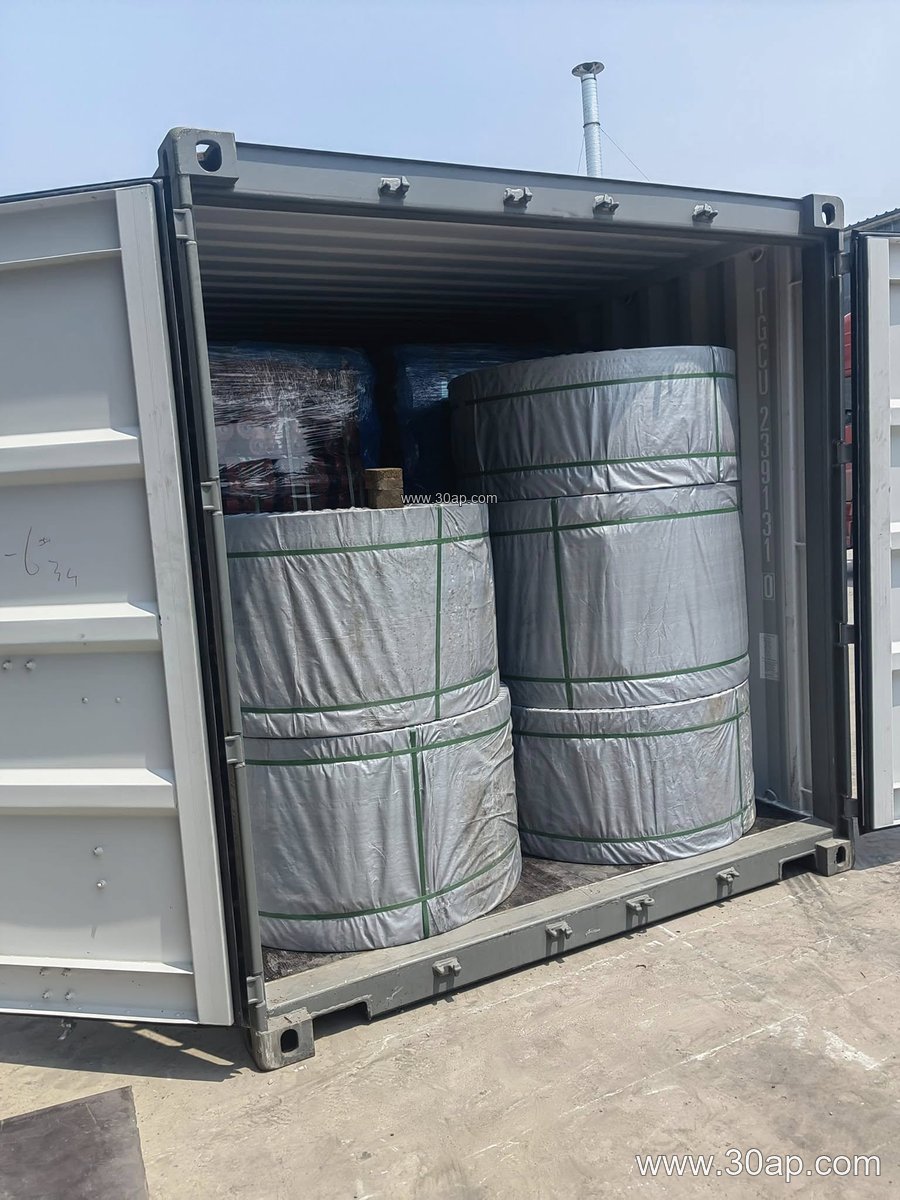
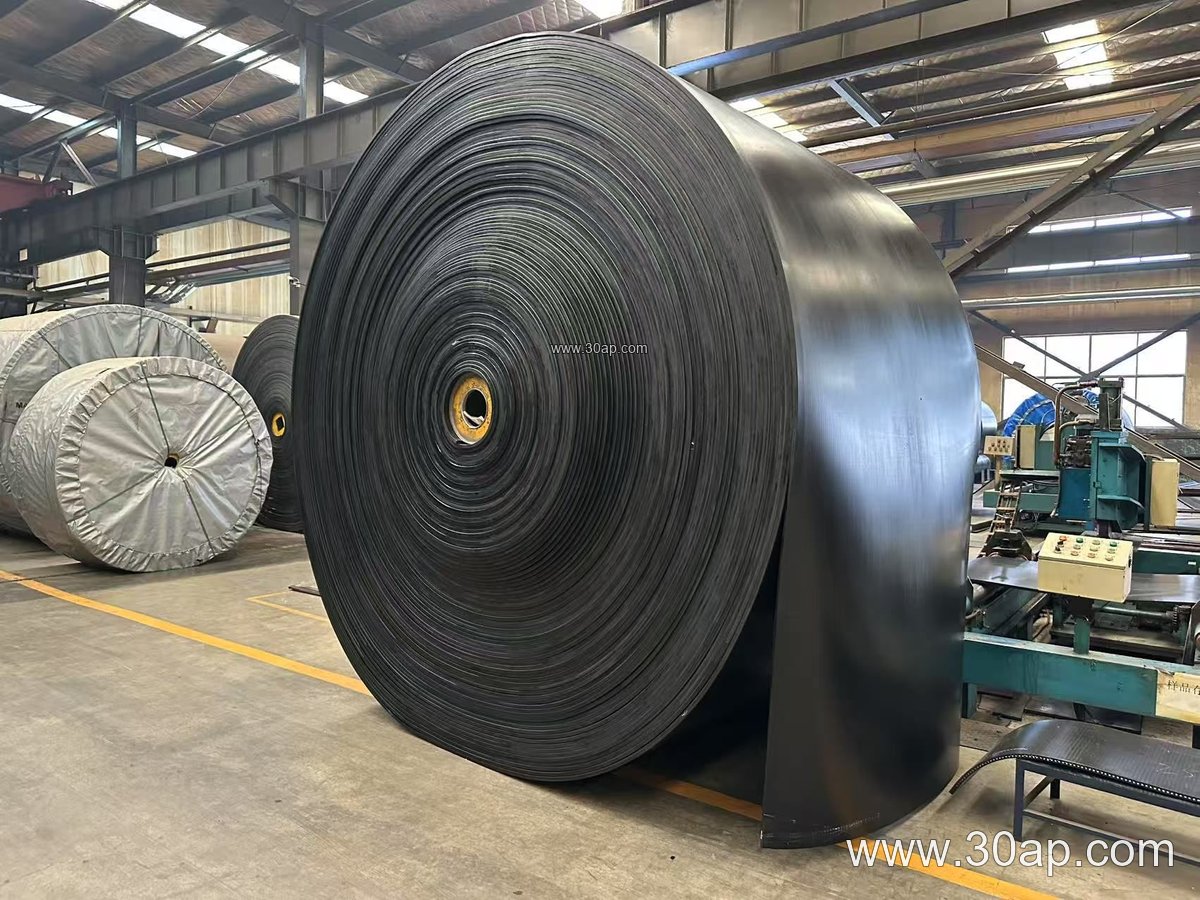
Most fire resistant belts use a fabric core or a steel cord core, wrapped in top and bottom cover rubber. The carcass provides tensile strength; the covers protect the carcass from impact, abrasion and moisture. Flame retardant additives are compounded into the covers, and anti-static agents are added where static discharge is a concern.
Common constructions include EP conveyor belt carcasses with polyester warp and nylon weft, NN conveyor belt carcasses with nylon in both directions, and steel cord conveyor belt carcasses for very long or high-tension runs. In underground coal mining, PVG conveyor belt and PVC conveyor belt constructions are widely used because the whole belt, not only the cover, is formulated for flame resistance.
| Item | Typical reference values |
|---|---|
| Carcass type | EP fabric, NN fabric, steel cord, PVG, PVC |
| Strength grades (fabric) | EP200, EP315, EP400, EP500, EP630, EP800, EP1000, EP1250, EP1600, EP2000 |
| Belt width | B500, B650, B800, B1000, B1200, B1400, B1600, B1800, B2000 |
| Cover thickness | 3+1.5 mm, 4+2 mm, 5+2 mm, 6+2 mm, 8+3 mm |
| Fabric plies | Usually 2 to 6 layers |
These figures are common references, not universal specifications. Actual cover thickness, ply count and strength grade are set by the conveyor design, the material carried and the local safety requirement.
Where It Is Used
The strongest demand comes from underground coal mining conveyor belts and other underground mining conveyor belts, where a flame retardant conveyor belt is part of the site safety concept. It also appears in power plant coal handling, cement plant raw material and clinker lines, and quarry conveyor belts feeding crushers and screens.
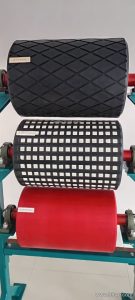
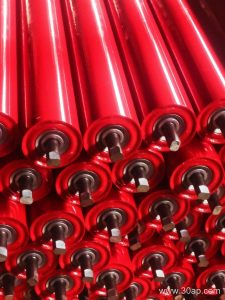
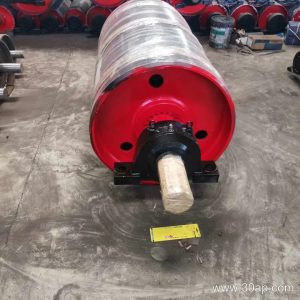
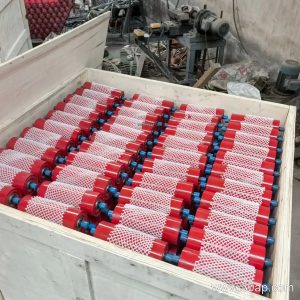
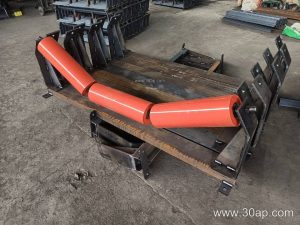
In these plants the belt works alongside idler rollers, conveyor pulleys and conveyor brackets, and fire resistance must be considered together with dust, spillage and heat. A belt carrying hot clinker may need a heat resistant conveyor belt instead, or a combined heat and fire resistant grade. A belt carrying oily scrap may need an oil resistant conveyor belt. The fire property does not replace those choices.
Specification Points Buyers Should Check
- Strength grade and width. Confirm the required tensile grade and belt width against the actual conveyor, not against a catalogue default. A B800 belt and a B1200 belt are different products with different splice designs.
- Carcass type. Fabric core belts suit many medium-duty runs; steel cord belts suit long, high-tension lines. A multi-ply fabric core conveyor belt may be preferred where impact is heavy.
- Cover grade. Fire resistance, abrasion resistance and anti-static performance should be stated together, with the test method named in the purchase specification.
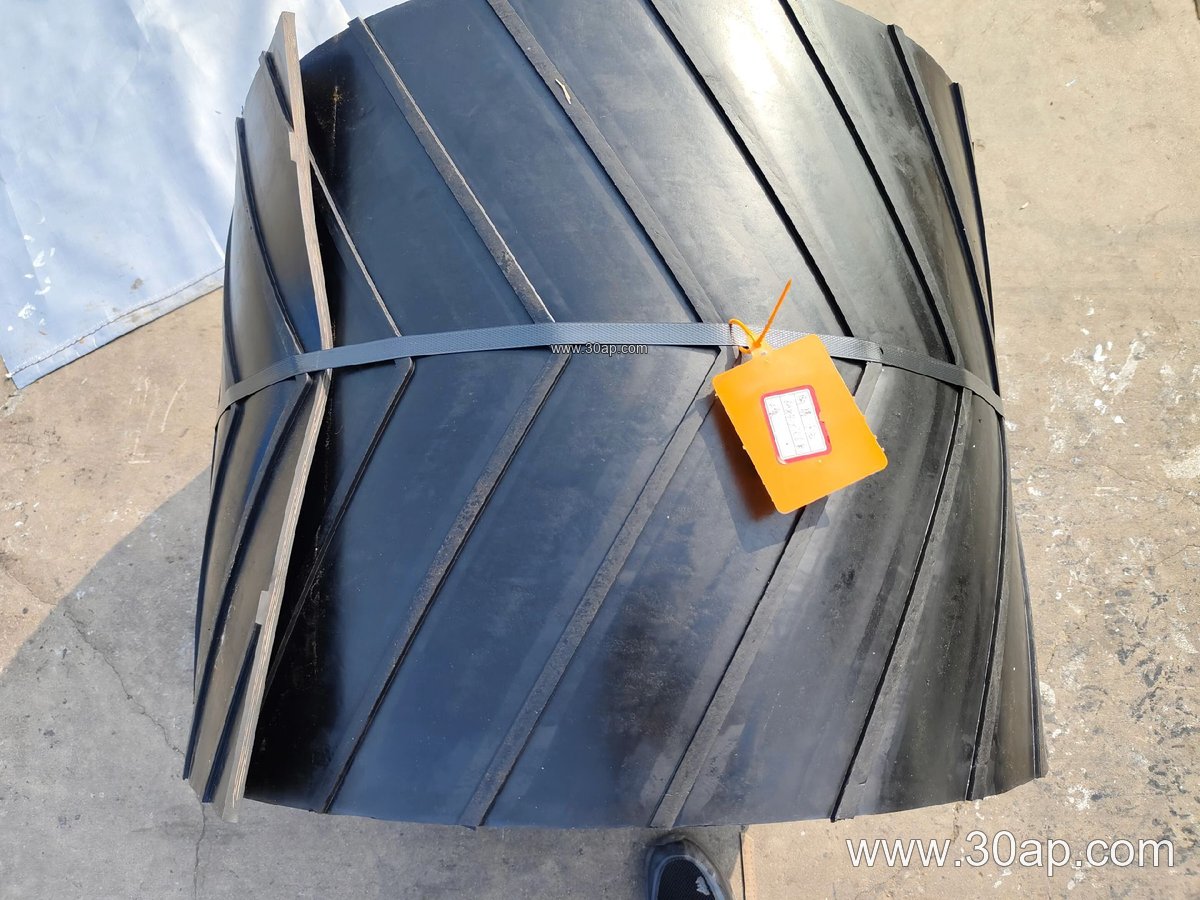
- Surface form. Smooth covers are standard; a chevron conveyor belt or corrugated sidewall conveyor belt may be needed on inclined sections, and the fire rating should be confirmed for that form as well.
- Splicing. The joint is often the weakest point in a fire resistant belt. Ask how the belt will be spliced and whether the splice materials carry the same flame retardant rating.
Installation and Maintenance Notes
Keep the belt aligned and the idler rollers turning freely; a seized roller can generate heat and damage the cover. Check pulley lagging and bend pulleys for buildup that can rub the belt edge. Store spare belt rolls away from heat, oil and direct sunlight, and rotate stock so old rolls are not installed on critical lines.
During operation, watch for cover gouges, exposed carcass and edge wear. A fire resistant conveyor belt that has lost its cover compound may no longer meet its original flame performance, so repair or replace damaged sections promptly. For mining and quarry sites, pair the belt with suitable conveyor brackets and guards to reduce the chance of material trapping and friction heating. More belt, roller and pulley references are available at belt.top if you are comparing options for a project.