What a Take-Up Wheel Pulley Does
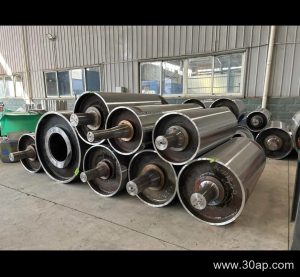
A take-up wheel pulley is a tensioning pulley that maintains proper belt tension on a conveyor system. Often called a take-up pulley or tension pulley, it moves along a guided path to compensate for belt stretch and load variations. Unlike a drive pulley that transmits power or a tail pulley that redirects the belt, this pulley keeps the conveyor belt snug against the driving drum. Without sufficient take-up, a conveyor belt can slip, misalign, or spill material. The take-up wheel pulley is common in mining, coal preparation, cement plants, and power plant coal handling systems where continuous operation demands stable tension.
Construction and Key Components
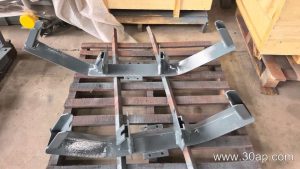
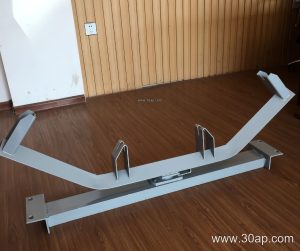
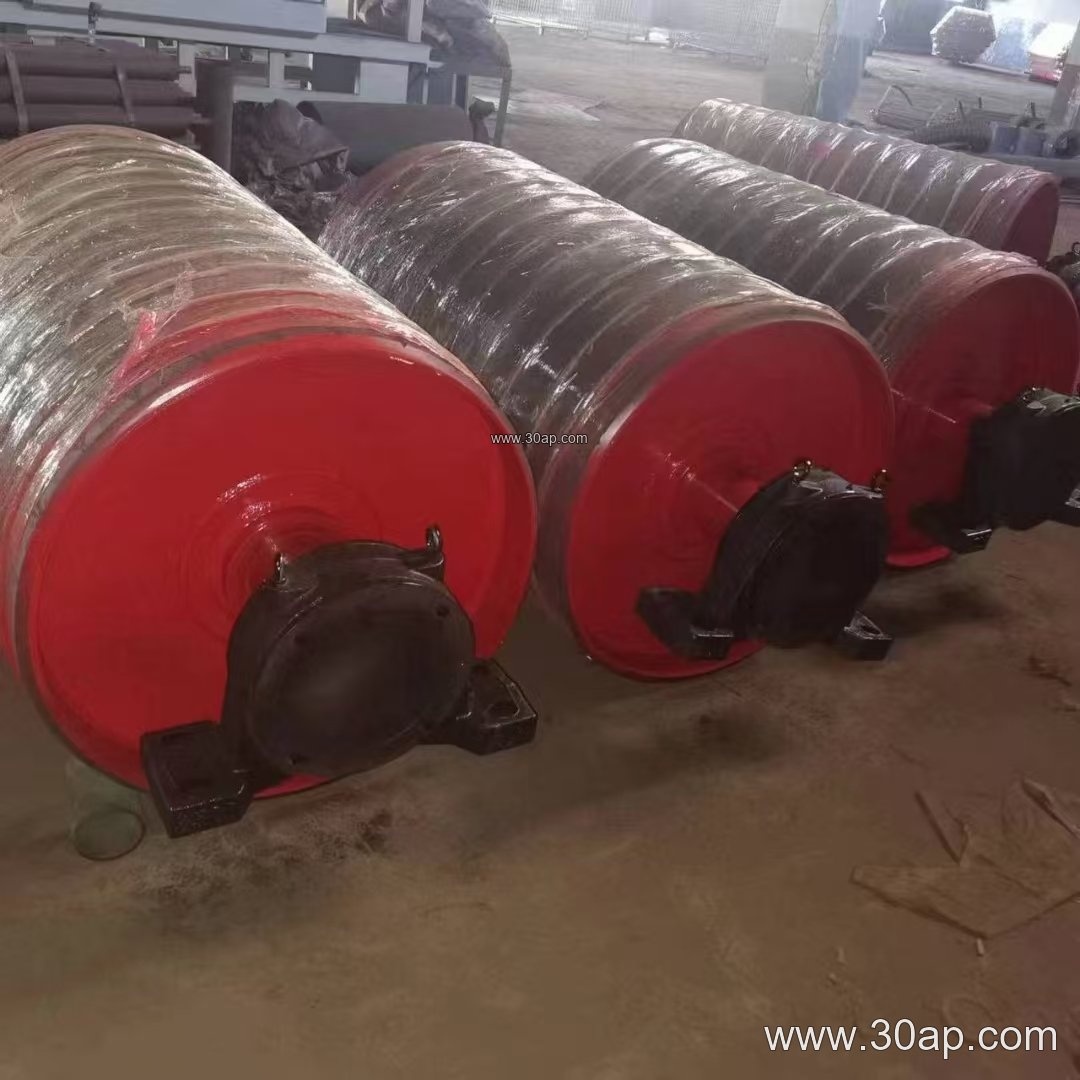
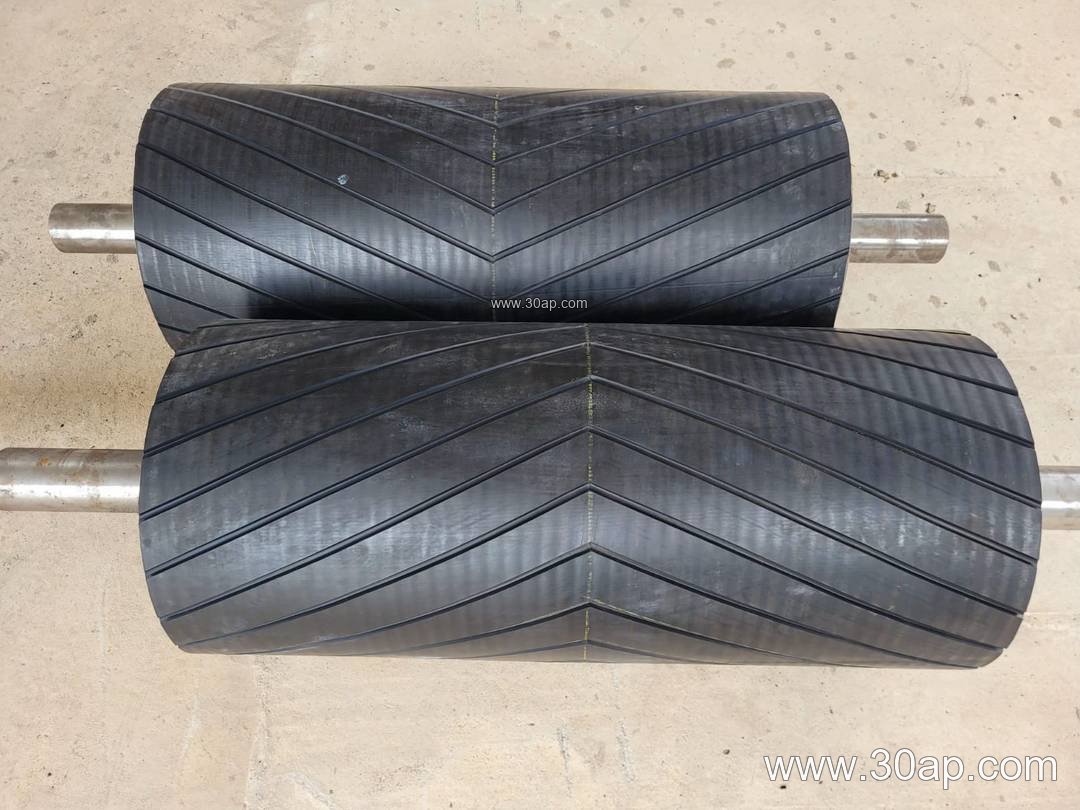
The take-up wheel pulley typically consists of a cylindrical shell, a shaft, bearing housings, and a tensioning mechanism. The shell may be smooth or covered with rubber lagging for grip. Common surface options include plain, cold-bonded rubber, hot vulcanized rubber, diamond grooved, and ceramic lagging. Lagging thickness often ranges from 8 mm to 20 mm depending on the application. The shaft diameter is determined by torque and load, with common sizes such as Ø80, Ø100, Ø120, and Ø140 mm. The pulley is mounted in a frame that allows horizontal or vertical movement, often guided by slide rails or a screw take-up system. For heavy-duty mining conveyor belts, the take-up wheel pulley may be paired with a sturdy conveyor bracket to withstand vibration and shock loads.
Where It Fits in a Conveyor System
This pulley is usually located near the tail end or at a dedicated take-up station. In a typical arrangement, the conveyor belt passes around the take-up wheel pulley and then returns to the tail pulley. In underground coal mining, the take-up pulley helps accommodate the constant flexing of a flame retardant conveyor belt. In a quarry or aggregate line, it keeps an abrasion resistant conveyor belt tracking properly on the idler rollers. The take-up wheel pulley is not a substitute for a bend pulley or a snub pulley; those serve different functions in redirecting the belt. However, in some compact designs, a bend pulley may assist the take-up action, but the primary tensioning role remains with the take-up wheel pulley.
Sizing and Selection Guidelines
Selecting a take-up wheel pulley involves matching the pulley diameter to the belt width and the required tension. There is no fixed rule that a given belt width must use a specific diameter; the design engineer considers belt tension, shaft load, and available space. The table below lists common reference combinations, but these are not mandatory pairings.
| Belt Width (mm) | Common Pulley Diameter (mm) | Typical Shaft Diameter (mm) | Face Width (mm) |
|---|---|---|---|
| B500 | Ø250, Ø315 | Ø60, Ø70 | 600 |
| B650 | Ø315, Ø400 | Ø70, Ø80 | 750 |
| B800 | Ø400, Ø500 | Ø80, Ø90 | 950 |
| B1000 | Ø500, Ø630 | Ø90, Ø100 | 1150 |
| B1200 | Ø630, Ø800 | Ø100, Ø120 | 1400 |
| B1400 | Ø800, Ø1000 | Ø120, Ø140 | 1600 |
Face width is usually slightly larger than the belt width to prevent edge damage. For example, a B1200 conveyor belt often uses a pulley face width around 1400 mm. When selecting lagging, consider the material being conveyed. A coal mining conveyor belt may require a flame retardant conveyor belt and a take-up pulley with anti-static properties. In a cement plant, heat resistant conveyor belt may be used, and the take-up pulley should be positioned away from hot clinker discharge. For iron ore or copper ore, a heavy-duty mining conveyor belt demands a robust take-up wheel pulley with reinforced bearings.
Maintenance and Buyer Considerations
Buyers should verify the take-up travel distance, the method of tensioning (screw, gravity, or hydraulic), and the bearing type. Regular inspection of lagging wear and shaft alignment prevents premature failure. In a sand and gravel plant, dust and grit can accelerate bearing wear, so sealed bearing housings are preferred. The take-up wheel pulley should be compatible with the conveyor bracket and the overall conveyor pulley layout. When replacing a pulley, confirm the shaft diameter and keyway dimensions rather than assuming they match the belt width. For harsh environments such as a quarry conveyor belt or a coal mining conveyor belt, choose a pulley with adequate corrosion protection and wear-resistant lagging. Remember that the take-up wheel pulley works with the conveyor belt, idler roller, and drive pulley to maintain efficient material flow. Proper tensioning reduces belt slippage, extends splice life, and minimizes spillage in bulk material handling operations.