What a Conveyor Support Bracket Does
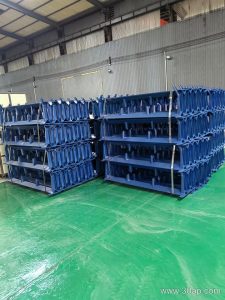
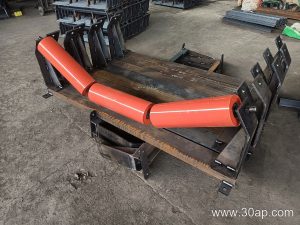
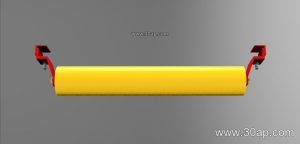
A conveyor support bracket is the structural component that holds idler rollers in the correct position under or above the belt. It connects the roller frame to the main conveyor stringer or beam, keeping the belt profile stable along the entire run. In a quarry or a cement plant, these brackets are often the quiet workhorses of the line, carrying every load from coarse rock to fine powder. The bracket may look simple, but its geometry directly affects belt tracking, load distribution, and how easily maintenance crews can replace worn rollers.
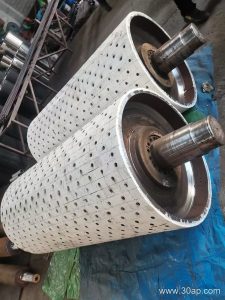
Common names for the same part include roller support bracket and idler mounting bracket. Both refer to the same mounting function. A conveyor bracket for a troughing station is not the same as a return bracket, and neither should be confused with a drive pulley or tail pulley, which serve different roles in the conveyor drive and tension system.
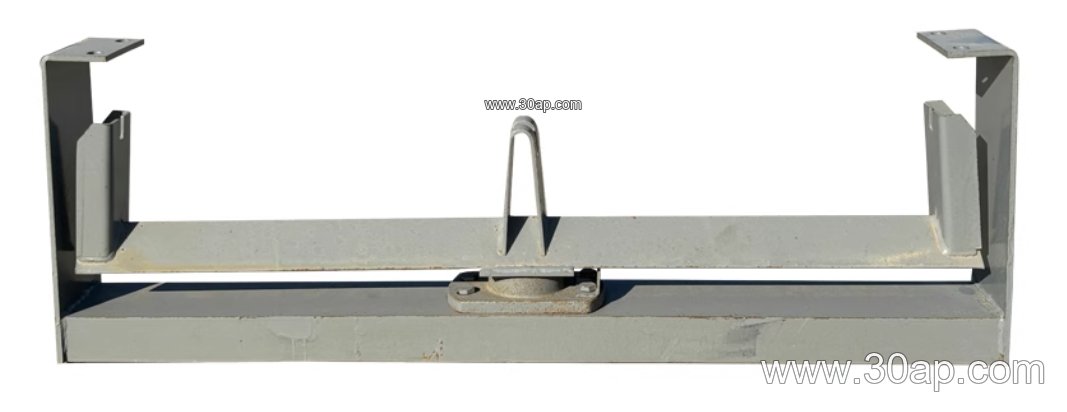
Construction and Materials
Most brackets are fabricated from angle steel, channel steel, or bent steel plate. The choice of material and thickness follows the belt width, the load carried, and the spacing between stations. A heavy-duty mining conveyor belt moving iron ore demands a more robust bracket than a light assembly line in a food plant. Welded brackets usually receive a protective coating, such as paint or galvanizing, to resist dust and moisture in coal mining or port environments.
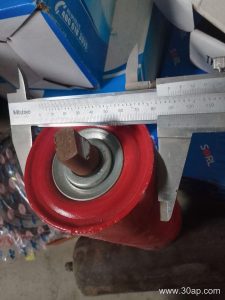
Mounting holes and crossbeam lengths are not universal. They change with belt width, trough angle, and roller diameter, so a bracket for a B800 line will not fit a B1400 structure without redesign. Buyers should always confirm the hole pitch and beam span against the actual conveyor drawing.
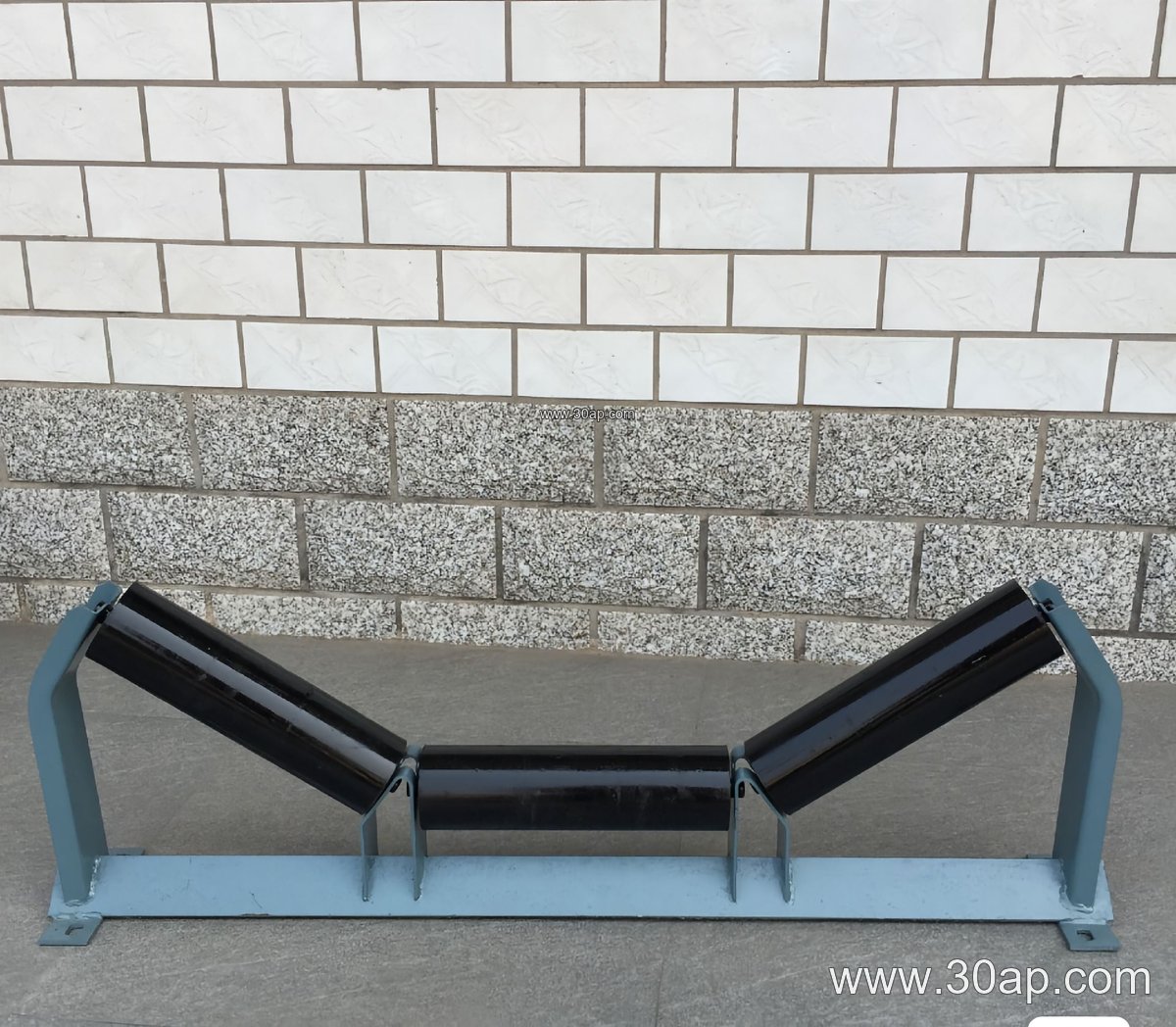
Types and Their Place in the Line
Troughing brackets support the upper carrying side and set the trough angle, commonly 20, 30, 35, or 45 degrees. Adjustable brackets allow the angle to be changed within that range, which helps when a plant handles different materials or wants to fine-tune belt capacity. Return brackets hold the lower run, and V-type return brackets help center the belt on the return side. Impact brackets with cushioning are used below loading points where coarse rock drops onto the belt. Self-aligning brackets correct minor belt drift on long lines.
Only the correct bracket type should be used for each position. A troughing bracket is not a substitute for a return bracket, and a bend pulley is not a replacement for any bracket at all.
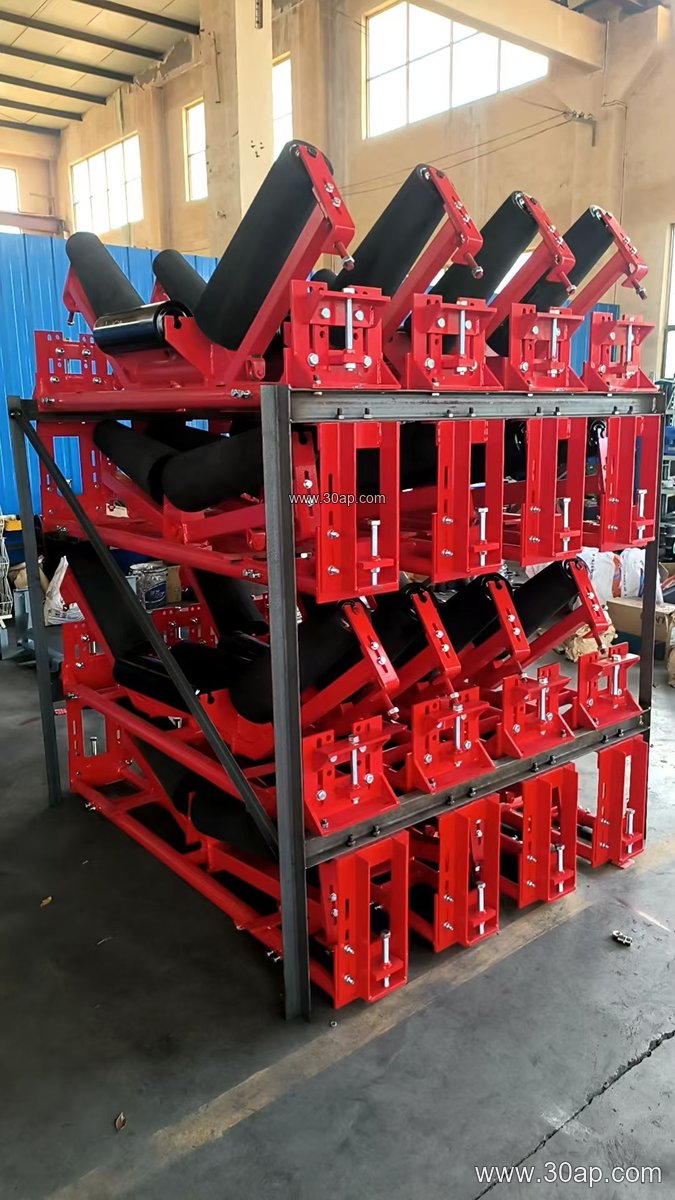
Where These Brackets Are Used
In a limestone quarry, troughing brackets with a 35-degree angle and Ø108 rollers are a familiar sight on primary haulage lines. In a coal preparation plant, flame retardant conveyor belt runs over brackets that must tolerate dust and occasional moisture. Power plant coal handling, steel plant sinter lines, and aggregate crushing circuits all rely on correctly spaced brackets to keep the belt supported. The same part also appears in fertilizer plants and grain silos, where cleanliness and smooth belt travel matter.
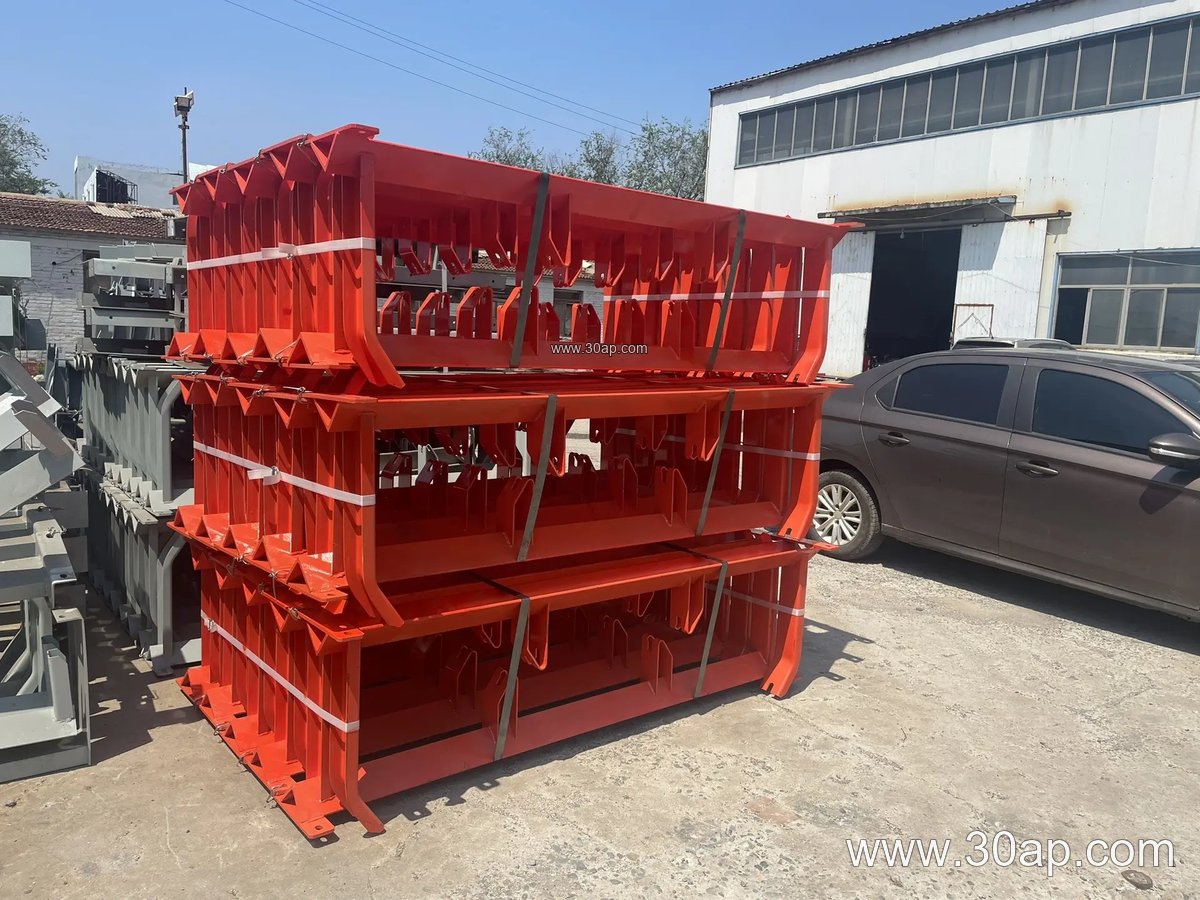
Selection Points for Buyers
Selection starts with the belt width and the roller diameter, because these determine the bracket span and mounting dimensions. A B650 line with 30-degree troughing and Ø89 rollers needs a different bracket from a B1200 line with 45-degree troughing and Ø133 rollers. Neither combination is mandatory, and one belt width can work with more than one roller size depending on load and speed.
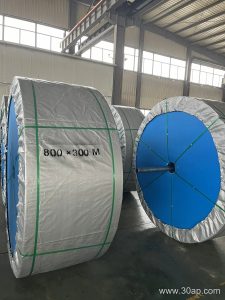
Other factors include the material being conveyed, the environment, and the maintenance plan. Abrasion resistant conveyor belt and heat resistant conveyor belt may be paired with brackets that are easy to remove, so roller changes do not stop the line for long. In underground coal mining, brackets should be checked for corrosion and bolt tightness during every inspection cycle.
Installation and Maintenance Notes
Brackets must be aligned to the centerline of the conveyor. A small offset can cause the belt to run to one side, wearing both the belt edge and the roller. During commissioning, check that all brackets sit at the same height and that the trough angle matches the design. Routine checks should include looking for loose bolts, bent frames, and cracked welds, especially at transfer points where impact loads are highest.
Replacement brackets should match the original mounting pattern or come with an adapter plate. Mixing bracket types along one stringer can create uneven support and shorten roller life. For any conveyor structure, the bracket is a small part with a large influence on reliability, so it deserves the same attention as the belt and the pulleys.