What a Q235 Conveyor Bracket Does on the Line
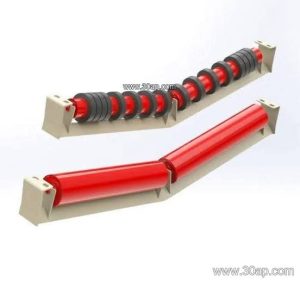
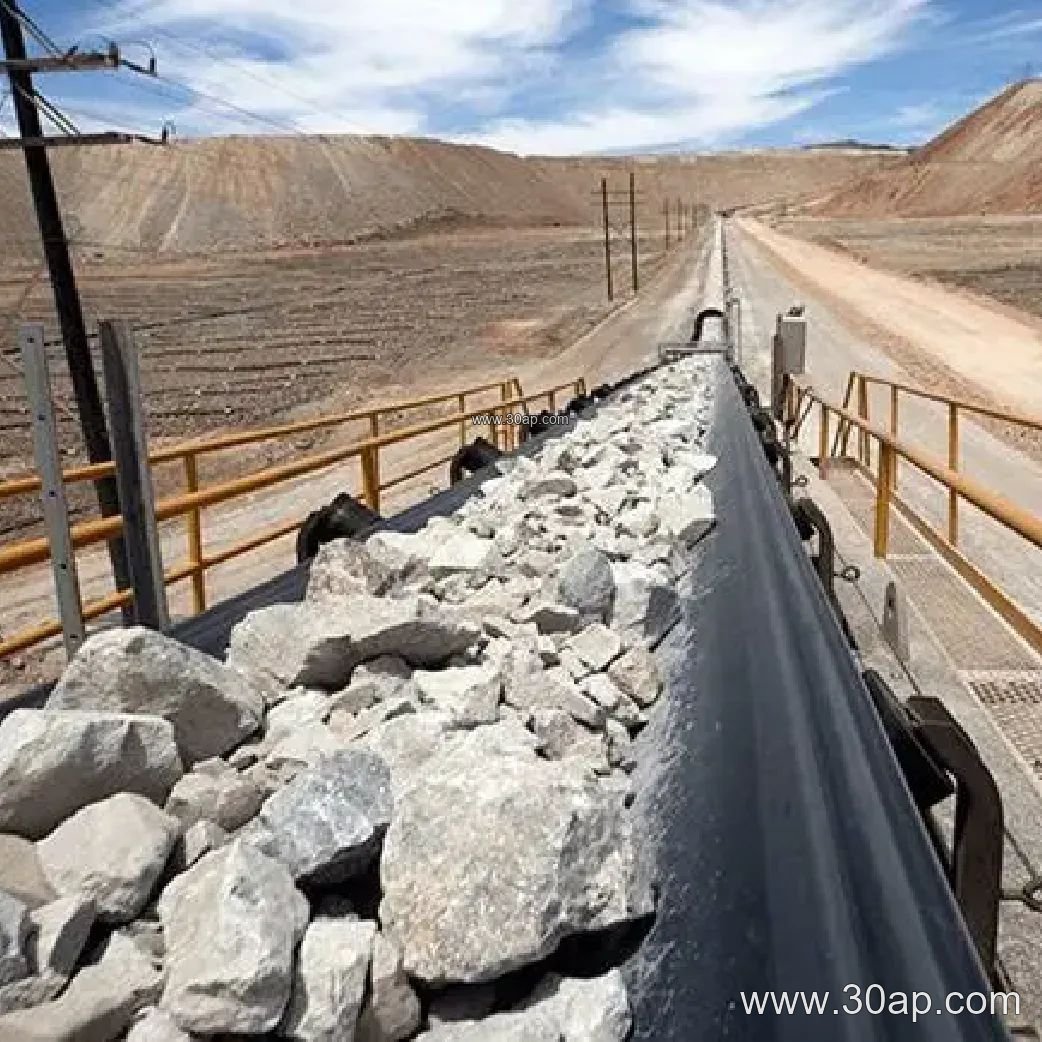
A Q235 conveyor bracket is the steel support that holds idler rollers in the right position under or above a conveyor belt. It is the quiet workhorse of a belt conveyor: the belt carries the load, the rollers carry the belt, and the bracket carries the rollers. In a limestone quarry or a cement plant, dozens of these brackets line each conveyor, so small differences in alignment and strength add up over the whole run. The Q235 grade refers to a common structural carbon steel with a nominal yield strength around 235 MPa, which makes it a practical, weldable and economical choice for general conveyor framing.
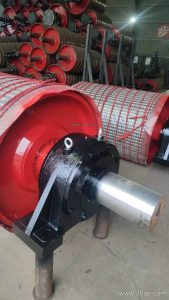
The same item is also called a Q235 steel conveyor idler bracket or a Q235 belt conveyor roller support. Those names describe the same product; they do not refer to a different component. For a heavier head section, a conveyor pulley does a different job entirely, and a drive pulley, tail pulley or bend pulley cannot be substituted for a bracket.
How the Bracket Is Built
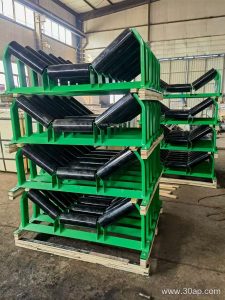
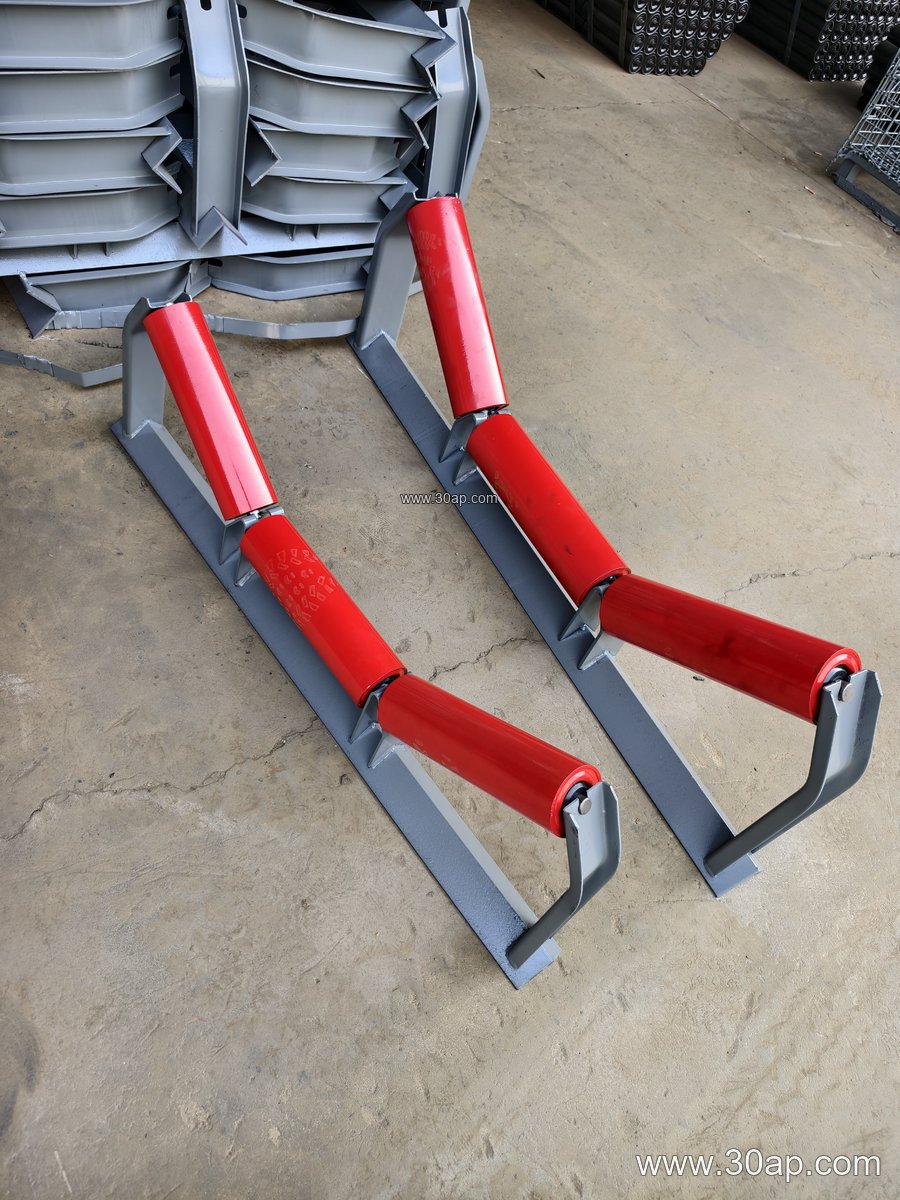
Most brackets are fabricated from angle steel, channel steel, or folded steel plate. The frame is cut, drilled, and welded into a shape that matches the trough angle and the roller spacing. Bolt slots or holes are positioned so the idler roller sits at the intended height and angle. Because hole spacing and crossbeam length change with belt width and trough angle, these dimensions are usually made to order rather than fixed.
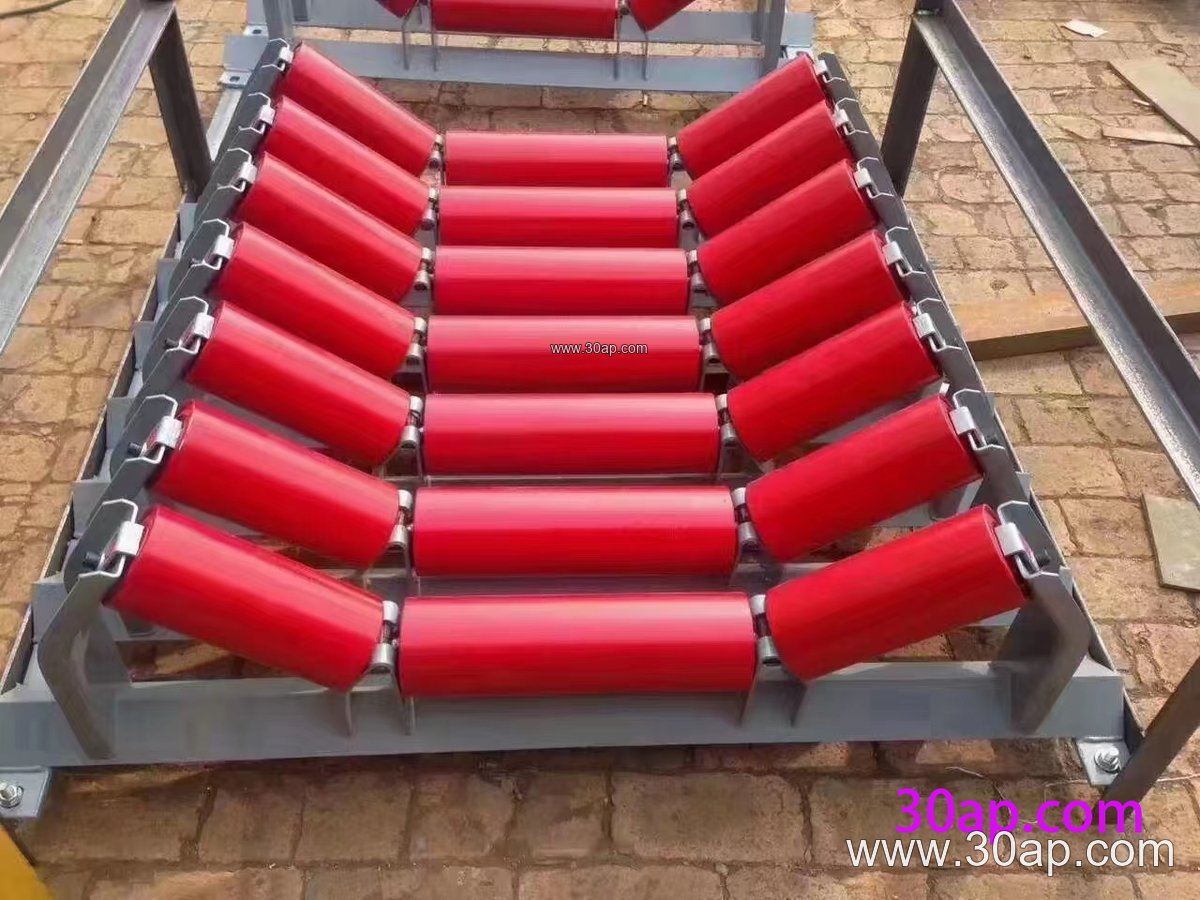
- Troughing bracket: supports three rollers in a trough shape on the carrying side.
- Transition bracket: eases the belt from flat to troughed near the tail.
- Return bracket: holds flat or V-shaped return rollers under the belt.
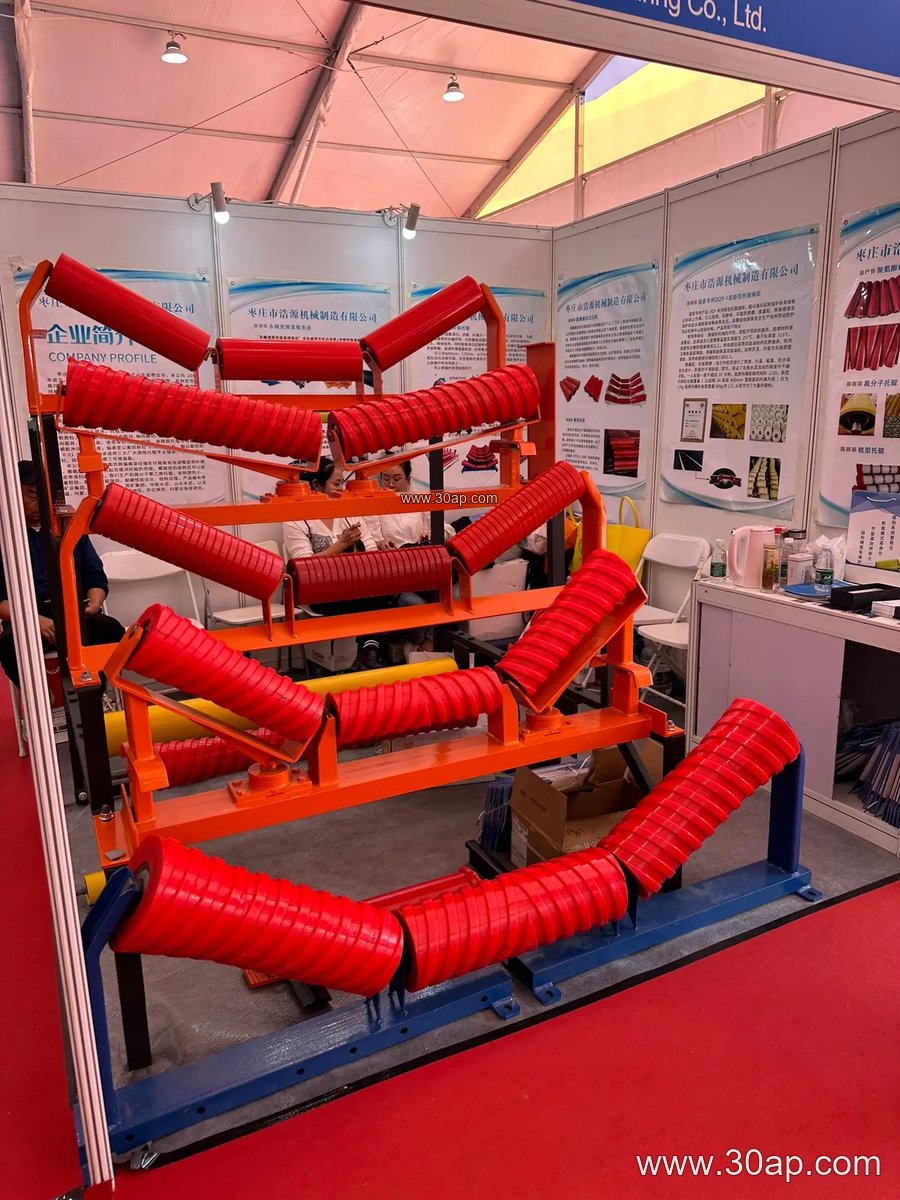
- Impact bracket: sits under loading points and carries buffer rollers.
- Self-aligning bracket: allows slight movement to correct belt drift.
- Adjustable bracket: lets the trough angle be changed on site.
Adjustable designs commonly cover 20, 30, 35 and 45 degree trough angles, while forward-tilted brackets often use about 1.5 to 2 degrees of tilt to help centering. Common roller diameters include Ø89, Ø108, Ø133, Ø159 and Ø194 mm, matched to belt width and load rather than to a single fixed rule.
Sizing Notes for Buyers
Belt width is the first thing to confirm. A bracket for a B650 belt is not the same as one for a B1200 or B1800 frame, and the crossbeam, mounting holes and roller positions all follow the design. The table below shows common reference combinations; treat them as examples, not as mandatory pairings.
| Belt Width | Typical Trough Angle | Common Roller Diameter | Typical Use |
|---|---|---|---|
| B500 | 20-30 degrees | Ø89 mm | Light aggregate lines |
| B650 | 30 degrees | Ø89-Ø108 mm | Sand and gravel conveyors |
| B800 | 35 degrees | Ø108 mm | General bulk handling |
| B1000 | 35-45 degrees | Ø108-Ø133 mm | Cement and power plant belts |
| B1200 | 35-45 degrees | Ø133 mm | Coal and ore transport |
| B1400 | 35-45 degrees | Ø133-Ø159 mm | Heavy mining service |
| B1600-B2000 | 35-45 degrees | Ø159-Ø194 mm | Large tonnage systems |
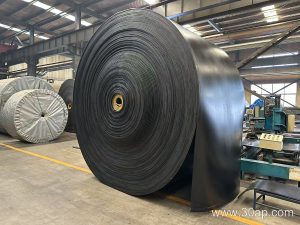
A 1200mm wide conveyor belt may run with a 35 degree trough and Ø133 rollers in one plant, while a similar width in another plant uses a 45 degree trough and a different roller. The bracket must match the actual design, not a catalog guess. Where a heavy-duty mining conveyor belt or a steel cord conveyor belt carries high tension, the frame stiffness and bolt grade deserve extra attention.
Where These Brackets Are Used
You will find Q235 conveyor brackets in coal preparation plants, power station coal yards, and aggregate crushing and screening lines. They also appear in fertilizer handling, grain silos, and tunnel spoil removal. In a typical cement plant, troughing brackets support the carrying run while return brackets hold the belt on the way back. Paired with a rubber conveyor belt, an EP conveyor belt, or a flame retardant conveyor belt in underground service, the bracket keeps the belt tracking smoothly and reduces spillage.
For abrasive duty, such as iron ore or quarry rock, a high abrasion resistant conveyor belt protects the belt, but it is the bracket and idler roller alignment that protect the belt edges. In hot clinker or sinter areas, a heat resistant conveyor belt may be used, and the bracket should be checked for thermal expansion at the joints.
Installation and Maintenance Pointers
Set brackets square to the conveyor centerline and at a consistent height, or the belt will drift and load unevenly. Check bolt torque after the first few days of running, since vibration loosens fittings. Inspect for bent frames, worn slots and corrosion, especially in wash-down or coastal sites. A slightly bent bracket can tilt a roller and wear one edge of the belt long before the roller itself fails. Replacing a damaged bracket early is usually cheaper than replacing a section of conveyor belt.
Buyers should confirm belt width, trough angle, roller diameter, mounting hole pattern, material thickness and surface treatment before ordering. Ask for the drawing, not just a model name, because two brackets for the same belt width can differ in hole spacing. With clear specifications, a Q235 conveyor bracket is a straightforward, long-serving part of any bulk material conveyor system.