What an Impact Idler Bracket Does
An impact idler bracket is the supporting frame that holds impact idler rollers directly beneath the loading point of a conveyor belt. Its job is simple to describe and demanding in practice: absorb the repeated shock of falling material, keep the rollers at the correct height and trough angle, and protect both the belt and the surrounding conveyor structure. In a quarry, a coal preparation plant, or a crushing and screening line, the first few metres after the feed chute take more punishment than almost any other part of the conveyor.
Unlike a standard carrying bracket, which mainly supports a steady load, this bracket is designed around dynamic force. Lumps of ore, rock, or clinker hit the belt and transfer energy into the rollers and frame. The bracket must resist bending, vibration, and loosening of fasteners without letting the belt sag into the structure below.
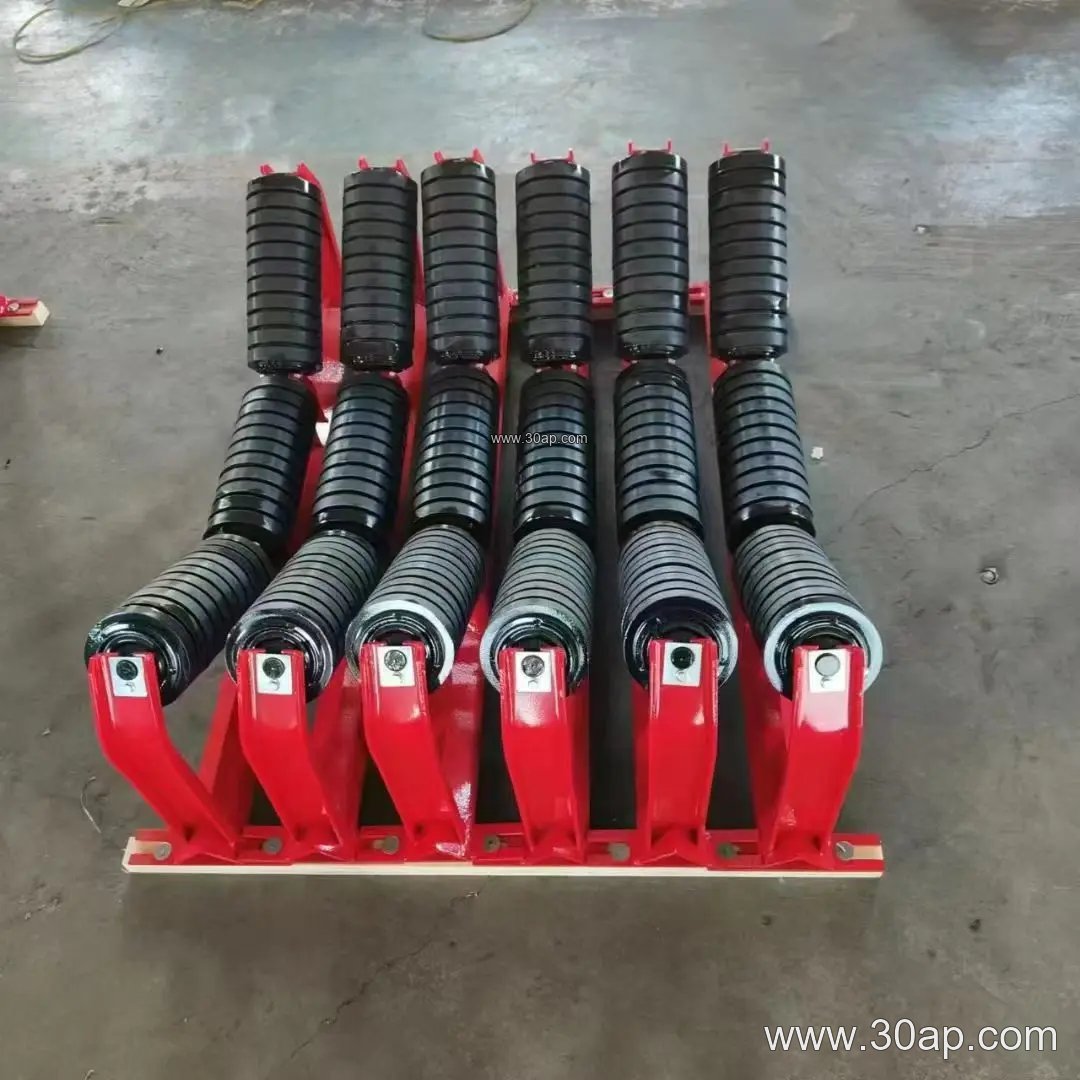
Construction and Mounting Details
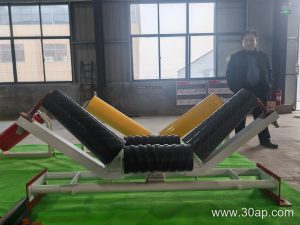
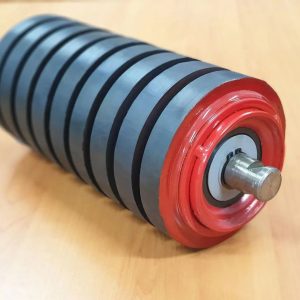
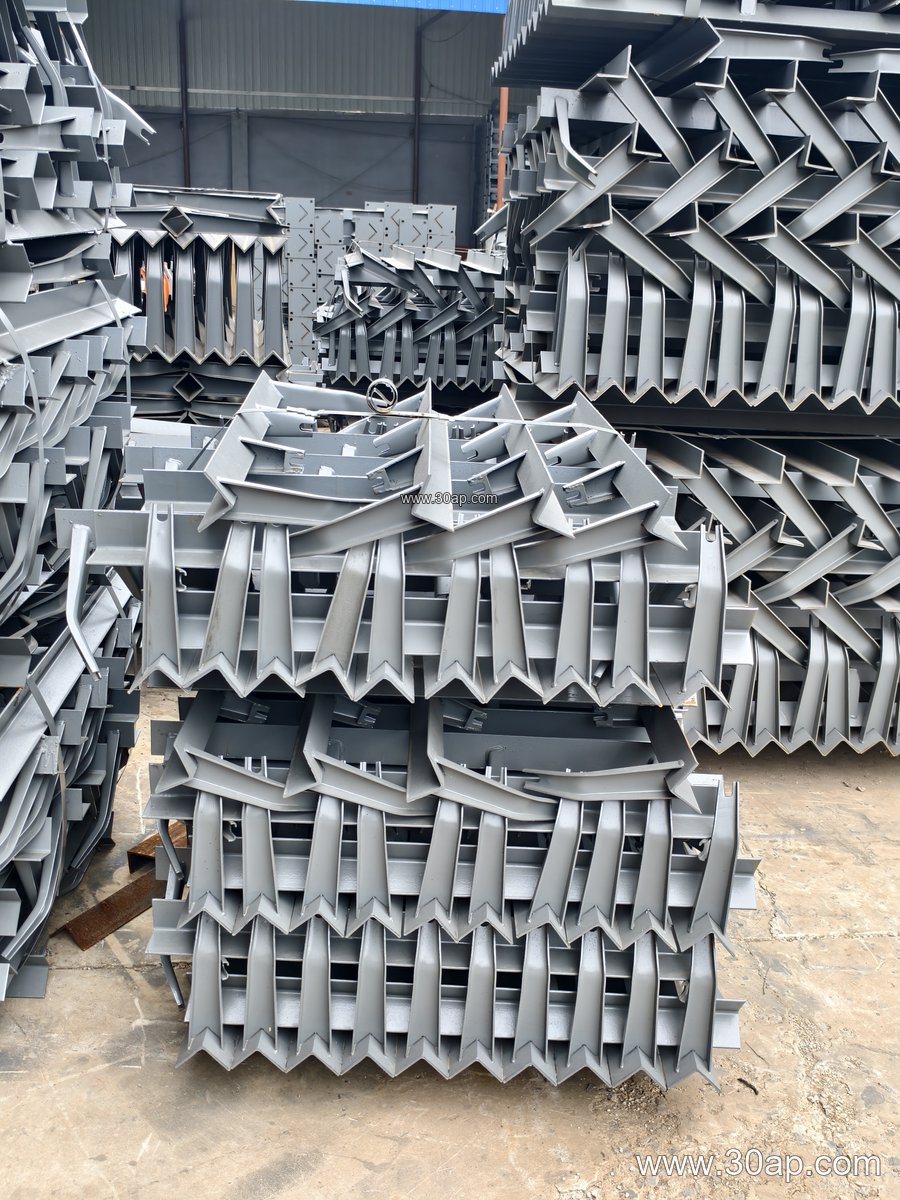
Most impact idler brackets are fabricated from angle steel, channel steel, or folded steel plate. The frame is welded or bolted into a rigid assembly that carries two or three impact rollers, often with rubber rings or cushioning discs. A cross beam spans the conveyor width, and mounting slots or holes connect the bracket to the conveyor stringers. Installation height is normally set so the belt line matches the adjacent carrying idlers.
Key build points a buyer should check include weld quality, hole spacing, surface treatment, and the fit between the bracket and the roller shaft. The mounting hole distance and cross beam length change with belt width and trough angle, so they should be confirmed against the conveyor drawing rather than assumed. Typical reference values look like this:
- Belt width range: B500, B650, B800, B1000, B1200, B1400, B1600, B1800, B2000
- Trough angle: 20 degrees, 30 degrees, 35 degrees, 45 degrees
- Roller diameter: 89 mm, 108 mm, 133 mm, 159 mm, 194 mm
- Example combinations: B800 with 35 degrees and 108 mm rollers; B1200 with 45 degrees and 133 mm rollers; B650 with 30 degrees and 89 mm rollers
These are common references only. A wide, heavy-duty conveyor may use a reinforced bracket with a larger roller, while a smaller sand line may need only a compact frame. The bracket and the idler roller should be selected together.
Where It Fits in the Conveyor
The bracket sits at the transfer point, usually under a chute or between the feed hopper and the first standard carrying set. In a limestone mine or an iron ore plant, the impact zone may be short but the loads are severe. In a power plant coal handling system, the material is lighter but the flow is continuous, so bracket alignment and roller rotation matter just as much. A cement plant handling clinker needs a frame that tolerates heat and abrasion, while a fertilizer or grain silo application may put more emphasis on clean running and corrosion protection.
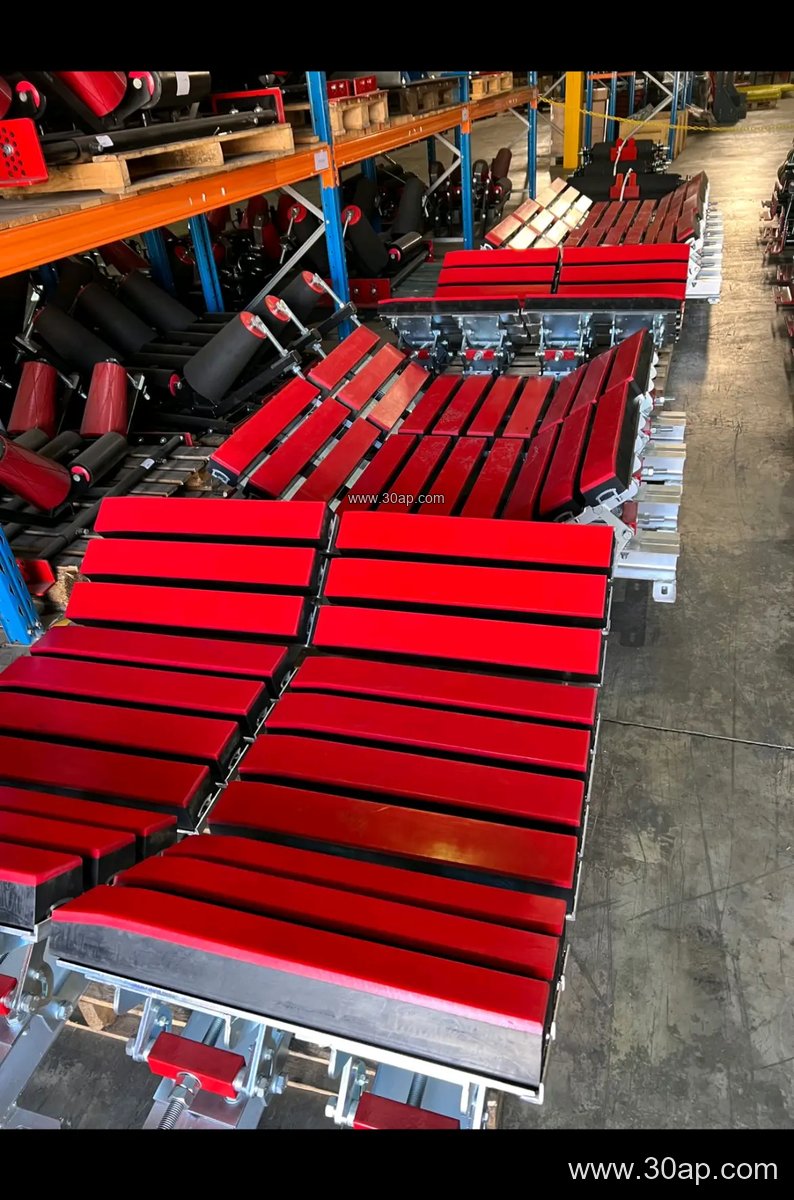
It is also worth remembering that the impact bracket is not a substitute for a bend pulley or a drive pulley. Those components change belt direction or transmit power; the bracket only supports the belt at the load point. The same applies to a tail pulley or a conveyor pulley in general. Each has its own function, and mixing them up leads to the wrong selection.
Selection Advice for Buyers
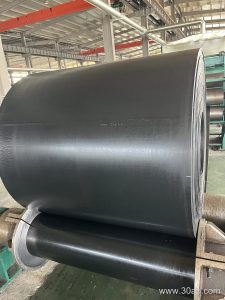
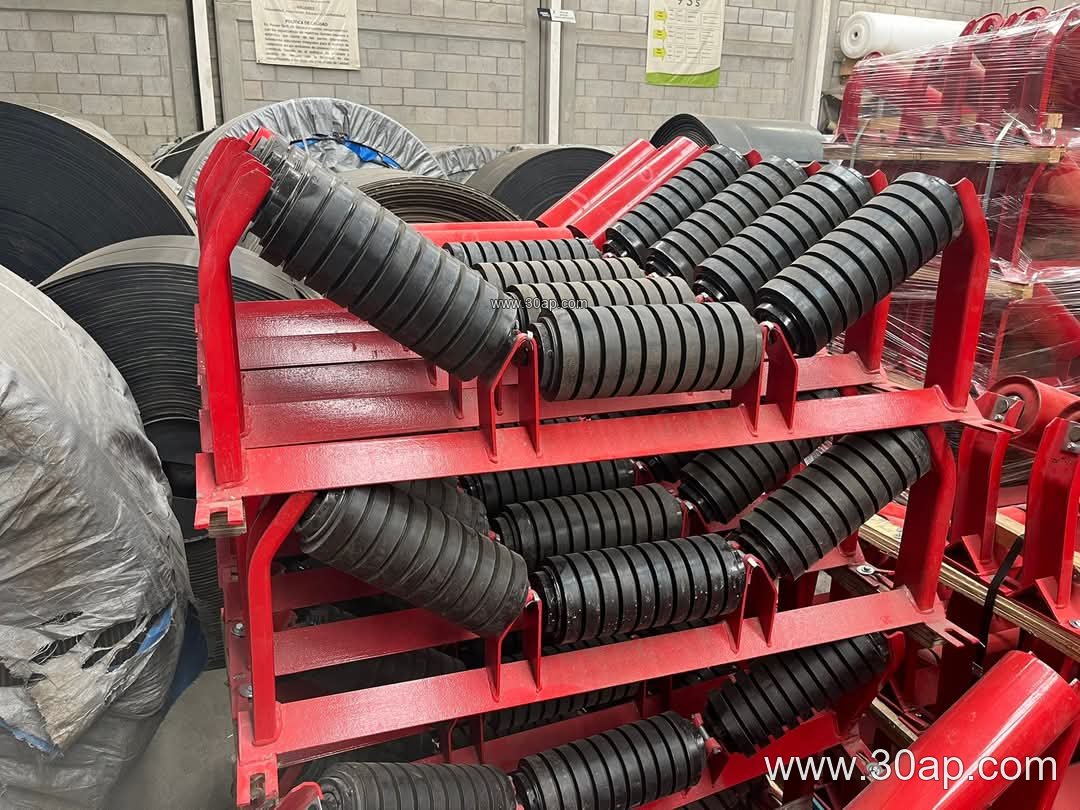
Start with the belt width, the trough angle, and the roller diameter, then add the material lump size and drop height. A high drop with large lumps calls for a more robust impact frame and cushioning rollers. Check that the bracket matches the conveyor stringer spacing and that the mounting holes line up with the existing or planned structure. If the conveyor uses an abrasion resistant conveyor belt or a heavy-duty mining conveyor belt, the bracket should be strong enough to keep the belt line stable under that extra load.
For adjustable frames, confirm the range of trough angles before ordering. Fixed brackets are simpler and usually stiffer, while adjustable brackets help when the conveyor profile or material flow changes. Either way, ask for a dimensional drawing and confirm the roller shaft size, since the shaft diameter is set by the roller design, not by belt width alone.
Maintenance and Inspection
Inspect the impact idler bracket after the first weeks of operation, when fasteners tend to settle. Look for bent cross beams, cracked welds, elongated mounting holes, and rollers that no longer turn freely. Material buildup under the belt can lift the belt off the rollers and overload the frame, so keep the loading zone clean. Replacing worn cushioning rollers early is cheaper than repairing a damaged belt or a deformed bracket.
Used together with quality conveyor belting such as EP conveyor belt or steel cord conveyor belt, a well-matched impact bracket keeps the loading zone stable and extends the service life of the whole conveyor line.