What an Impact Idler Set Does at the Load Point
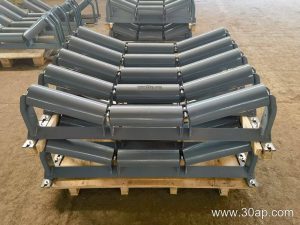
An impact idler set is the cushioning group of idler rollers installed directly beneath the loading zone of a conveyor belt. Its job is to absorb the kinetic energy of falling material before that energy reaches the belt carcass. In a quarry, limestone mine or primary crushing station, lumps of rock can drop more than a metre onto the belt; without a cushioning group, the cover would be cut and the carcass bruised within weeks. The set usually consists of three rolls arranged in a trough, mounted in a frame that fits the same stringers as the standard carrying idlers. The difference is in the roll surface and the roll body, not in the general position along the conveyor.
The same product is often called an impact roller set or a buffer idler set, and those names describe the same assembly. It is not a drive pulley, not a tail pulley and not a bend pulley; those are conveyor pulleys that transmit or redirect belt tension, while the impact idler set only supports and protects the belt.
Construction Details That Matter
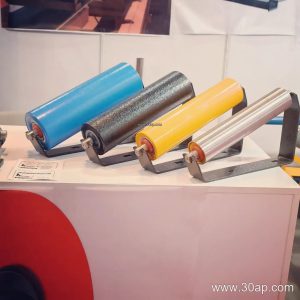
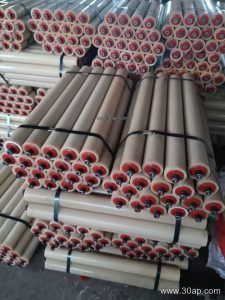
A typical impact idler set uses a steel tube body with a thick rubber ring or a set of rubber discs fitted over it. The rubber rings are spaced along the roll so that the belt is supported on a compliant surface rather than on bare steel. Some designs use solid rubber tyres, others use laminated rubber rings clamped between end plates. The bearing housing is sealed against dust, because loading zones are the dirtiest part of any conveyor.
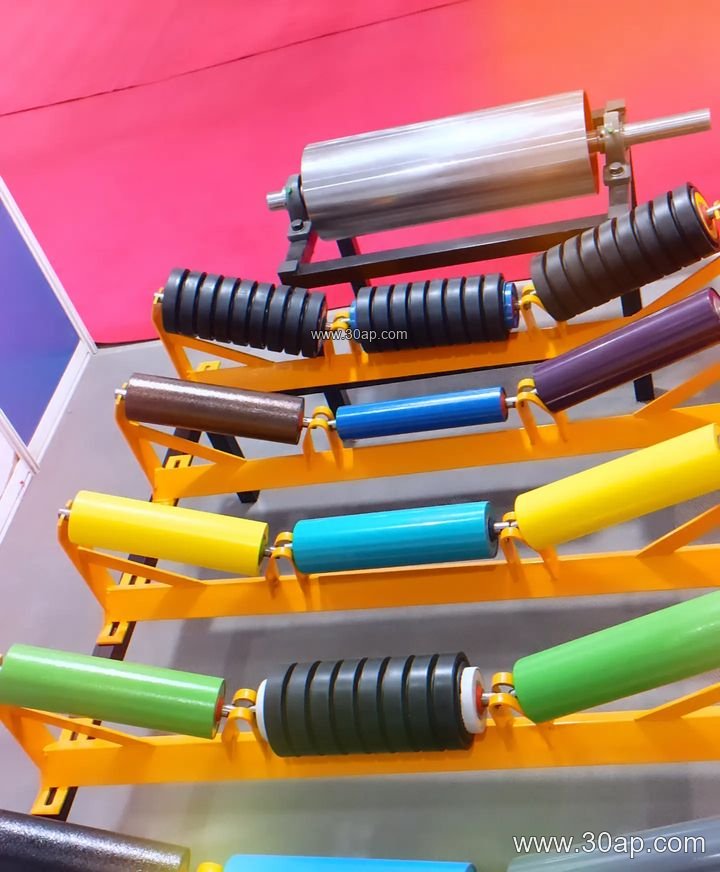
Common roll diameters for this group include Ø89, Ø108, Ø127, Ø133 and Ø159 mm; heavier stations may use Ø178 or Ø194 mm. Bearings are usually 6205, 6305 or 6306 for medium rolls and 6308 or 6310 for larger ones. The table below gives reference values only; final selection follows the belt width, the drop height and the lump size.
| Reference item | Common range |
|---|---|
| Roll diameter | Ø89 to Ø194 mm |
| Belt width | B500 to B2000 mm |
| Trough angle | 20°, 30°, 35°, 45° |
| Roll surface | Rubber ring, rubber disc, steel tube |
| Bearing | 6205, 6305, 6306, 6308, 6310 |
For a three-roll trough set, the roll length changes with belt width and trough angle. Common examples are about 250 mm for B650, 315 mm for B800, 380 mm for B1000, 465 mm for B1200 and 530 mm for B1400. The centre roll and the side rolls can differ, and these figures are not a fixed match to any one belt width.
Where the Set Is Used
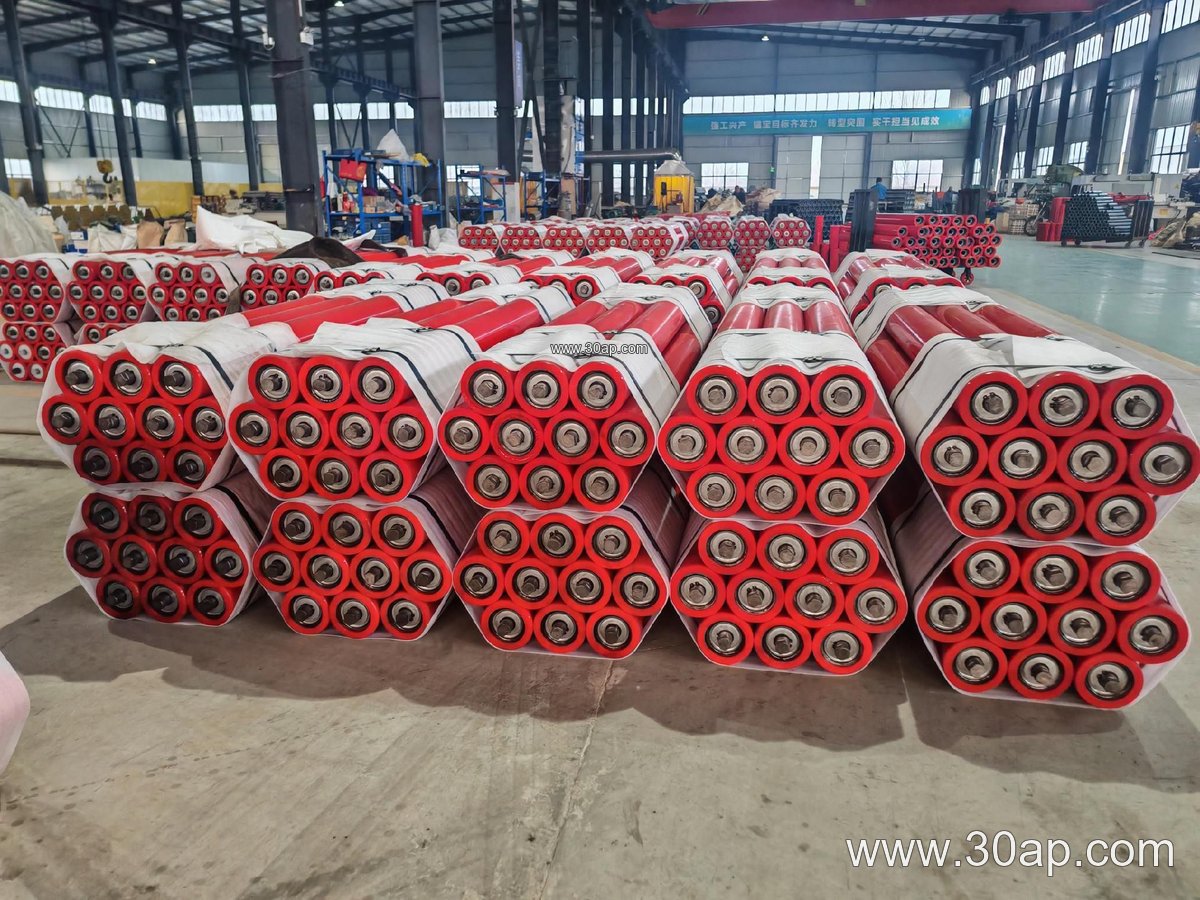
The most common locations are the transfer points of a crusher conveyor belt, the discharge of a screening plant and the loading chute of a bulk material conveyor belt. In a coal mining conveyor belt system, the set is placed under the transfer chute where coal drops from the previous stage. In a cement plant it sits below the clinker or limestone feed point. A power plant coal handling line uses the same arrangement at the tripper and at each transfer tower. The set is also found in steel plant sinter lines and in port ship loading conveyors where the drop height is significant.
Because the rubber rings deform under impact, the set also reduces bounce and spillage at the load point, which keeps the belt centred and reduces edge damage. This is why the group is often specified together with a skirted conveyor belt or a corrugated sidewall conveyor belt in transfer chutes that need material containment.
How to Specify the Right Group
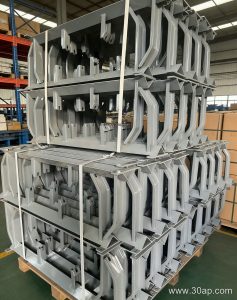
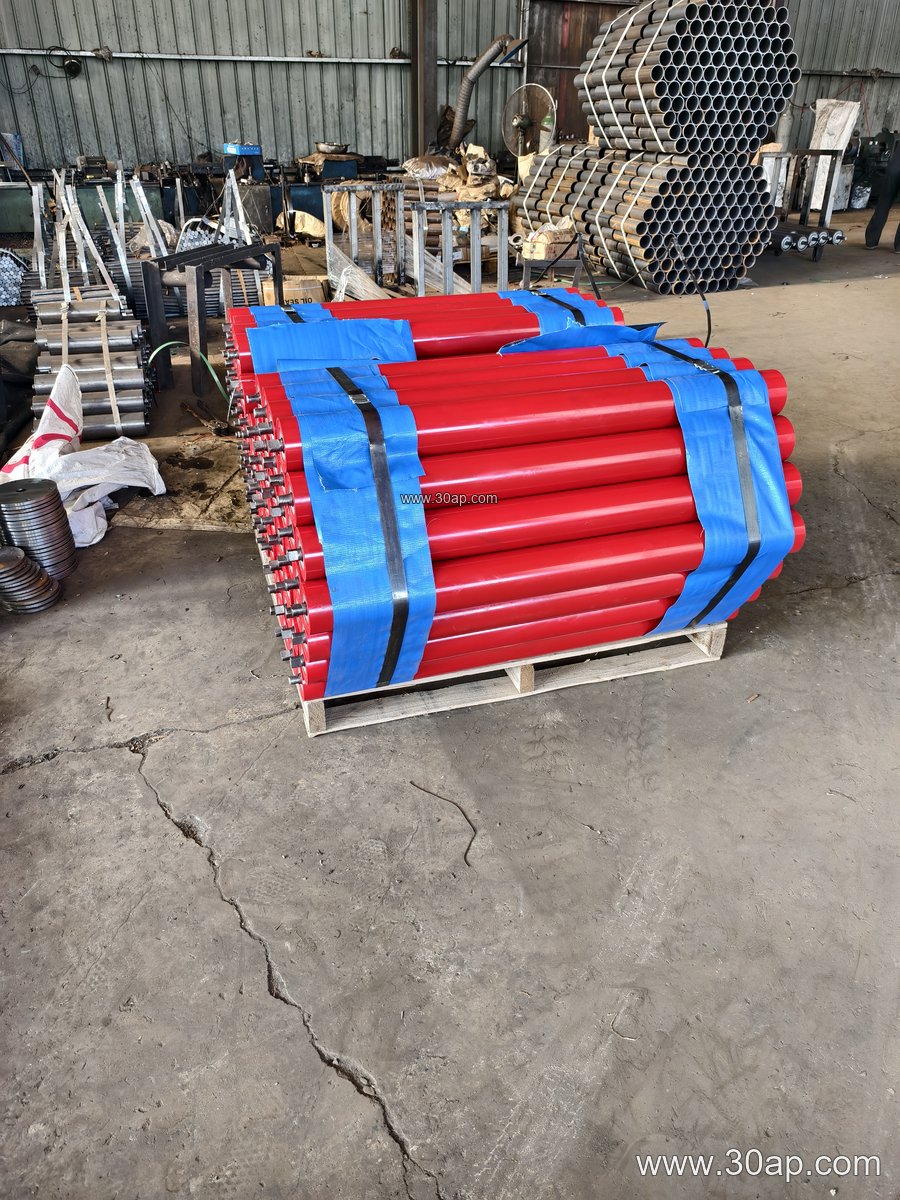
Start with the belt width and the trough angle of the existing carrying idlers, because the impact set must match the same frame and stringer spacing. Then consider the maximum lump size and the drop height. A high drop with large rock calls for a larger roll diameter and thicker rubber rings; a modest drop on a fine aggregate line can use a lighter ring. Check the shaft diameter and the fixing centres against the conveyor bracket so the frame bolts on without modification.
- Confirm belt width, trough angle and frame fixing centres.
- State the maximum lump size and the drop height.
- Choose roll diameter and rubber ring thickness together, not separately.
- Check the bearing size and sealing class for dust and water exposure.
- Decide whether the set needs a rubber ring surface or a plain steel surface for light duty.
Abrasion resistant conveyor belt grades are common above the impact set in hard rock operations, while flame retardant conveyor belt and fire resistant conveyor belt grades appear in coal and power applications. The idler set itself does not change the belt grade, but the two are selected as a pair for the same duty.
Installation and Maintenance Notes
Mount the impact idler set so the rubber rings sit slightly higher than the adjacent carrying idlers, allowing the belt to rest on the cushion without a step. Keep the gap between rolls small enough that the belt cannot sag between them under a lump. Inspect the rings for cuts and looseness during scheduled shutdowns, and check that the rolls still turn freely; a seized roll will wear a flat spot into the rubber and transfer shock back to the belt. Replacing worn rings early is cheaper than replacing a damaged belt section.
For a full conveyor line, the impact idler set works alongside the carrying idlers, return idlers, conveyor pulleys and conveyor bracket assemblies. Matching the set to the belt width and the loading conditions is the practical way to protect a conveyor belt investment in mining, quarrying, cement and power generation.