What a Drive Lagged Pulley Does
A drive lagged pulley is the powered head pulley of a belt conveyor, fitted with a rubber or ceramic lagging layer on its shell to raise friction between the pulley face and the conveyor belt. In a quarry, limestone mine, or aggregate crushing line, the drive lagged pulley is the point where motor torque enters the belt loop; without sufficient grip, the belt slips, the pulley shell wears quickly, and throughput drops. The lagging is the working surface that converts rotary motion into belt travel, so its condition matters as much as the pulley’s mechanical strength.
Buyers often see this component described simply as a lagged head pulley or a rubber-lagged drive drum. Those are accurate equivalents for the same product. It should not be confused with a tail pulley, which turns freely at the loading end, or a bend pulley, which only redirects belt direction without transmitting drive power.
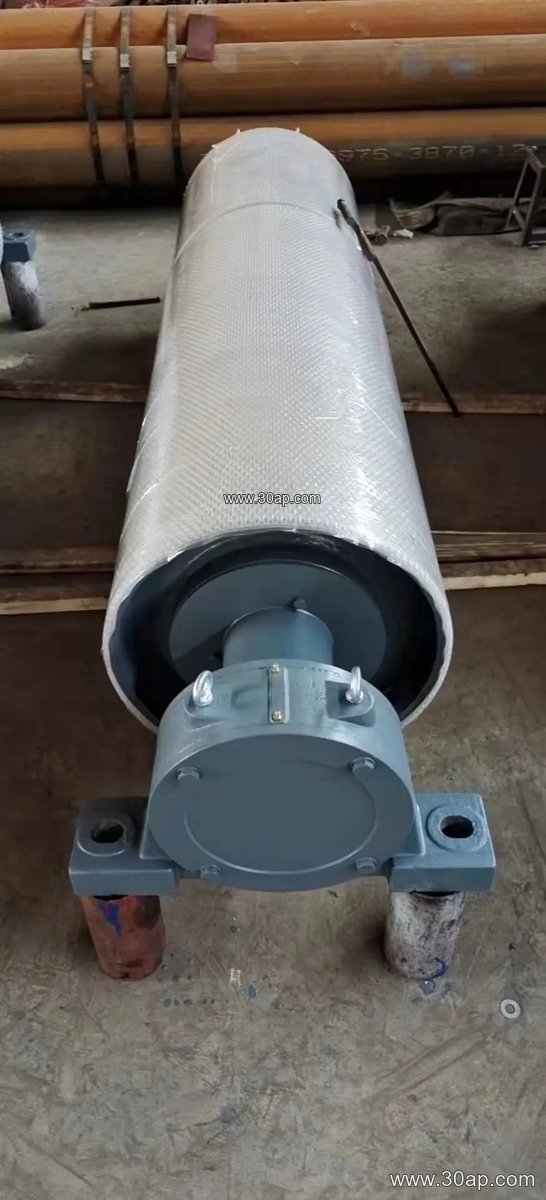
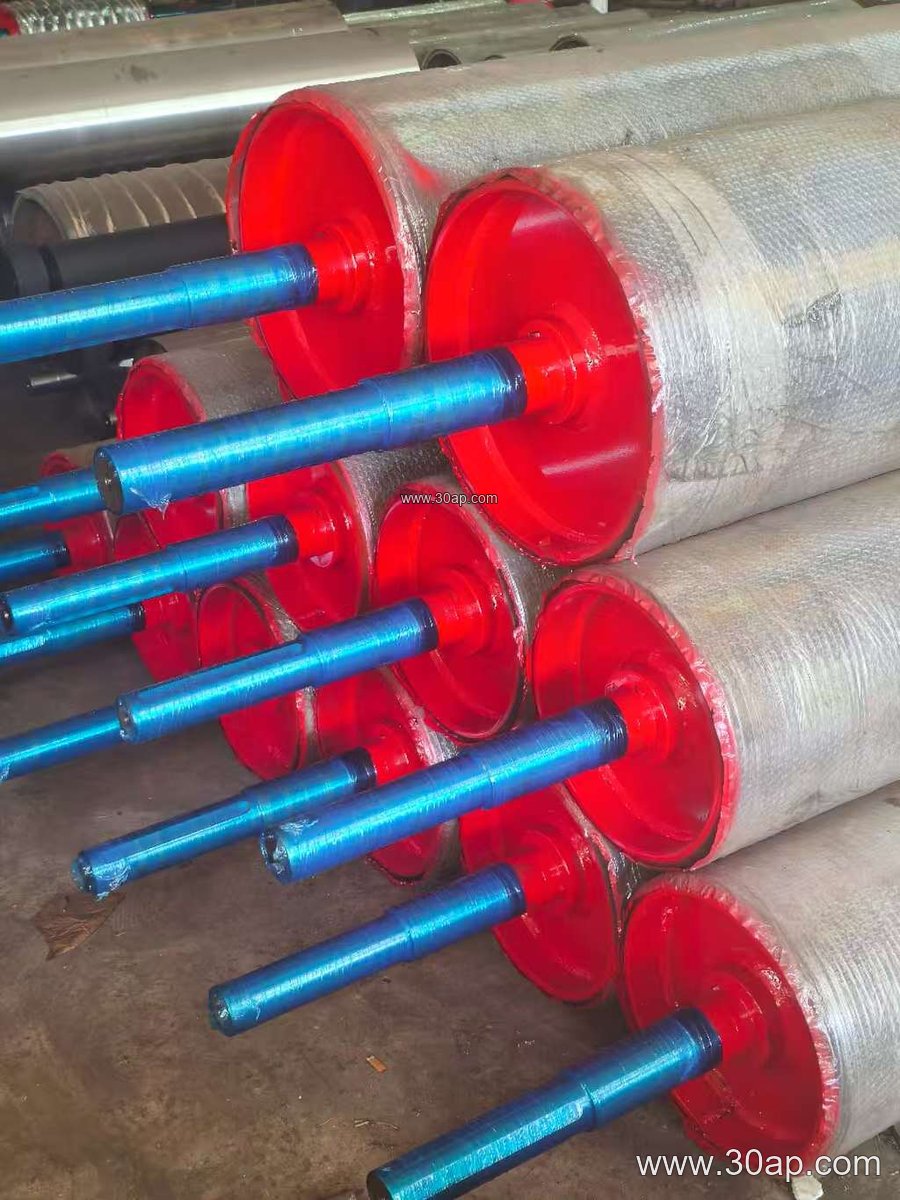
Construction and Surface Options
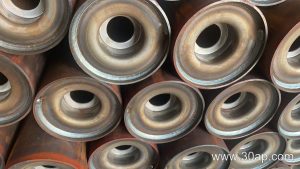
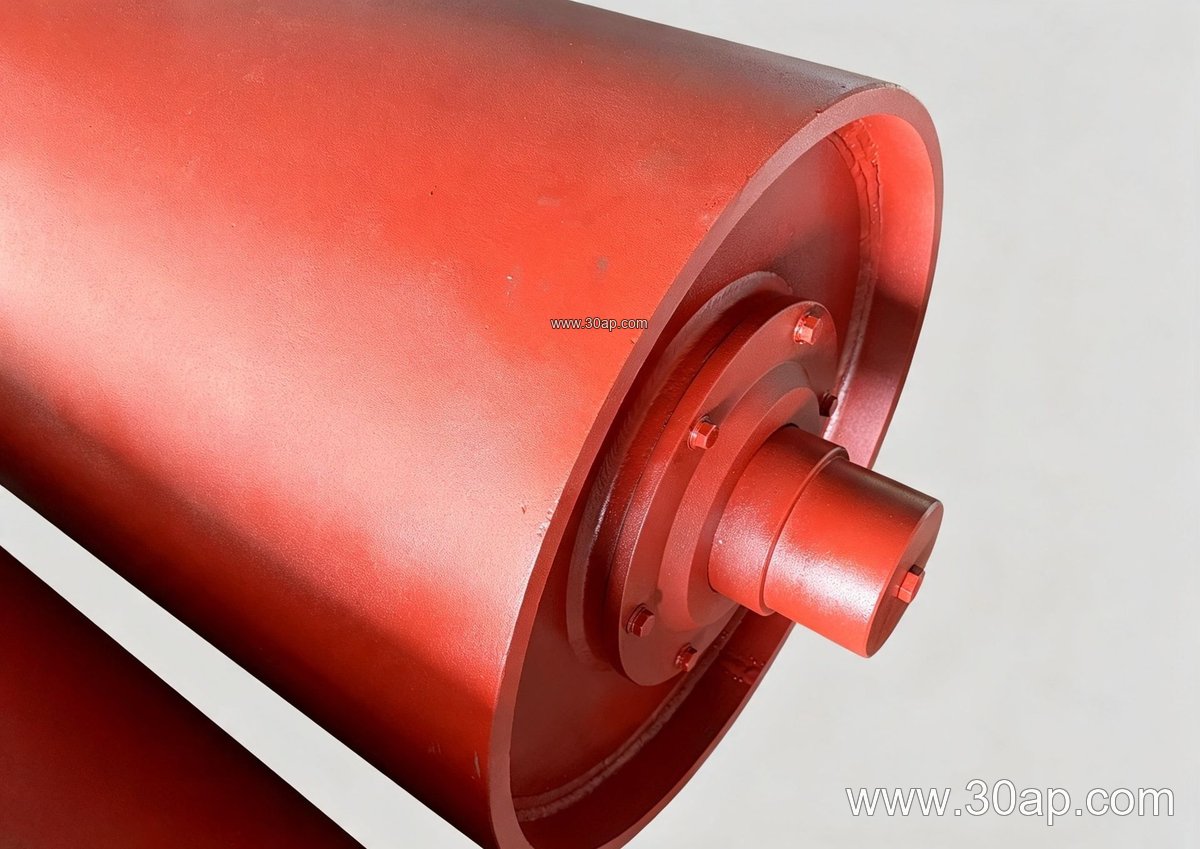
The body is typically a welded steel shell with dished or flat end plates, a shaft, bearing housings, and a keyed or shrink-fit connection to the drive. The lagging may be applied in several ways: hot-vulcanized rubber, cold-bonded rubber sheet, cast rubber, diamond-grooved rubber, herringbone rubber, plain sheet, or ceramic tiles set in a rubber matrix. Thickness commonly ranges from 8 mm to 20 mm, selected according to belt tension, pulley diameter, and the abrasiveness of the conveyed material.
- Diamond lagging: general-purpose grip with good water and fines shedding
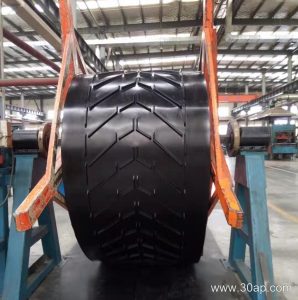
- Herringbone lagging: self-cleaning profile for wet or sticky bulk material
- Ceramic lagging: high wear resistance in iron ore, copper ore, and sinter service
- Plain rubber: smooth contact for lighter belts and cleaner duty
The shell face width usually exceeds the belt width so the belt stays supported across its full span. Common references include B800 with a face of roughly 950 mm, B1000 at about 1150 mm, and B1200 at about 1400 mm. A typical arrangement might be B1200 x Ø1000 or B800 x Ø500, but these are reference combinations, not fixed rules. Diameter and shaft size must be calculated from torque, belt tension, and bearing loads; shaft diameters such as Ø80, Ø100, Ø120, or Ø160 mm are common, yet no belt width dictates one shaft size on its own.
Where It Fits in the Conveyor
The drive lagged pulley normally sits at the discharge end, pulling the loaded belt. In a coal handling plant or power plant coal yard, it works alongside a flame retardant conveyor belt and a set of troughing idler rollers, while the return strand passes over a snub or take-up arrangement. In a cement plant clinker line, heat resistant conveyor belt grades may run over the same drive pulley, so lagging compound and belt cover hardness should be matched to avoid excess polishing or slip. In a port bulk terminal, wide belts such as B1800 or B2000 place heavy demand on lagging adhesion and on the pulley’s balance at speed.
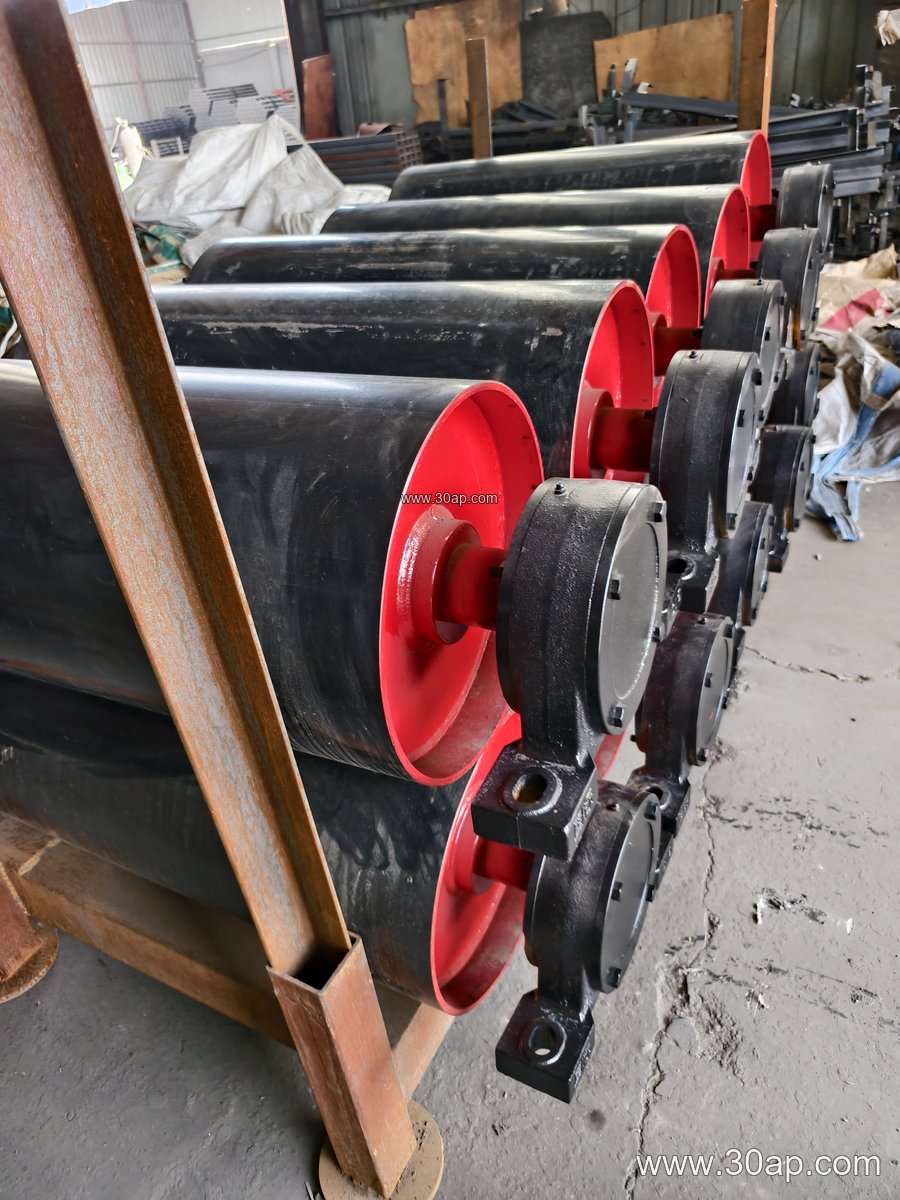
At the tail end, a tail pulley with a plain or lightly lagged surface does a different job: it supports the belt and helps track it, but carries no drive torque. A bend pulley changes direction only. Keeping these roles separate helps maintenance teams order the right spare and avoid fitting a lagged drive pulley where a free-turning bend pulley belongs.
Selection and Maintenance Notes
When specifying, confirm the belt width, the required diameter, the shaft and bearing assembly, the lagging type and thickness, and the drive connection. Check that the lagging grooves or tiles run in the correct direction for belt travel. For heavy-duty mining conveyor belt duties, ceramic or thick hot-vulcanized rubber is often preferred; for a stone crushing line with sharp aggregate, abrasion resistant conveyor belt covers and durable lagging work together to extend service life.
During operation, monitor for belt slip, lagging wear, groove fill with fines, and uneven contact. Re-lagging is a normal part of pulley maintenance and is usually cheaper than replacing the shell. Align the pulley with the conveyor frame, verify belt tension, and inspect the conveyor bracket and bearing seats for movement. A well-maintained drive lagged pulley keeps starting torque predictable and protects the belt from the heat and wear caused by persistent slip, whether the line serves a sand and gravel plant, a fertilizer granulation unit, or a ship loading system.