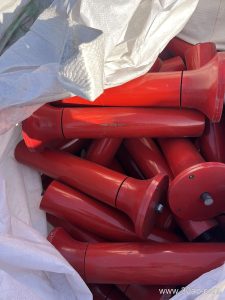
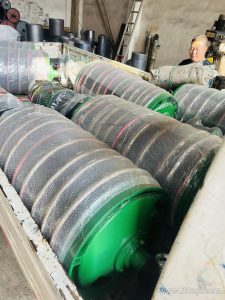
What the Discharge-End Pulley Does
The discharge-end pulley, also called the head pulley or delivery pulley, is the last pulley the conveyor belt wraps around before the material leaves the belt. Its position at the delivery point means it sets the belt path, the discharge trajectory, and the tension on the carrying side. In a quarry, a coal prep plant, or a power station coal yard, this pulley is often the point where wear and alignment problems first show up because it works directly under the material stream.
This pulley is not a tail pulley and not a bend pulley. The tail pulley sits at the loading end, and a bend pulley changes belt direction without discharging material. A drive pulley may share the same shaft at the discharge end on a head drive arrangement, but the two roles are distinct and should be specified separately.
Construction and Surface Options
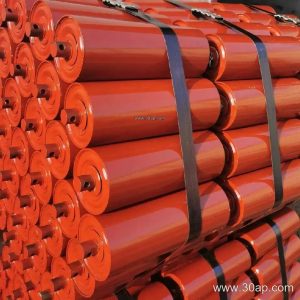
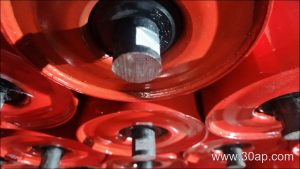
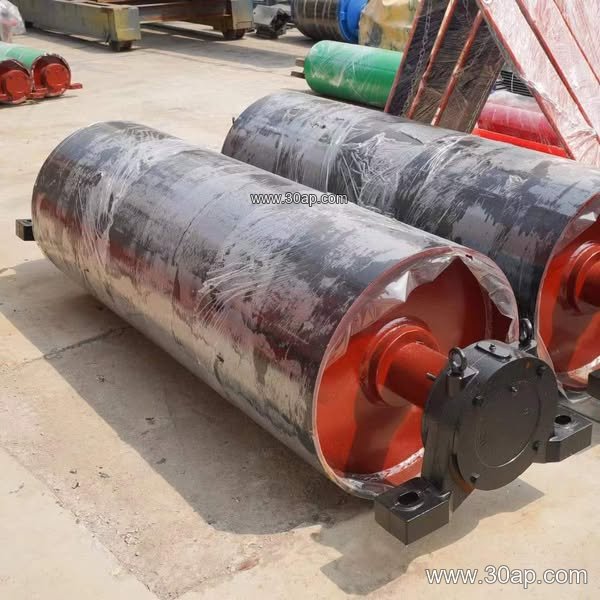
A discharge-end pulley is built around a steel drum with end discs, a shaft, and bearing housings. The shell is usually machined and then covered with a lagging to protect the belt and improve grip. Common surface forms include plain, hot-vulcanized rubber, cold-bonded rubber, diamond grooved lagging, herringbone lagging, and ceramic lagging. Lagging thickness is often 8, 10, 12, 15, or 20 mm, chosen by belt tension and material conditions rather than by belt width alone.
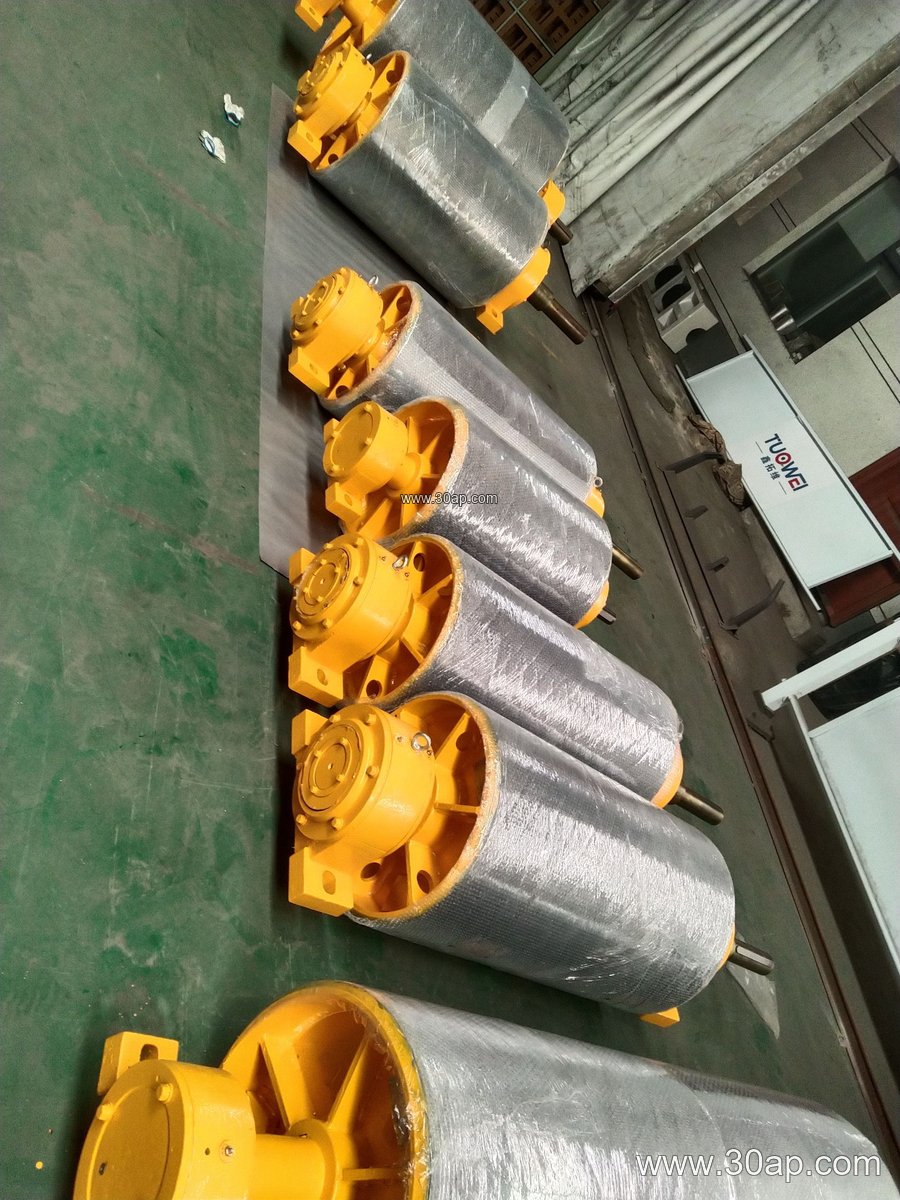
Shaft diameter is determined by torque and bearing load, not by a fixed rule from belt width. Typical shaft sizes range from Ø50 to Ø200 mm, and a B800 pulley may use a different shaft than another B800 pulley on a different conveyor. Pulley face width is normally wider than the belt, for example about 950 mm for B800, about 1150 mm for B1000, and about 1400 mm for B1200.
Where It Fits in Bulk Handling
In a limestone quarry or an aggregate line, the discharge-end pulley at the crusher feed or the transfer tower must tolerate dust and small rock impact. In a coal washing plant or an underground coal mining conveyor, flame retardant and anti-static properties of the belt matter, and the pulley lagging should avoid sparking risk from metal-to-belt contact. A cement plant clinker line may run a heat resistant conveyor belt, so the pulley surface and bearing clearance should allow for thermal expansion.
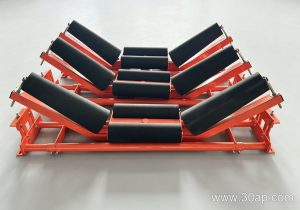
The pulley also works with the conveyor belt, idler roller, and conveyor bracket as a system. A heavy-duty mining conveyor belt such as an EP200 or EP300 fabric core belt or an ST1600 steel cord belt will transfer a different load pattern to the pulley than a lighter EP100 belt. Matching the discharge-end pulley diameter to the belt carcass and the minimum bend radius helps avoid ply separation and edge damage.
Matching Belt and Pulley
Belt width and pulley diameter are related by design, not by a mandatory table. Common combinations include B800 × Ø500, B1200 × Ø1000, and B1400 × Ø800, but these are reference points for layout discussions. A wide belt such as a 1800mm wide conveyor belt or a 2000mm wide conveyor belt may run on a larger diameter to control belt sag and discharge reach. A thick conveyor belt or a steel cord conveyor belt generally calls for a larger pulley to keep bending stress within the belt’s limits.
For high-abrasion service, a diamond or ceramic lagging on the discharge-end pulley can extend service life, especially when the belt is an abrasion resistant conveyor belt or a high abrasion resistant conveyor belt. In cold climates, a cold resistant conveyor belt and a pulley with adequate clearance help prevent belt cracking at the wrap.
Buyer Checklist
- Confirm the pulley role at the delivery point: plain head pulley, drive pulley, or a combined head-drive unit.
- Provide belt width, belt type, and belt tension so the supplier can propose diameter and shaft size.
- State the material and environment: coal, ore, clinker, or fertilizer, and whether the area is dusty, wet, or corrosive.
- Choose lagging by grip and wear needs, not by habit; plain, rubber, diamond, or ceramic each suits different conditions.
- Check bearing housing and conveyor bracket interfaces before ordering, and confirm that the pulley face width clears the belt path.
A discharge-end pulley that suits the belt, the load, and the discharge point will run cooler and last longer than one selected only by belt width. For a second opinion on pulley and belt matching, review the conveyor layout with the belt supplier and the pulley maker together.