What a Non-Standard Conveyor Pulley Really Is
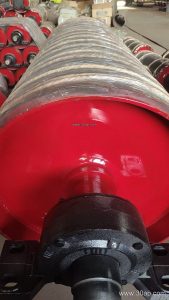
A non-standard conveyor pulley is a drum-shaped rotating component built to a specific set of dimensions or features that differ from common catalog ranges. Instead of choosing from ready-made sizes, the buyer and the manufacturer agree on face width, diameter, shaft diameter, bearing arrangement, lagging and attachment details. In practice, this usually means a pulley that must fit an existing conveyor frame, match a particular belt path, or carry loads that a standard shell cannot handle comfortably.
It is not a different product category. The same assembly principles apply as with any conveyor pulley, and the same engineering checks matter. The difference lies in how the unit is defined. A non-standard conveyor pulley is defined by the application, not by a stock list.
Construction Details That Drive the Design
The main parts are the shell, the end discs or hubs, the shaft, the bearing housings and the locking elements. On heavy units, the shell may be machined in sections, and the shaft is sized by torque and bending load rather than by belt width alone. Diameter selection is connected to belt tension, wrap angle and the minimum bending radius the belt can tolerate, but there is no rule that ties one belt width to one drum diameter.
Lagging is often part of the specification. Plain, rubber-lagged, diamond-grooved and ceramic-lagged surfaces are common, with lagging thickness typically in the range of 8 mm to 20 mm. For an abrasive ore conveyor, a rubber or ceramic surface may protect the shell. For a coal handling line, flame retardant conveyor belt requirements may influence the choice of rubber compounds nearby. The pulley itself is a mechanical part, but it works in the same environment as the belt, so material compatibility deserves attention.
Typical Reference Ranges
The values below are common reference points, not fixed pairings. Final sizes are determined by the conveyor design.
- Belt width range: B400 to B2400
- Drum diameter range: Ø200 to Ø1800
- Shaft diameter range: Ø50 to Ø200
- Lagging thickness: 8, 10, 12, 15 or 20 mm
Face width is usually a little wider than the belt. For example, a B800 belt often runs on a face around 950 mm, and a B1200 belt on a face near 1400 mm. Combinations such as B800 × Ø500 or B1200 × Ø1000 are simply examples of how width and diameter are quoted together.
Where Non-Standard Units Fit Best
Custom drums appear when a conveyor is modified, when space is tight, or when the duty is unusual. A limestone quarry may need a wider face to suit a replacement belt. A cement plant clinker line may require a heat-tolerant lagging or a heavier shell. A power plant coal handling system may need a specific bearing position to clear a chute. In a copper or iron ore concentrator, a non-standard conveyor pulley can be specified for a high-tension position where standard shells would be marginal.
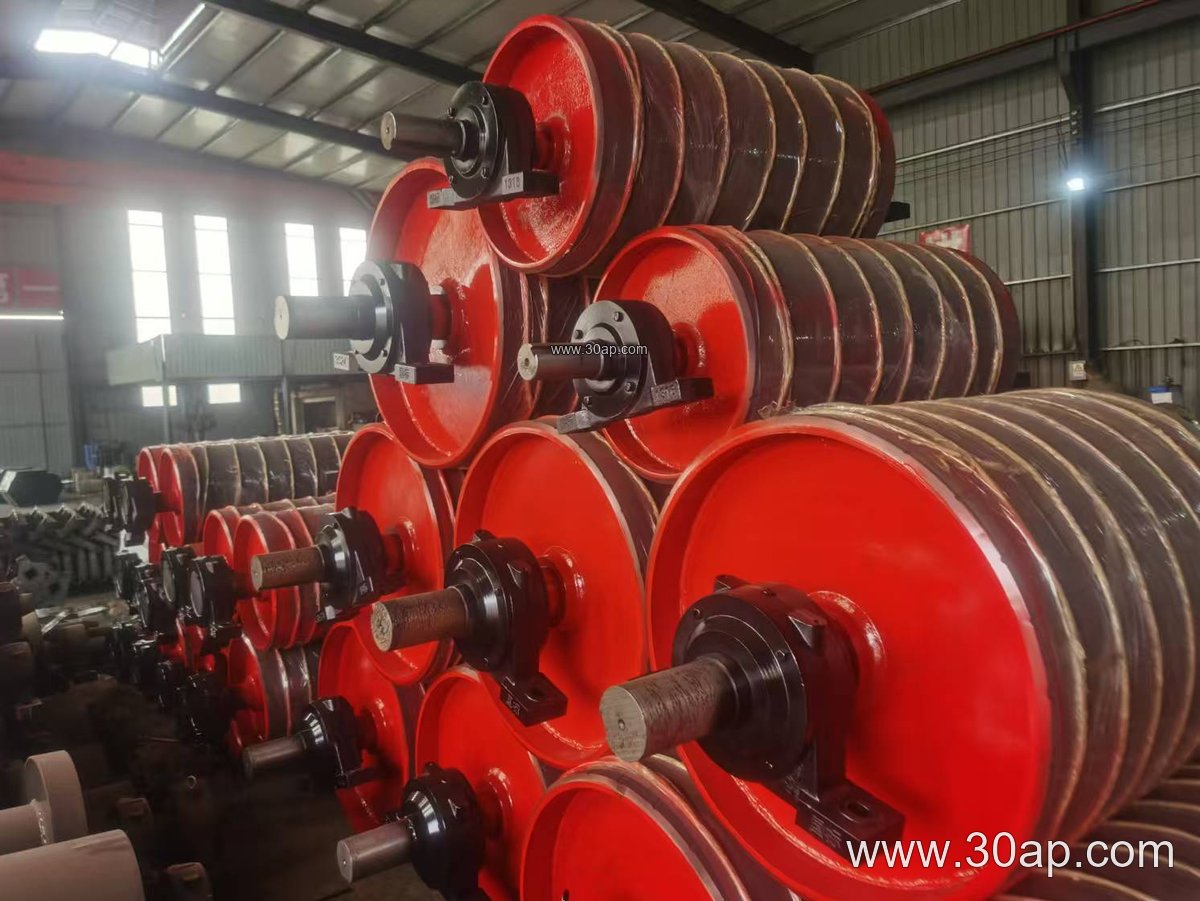
These pulleys also turn up in aggregate plants, sand and gravel lines, port bulk terminals, steel plants and tunnel spoil handling. In each case, the same question comes first: what is the pulley expected to do, and what does the surrounding structure allow?
Buyer Checklist Before Ordering
A clear enquiry saves time. Provide the belt width, the required face width, the drum diameter and the shaft diameter if known. State the belt speed, the calculated tension, the wrap angle and the position in the conveyor. Describe the lagging preference and the environment, including dust, moisture, temperature and any fire safety requirement linked to the conveyor belt.
Ask for a drawing showing key dimensions, the bearing type, the locking method and the balance class. Confirm how the pulley will be mounted to the conveyor bracket and whether the bearing housings suit the available space. For a retrofit, measure the existing shaft and frame before releasing the order.
Selection Notes
- Do not assume a shaft size from belt width; shaft diameter follows torque and load.
- Check that the chosen diameter suits the belt’s minimum bend radius.
- Match lagging to the material being carried and the risk of slip.
- Confirm the pulley position, since a drive unit and a bend unit are not interchangeable.
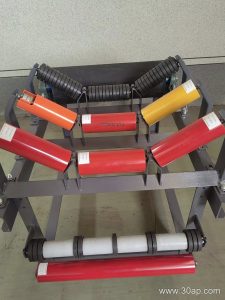
- Keep spare idler roller and bracket details on file for future maintenance.
Good communication between the conveyor designer, the maintenance team and the pulley manufacturer keeps a non-standard conveyor pulley predictable in service. The goal is not a complicated part, but a correctly defined one.