What a Ceramic Rubber-Lined Pulley Is
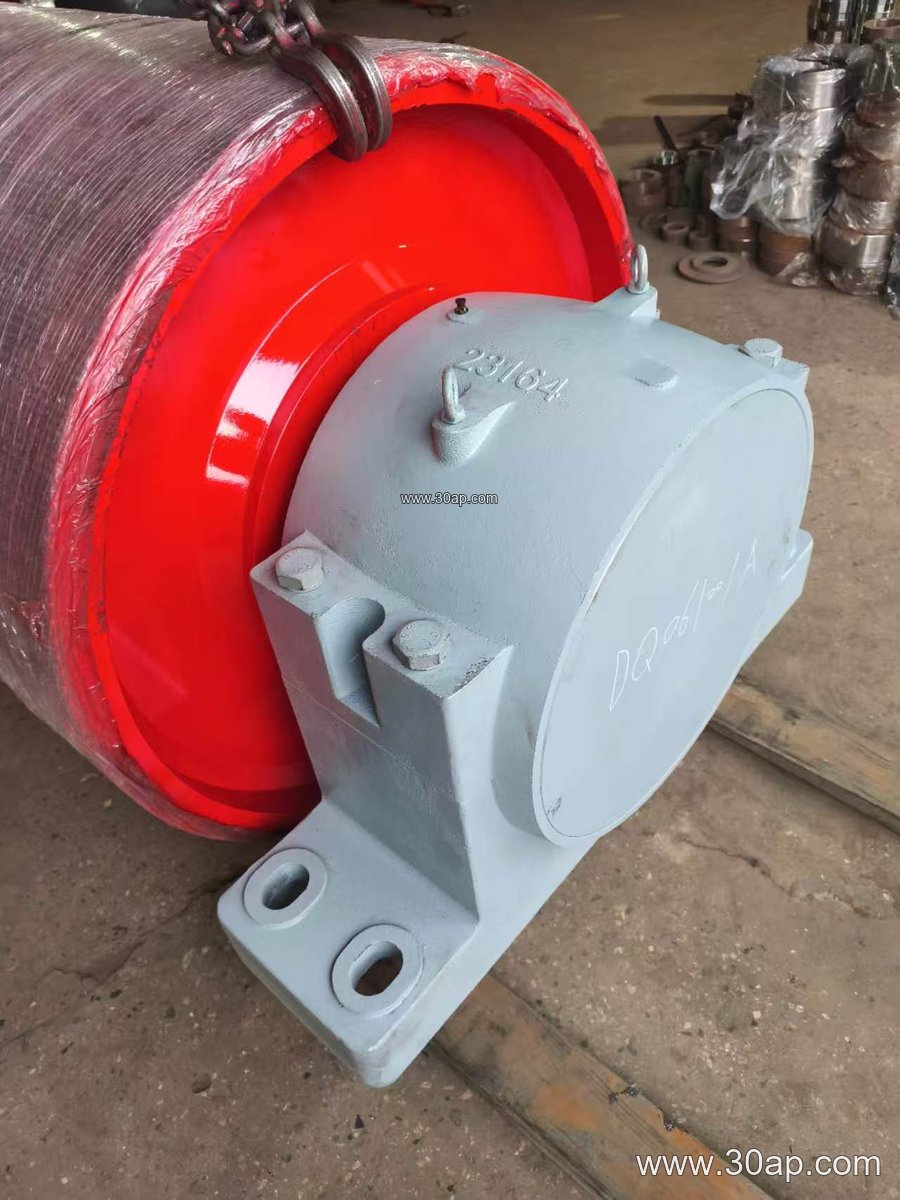
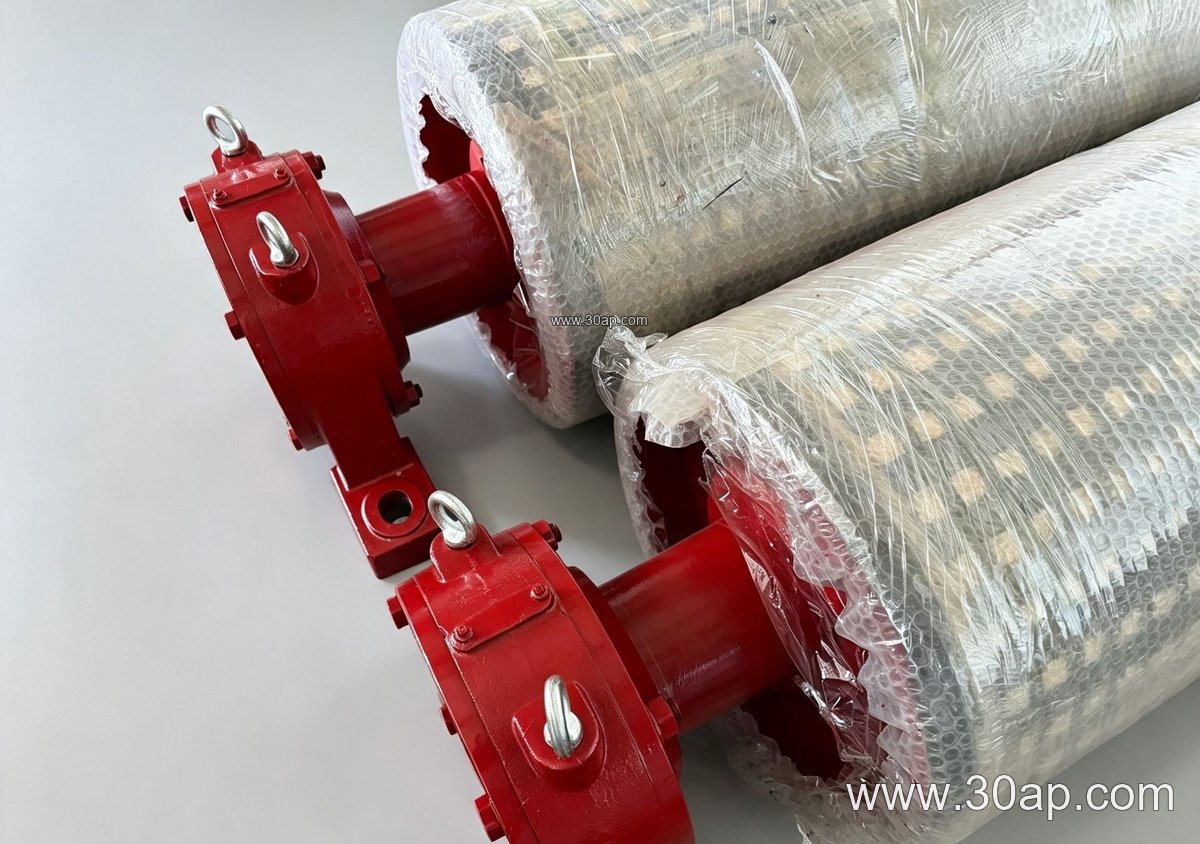
A ceramic rubber-lined pulley is a conveyor pulley whose shell is covered with a rubber layer embedded with ceramic tiles. The ceramic blocks sit proud of the rubber surface, so the belt contacts hard, wear-resistant pads while the rubber absorbs shock and provides grip. This combination makes the pulley a practical choice where slip and abrasion occur together, such as a drive pulley on a busy belt line. In many plants the same item is simply called a ceramic lagged pulley, and both names describe the same product.
The covering is not a substitute for the pulley itself. It is a wear surface applied to a fabricated steel shell, and the quality of the result depends on how the shell, the bonding layer and the tiles are assembled.
How the Ceramic Lagging Is Built
A typical build starts with a cleaned and prepared shell, often grit-blasted, then a rubber bonding layer is applied by hot vulcanization or cold bonding. Ceramic tiles, usually small squares or rectangles with chamfered edges, are pressed into the rubber before curing or set into a pre-formed rubber sheet. The tiles are spaced in a pattern that leaves rubber channels between them, which helps water and fine dust escape instead of being trapped under the belt.
- Shell preparation and primer application
- Rubber layer, commonly 8 mm to 20 mm thick depending on duty
- Ceramic tile layout, often staggered or in a chevron pattern
- Vulcanizing or cold-curing to bond rubber and tiles to the shell
- Final inspection of tile height, bond line and balance
Because the tiles are hard and the rubber is flexible, the lining tolerates small impacts from lumpy material without cracking the way a plain hard surface might.
Where It Fits on the Conveyor
Ceramic rubber-lined pulleys are most often specified for drive pulleys, where torque transfer and belt slip are the main concerns, and for tail pulleys that run in wet, gritty conditions. In a quarry or a sand and aggregate line, a tail pulley may sit in a pool of muddy water, and the ceramic surface keeps the shell from polishing smooth. In a coal preparation plant or a power plant coal handling system, the same lining helps on drives that see fine dust and occasional moisture.
It is not the automatic answer for every position. A bend pulley that only redirects the belt usually needs far less grip and can use a plain or lightly lagged surface. A snub pulley or a take-up pulley may be better served by a simpler rubber lagging if wear is mild. Matching the lining to the actual duty is more useful than applying the heaviest option everywhere.
Belt Width, Pulley Diameter and Shaft Size
Buyers often ask for a pulley by belt width alone, but the diameter and shaft are separate design decisions. The face width is usually a little wider than the belt, so a B800 belt commonly runs on a face around 950 mm, and a B1200 belt on a face around 1400 mm. Diameter depends on belt tension, wrap angle, belt stiffness and the space available.
| Belt width | Typical face width | Example diameter range |
|---|---|---|
| B500 | about 600 mm | Ø250 to Ø400 |
| B650 | about 750 mm | Ø315 to Ø500 |
| B800 | about 950 mm | Ø400 to Ø630 |
| B1000 | about 1150 mm | Ø500 to Ø800 |
| B1200 | about 1400 mm | Ø630 to Ø1000 |
| B1400 | about 1600 mm | Ø800 to Ø1250 |
These are reference ranges, not fixed pairings. A B1200 × Ø1000 drive pulley and a B800 × Ø500 tail pulley are both normal combinations, and the same belt width can work with several diameters. Shaft diameter is set by torque and bearing load, commonly falling between Ø80 and Ø200 on medium and heavy conveyors, and should never be guessed from belt width alone.
What to Check Before Ordering
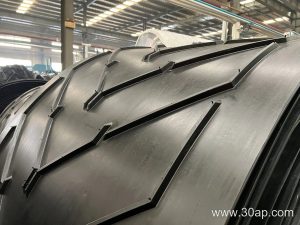
Confirm the position first: drive, tail, bend, take-up or snub. Then confirm the belt type and tension. A heavy-duty mining conveyor belt or a steel cord conveyor belt pulls differently from a light fabric core belt, and the pulley shell and lagging must suit that load. If the belt is a chevron conveyor belt or a corrugated sidewall belt, check that the ceramic pattern and tile height do not interfere with cleats or sidewalls.
Ask about the tile pattern, rubber hardness, lining thickness and the bonding method. For a wet or dirty application, a grooved or spaced tile layout that sheds water is often more useful than a fully closed surface. For a high-tension drive, check the shell thickness and the weld quality behind the lagging.
Finally, plan the installation. A ceramic rubber-lined pulley is heavier than a plain one, so lifting points, bearing alignment and conveyor bracket condition matter. Keep a spare lagging sheet or a spare pulley if the line cannot stop for long, and inspect tile edges during routine shutdowns for chipping or rubber undercutting.