What a Turning Pulley Does
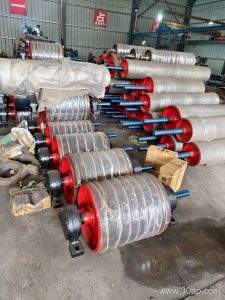
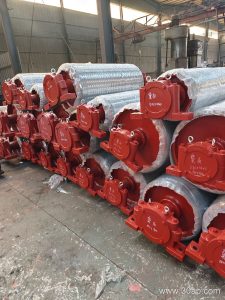
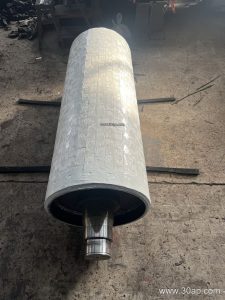
In a belt conveyor, the turning pulley is the component that changes the belt’s direction of travel. It is often a bend pulley or a snub pulley, mounted to guide the belt around a curve, increase wrap angle on the drive pulley, or route the belt to a take-up system. Unlike the drive pulley that transmits power, the turning pulley mainly redirects the belt with minimal slip. Its reliable rotation and accurate alignment are critical for keeping tension even and preventing belt edge damage.
Construction and Surface Options
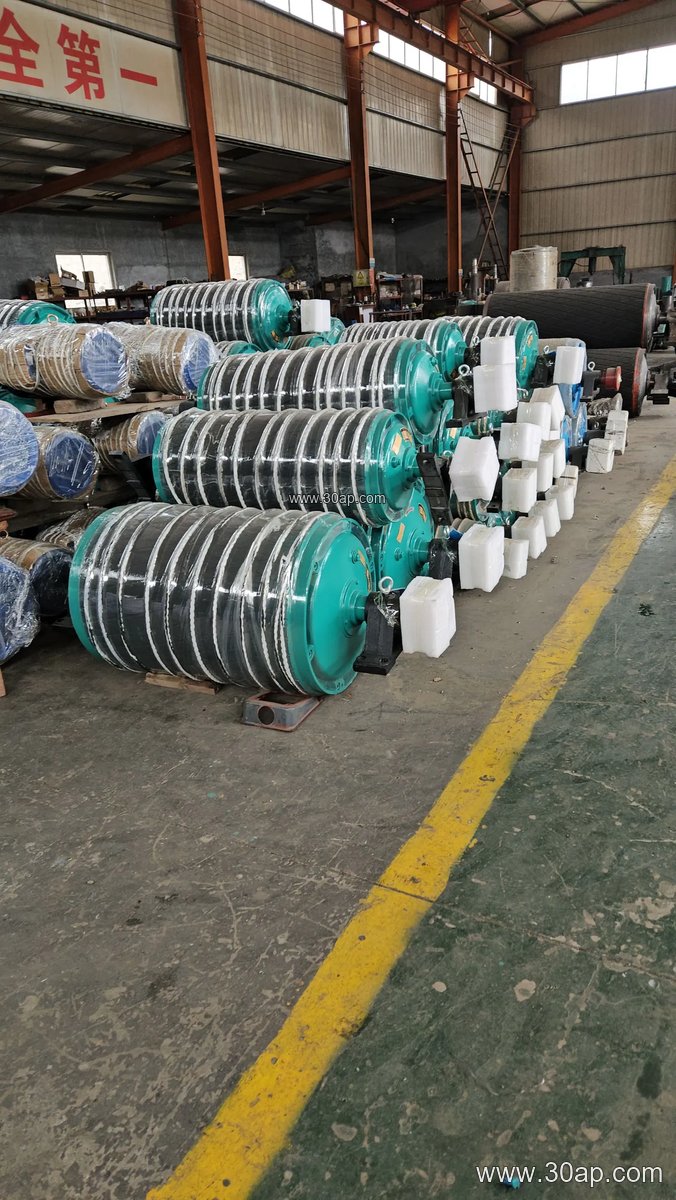
A typical turning pulley consists of a cylindrical shell, shaft, bearing housings, and end discs. The shell can be smooth or lagged. Common surface treatments include plain finish, cold-bonded rubber, hot-vulcanized rubber, diamond grooving, and ceramic lagging. Lagging thickness often ranges from 8 mm to 20 mm depending on the duty. The pulley face width usually exceeds the belt width to allow for misalignment; for example, a B800 belt often uses a pulley face around 950 mm, while a B1200 belt may use about 1400 mm. Shaft diameter is determined by torque and load, not by belt width alone, so a B650 belt might use a Ø70 shaft in one design and a Ø90 shaft in another.
Where It Fits in the Conveyor
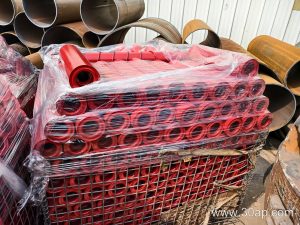
Turning pulleys appear at the tail end, in the take-up zone, and at intermediate bend points. In a quarry or aggregate line, a bend pulley may route the belt around a transfer tower, while a snub pulley increases contact angle on the drive pulley. In a coal mining conveyor, a turning pulley with flame retardant lagging helps maintain belt tracking in dusty conditions. The pulley works together with the conveyor belt, idler roller, and conveyor bracket to keep the belt centered and tensioned. Proper interaction between these parts prevents belt wander and reduces wear on the conveyor pulley.
Key Dimensions and Common Combinations
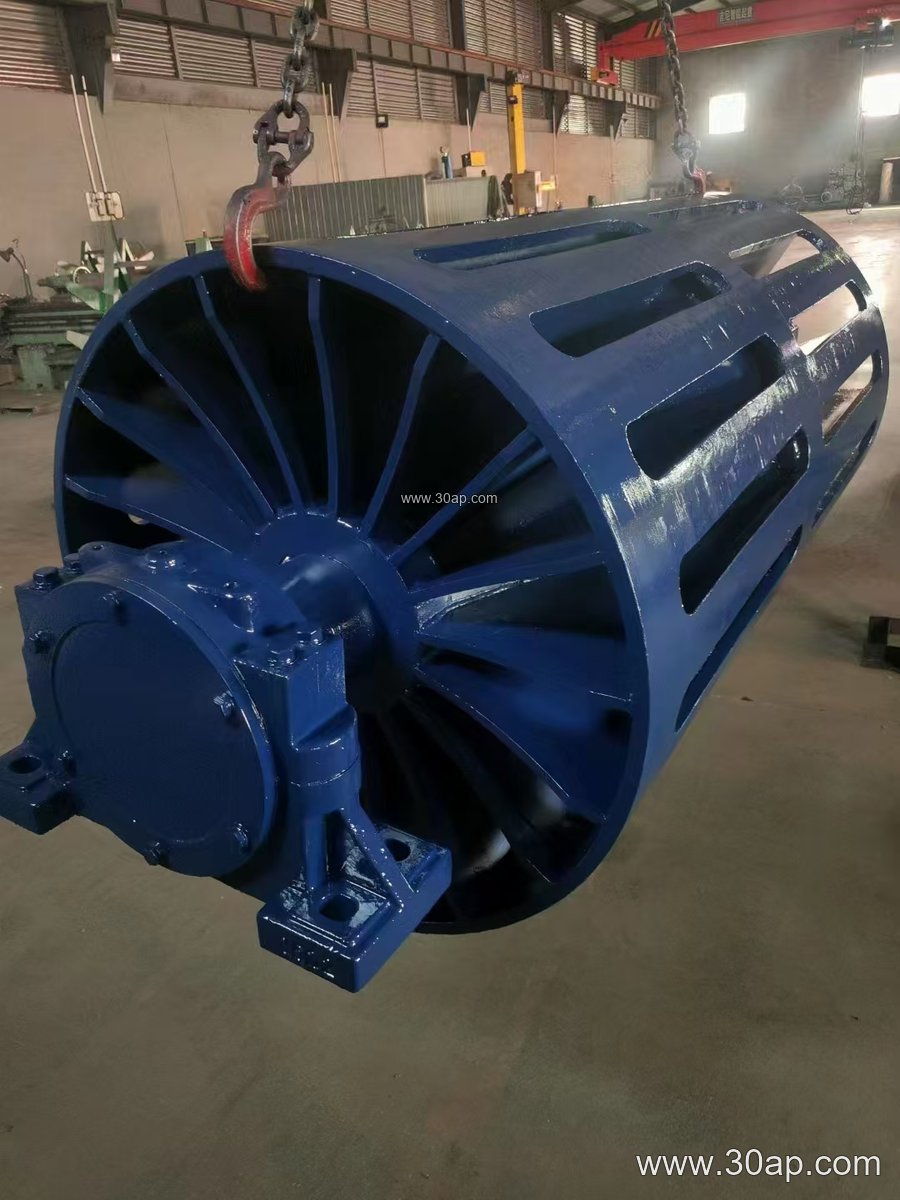
Turning pulleys are specified by belt width, pulley diameter, face width, shaft diameter, and lagging type. The table below shows reference combinations often seen in design drawings; these are examples, not fixed rules.
| Belt Width (mm) | Pulley Diameter (mm) | Face Width (mm) | Shaft Diameter (mm) | Typical Lagging |
|---|---|---|---|---|
| B500 | Ø250 | 600 | Ø60 | Plain or 8 mm rubber |
| B650 | Ø315 | 750 | Ø70 | 10 mm diamond rubber |
| B800 | Ø400 | 950 | Ø80 | 10 mm cold-bonded rubber |
| B1000 | Ø500 | 1150 | Ø100 | 12 mm hot-vulcanized rubber |
| B1200 | Ø630 | 1400 | Ø120 | 15 mm diamond rubber |
| B1400 | Ø800 | 1600 | Ø140 | 15 mm ceramic lagging |
| B1600 | Ø1000 | 1800 | Ø160 | 20 mm rubber |
These values are indicative and should be confirmed against actual load calculations. For instance, a B1200 × Ø1000 turning pulley may be used in a high-tension take-up, while a B800 × Ø500 unit suits a moderate-duty bend station.
Matching the Pulley to the Belt and Duty
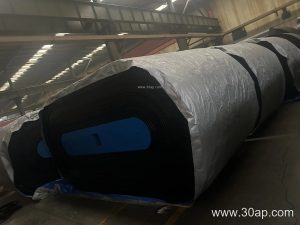
The belt type influences pulley selection. A heavy-duty mining conveyor belt with steel cord reinforcement may require a larger diameter turning pulley to reduce bending stress. In contrast, an EP conveyor belt or NN conveyor belt in a cement plant might work with a smaller diameter if the belt is flexible. Abrasion resistant conveyor belt used in a crusher conveyor often pairs with lagged pulleys to maintain grip and resist wear. Heat resistant conveyor belt in a power plant may need a pulley with heat-tolerant lagging. The turning pulley should never be chosen by belt width alone; belt tension, speed, and environmental conditions all matter.
Buyer Checklist
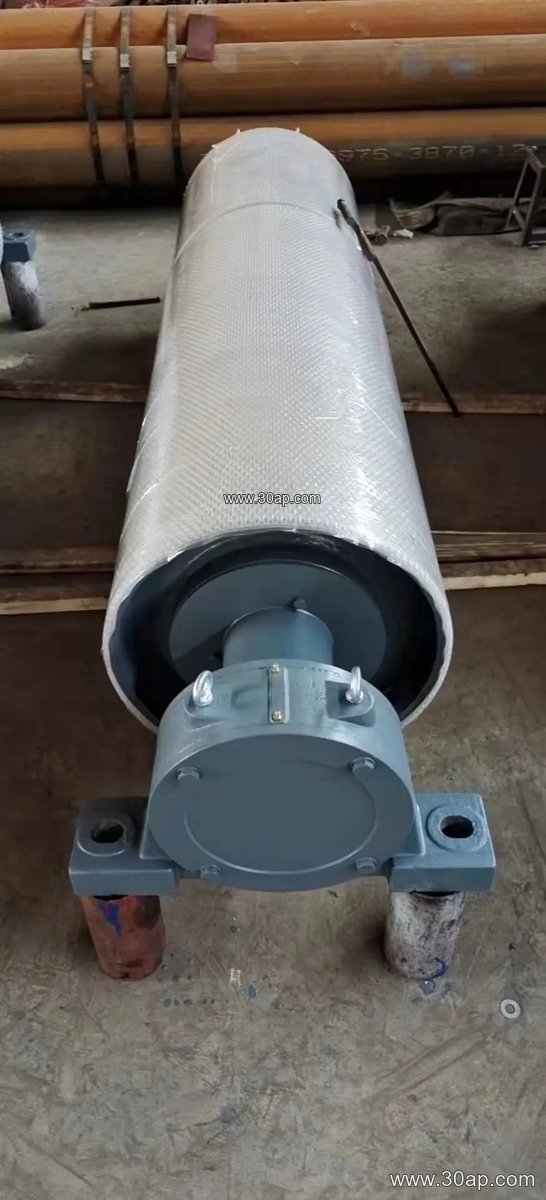
- Confirm the pulley’s role: bend, snub, or take-up. Drive and tail pulleys are not interchangeable with a turning pulley.
- Check face width against belt width; face width is usually larger than the belt.
- Specify lagging type and thickness based on grip and wear needs.
- Verify shaft diameter from torque and load, not from a fixed belt-width rule.
- Ensure bearing selection matches the pulley’s radial load and speed.
- For underground coal mining, request flame retardant and anti-static properties where required.
Installation and Maintenance Notes
Mount the turning pulley squarely to the conveyor frame using conveyor bracket and shim as needed. Misalignment causes belt edge wear and premature bearing failure. Regularly inspect lagging for wear or glazing, and check that the pulley rotates freely. In dusty environments such as a quarry conveyor or cement plant, keep the pulley area clean to avoid material buildup that can affect tracking. Lubricate bearings according to the manufacturer’s schedule, and replace worn lagging before it damages the belt.
For more information on conveyor components, visit cnc-centre.com for conveyor pulley and idler roller references.