What a Large Belt Conveyor Idler Does on a Heavy-Duty Line
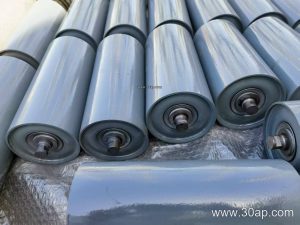
A large belt conveyor idler is the rotating support that carries the conveyor belt and its load along the structure. On wide, heavily loaded lines, this idler roller must handle more weight, longer spans and higher belt tension than a standard unit. In a quarry, a coal preparation plant or a power plant coal yard, the difference between an adequate idler and an undersized one often shows up as belt sag, edge wear or frequent bearing failure.
The product is usually described by roll diameter, roll length, trough angle and bearing size, and these values are chosen together with the conveyor belt width and the load profile. For example, a wide belt such as a 1200mm or 1400mm conveyor belt may use a three-roll troughing set with rolls around Ø133 or Ø159, while an 1800mm or 2000mm belt on a high-capacity ore line may call for larger rolls and heavier frames.
Construction Details That Matter
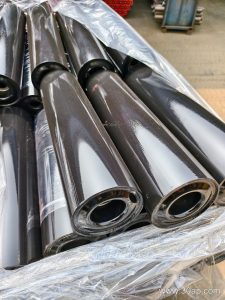
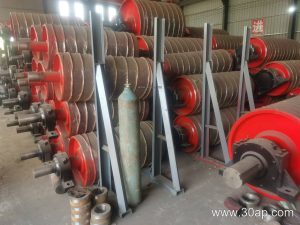
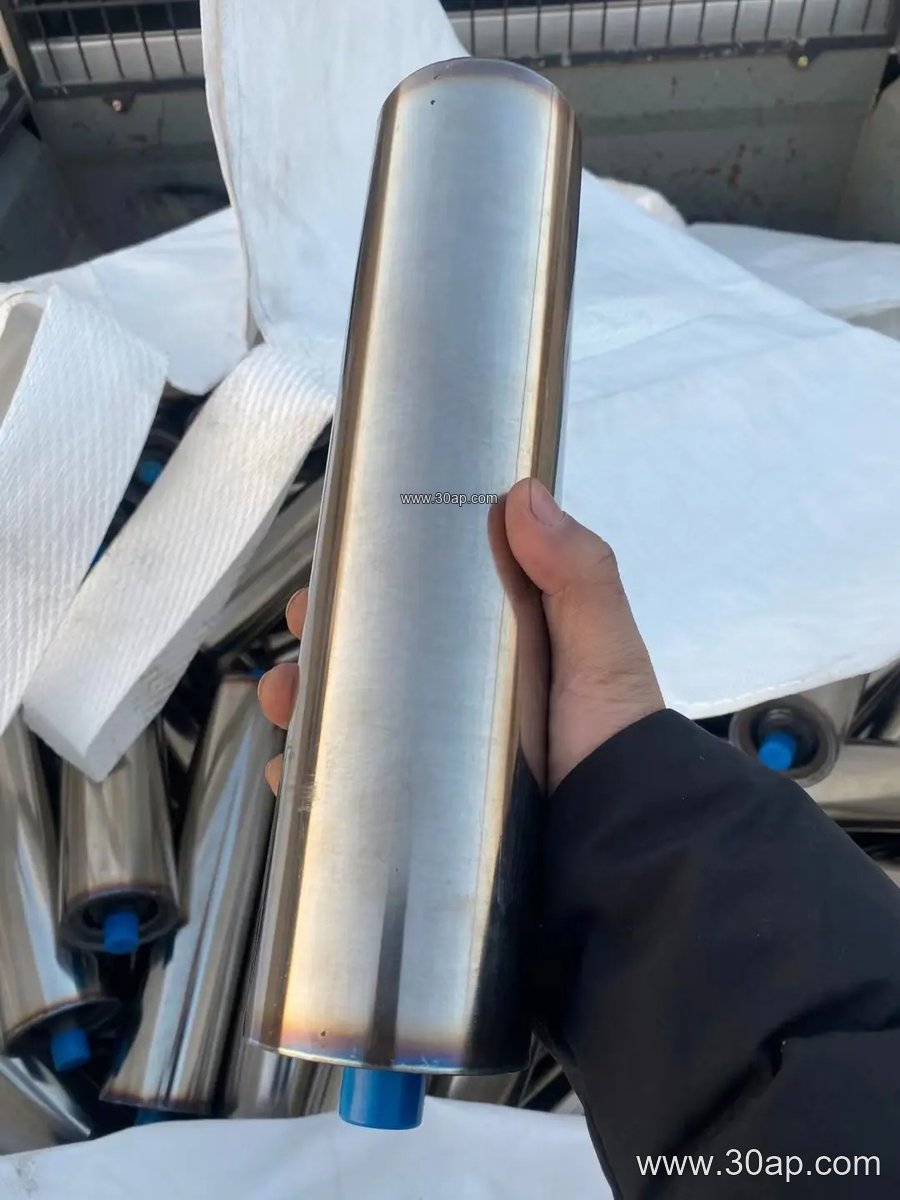
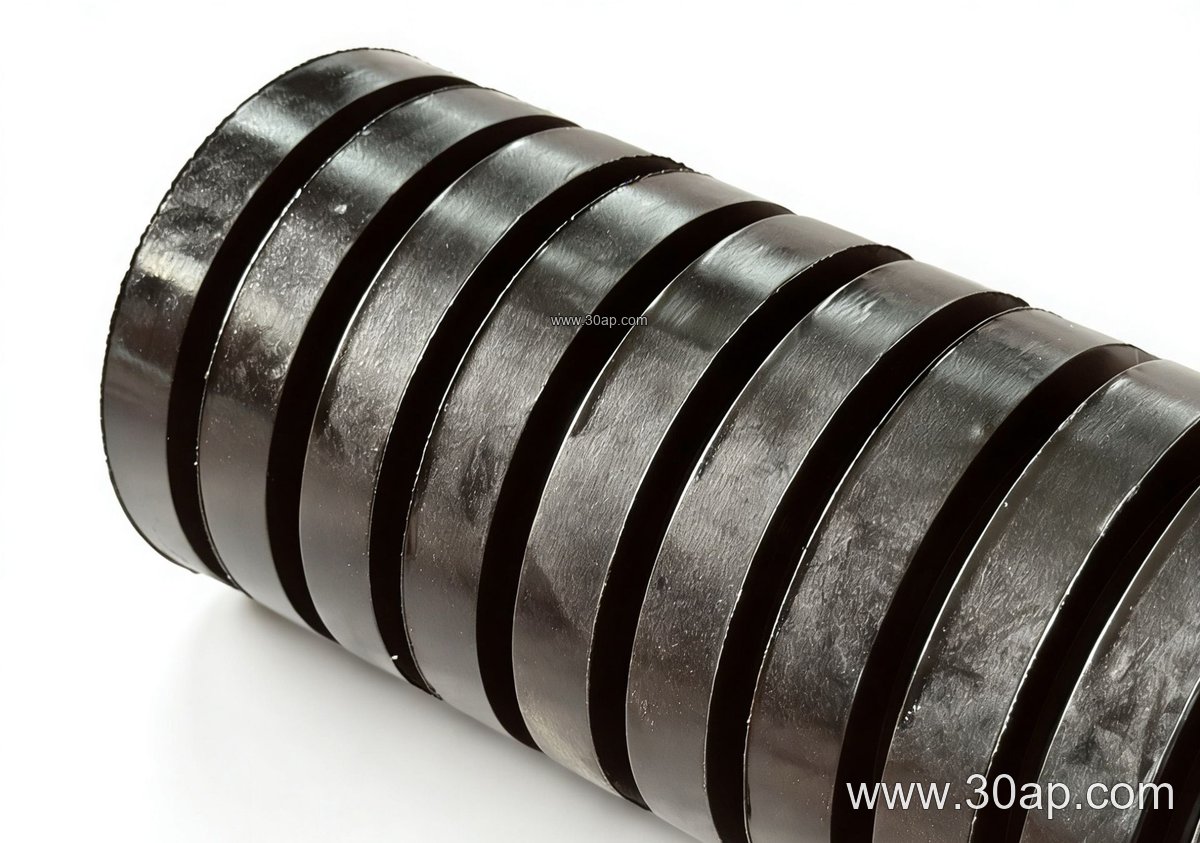
A heavy-duty troughing idler normally consists of a steel tube shell, a shaft, sealed bearings, a bearing housing and end caps. The shell may be plain steel, nylon-coated, ceramic-lined or fitted with rubber rings for impact absorption. Bearing selection is not fixed by roll diameter alone; common sizes such as 6205, 6305, 6306, 6308 and 6310 appear across different designs, and the final choice depends on load, speed and seal arrangement.
The seal is often the deciding factor in dusty service. A triple-labyrinth or similar dust-proof seal helps keep fine material out of the bearing cavity, which matters in crushing and screening circuits where abrasive dust is constant. The frame and brackets must also match the conveyor bracket spacing and the structure of the conveyor.
Common reference dimensions
The table below shows typical examples only. Actual roll length and diameter should be confirmed against the conveyor design.
| Belt width | Typical roll length (three-roll troughing) | Possible roll diameters |
|---|---|---|
| B500 | about 200 mm | Ø63, Ø76, Ø89 |
| B650 | about 250 mm | Ø76, Ø89, Ø102 |
| B800 | about 315 mm | Ø89, Ø102, Ø108 |
| B1000 | about 380 mm | Ø108, Ø127, Ø133 |
| B1200 | about 465 mm | Ø127, Ø133, Ø159 |
| B1400 | about 530 mm | Ø133, Ø159, Ø178 |
| B1600 | about 600 mm | Ø159, Ø178, Ø194 |
| B1800 | about 670 mm | Ø178, Ø194, Ø219 |
| B2000 | about 750 mm | Ø194, Ø219 |
Trough angles of 20, 30, 35 and 45 degrees are common, and a small forward tilt of about 1.5 to 2 degrees is sometimes used on training idlers. Side rolls and center rolls can differ in length, so the figures above are only a starting point.
Where Large Idlers Are Used
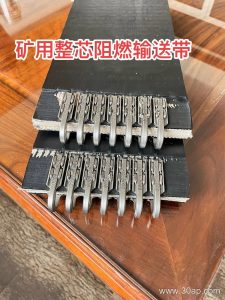
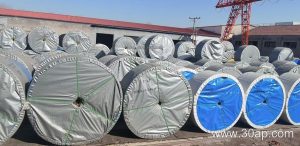
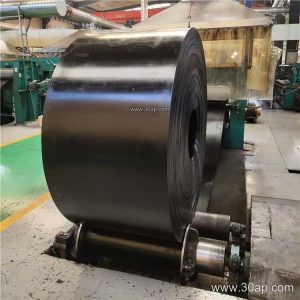
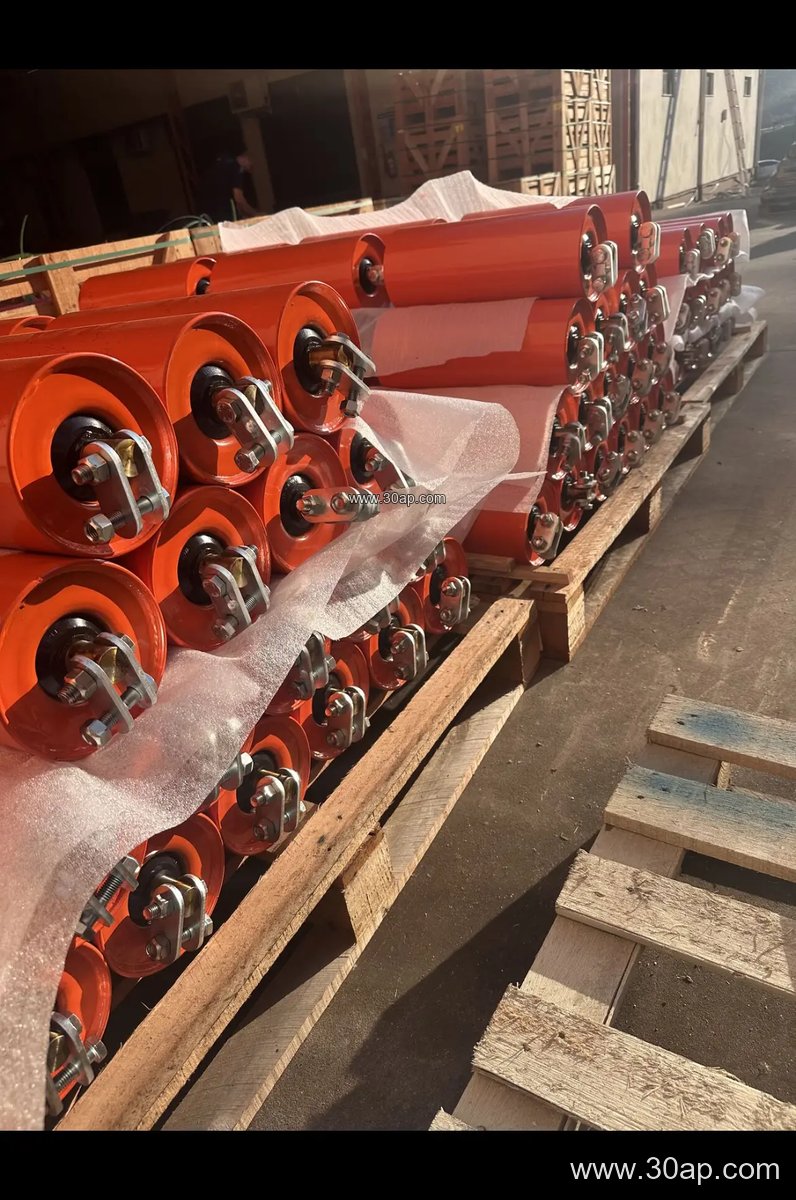
These units appear on main haulage lines in limestone mines, iron ore concentrators, cement plants and coal handling systems. A steel plant sinter line or a port ship-loading conveyor also relies on robust idlers to keep a wide, heavy belt tracking correctly. In these places, the belt itself may be an abrasion resistant conveyor belt, a flame retardant conveyor belt for coal service, or a steel cord conveyor belt for long distances and high tension.
The idler must suit the belt. A pipe conveyor belt or a corrugated sidewall conveyor belt has different support needs from a flat EP conveyor belt, and a chevron conveyor belt can affect contact and tracking. For abrasive ore, a high abrasion resistant conveyor belt paired with well-sealed idlers reduces downtime. For hot material such as clinker or sinter, a heat resistant conveyor belt and heat-tolerant idler design may both be required.
Buyer Checklist Before Ordering
- Confirm belt width, trough angle and roll length rather than assuming one diameter fits all.
- State the material, lump size and load per meter so the idler class can be matched.
- Check bearing size and seal type for dust, water or washdown conditions.
- Verify bracket hole spacing and frame height against the existing conveyor bracket.
- For impact zones, consider rubber-ring impact idlers; for return strands, review V-type or flat return rolls.
- Match idler life to the conveyor belt grade, whether EP, NN or steel cord construction.
A well-matched large belt conveyor idler protects the belt, keeps the line tracking and reduces maintenance in demanding bulk handling work.