What an EP Conveyor Belt Is
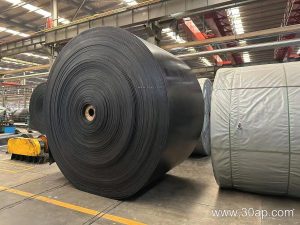
An EP Conveyor Belt is a fabric core conveyor belt built on polyester (E) warp yarns and polyamide (P) weft yarns. This polyester-polyamide carcass is the reason the belt is also sold as an EP Rubber Conveyor Belt or an EP Fabric Core Conveyor Belt. The combination gives low elongation in the length direction and good flexibility across the width, so the belt tracks well on long runs and absorbs starting loads without excessive stretch.
The carcass is the load-bearing element. It is bonded to rubber covers that protect the fabric from abrasion, moisture, heat or oil, depending on the compound chosen. Buyers in mining, coal, cement, power plants, quarries and sand and gravel yards usually meet this belt first because it balances strength, spliceability and cost better than most alternatives in the mid-strength range.
How the Belt Is Built
Manufacture starts with woven EP fabric plies. The plies are calendered with rubber friction and skim compounds, stacked to the required number of layers, and then consolidated under heat and pressure with the top and bottom covers. The result is a Multi-Ply Fabric Core Conveyor Belt with a defined ply count and cover thickness.
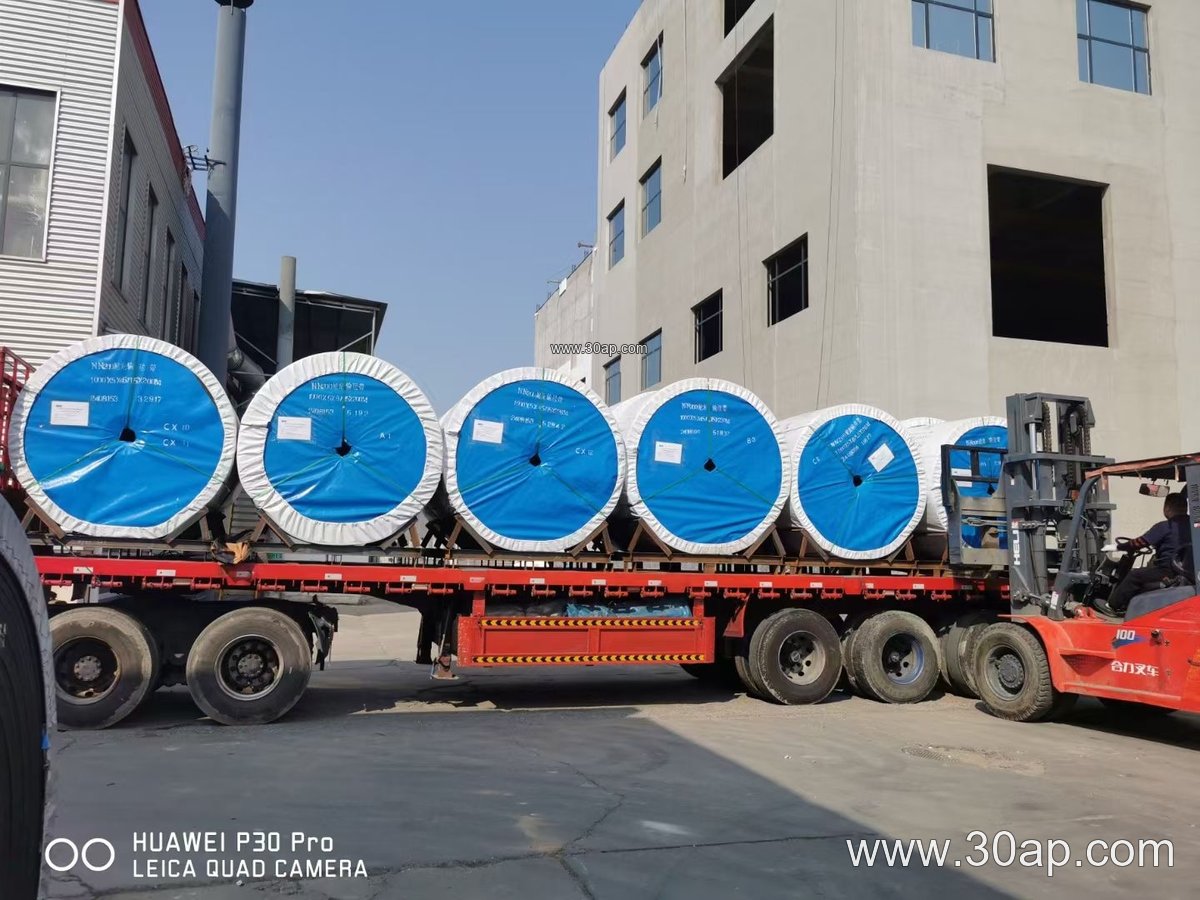
- Carcass: usually 2 to 6 plies of EP fabric, depending on duty.
- Cover compound: abrasion resistant, heat resistant, flame retardant, oil resistant, cold resistant or anti-static grades.
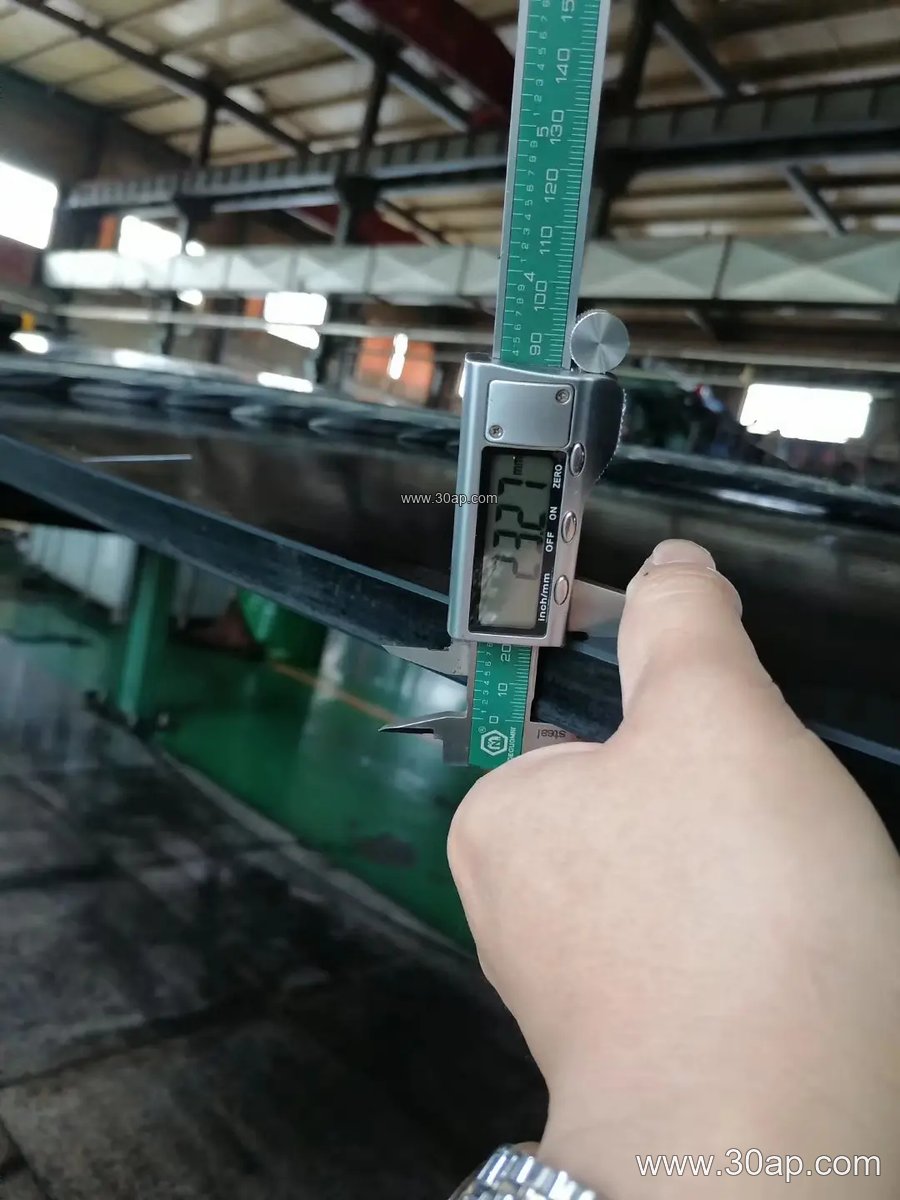
- Cover thickness: common builds include 3+1.5 mm, 4+2 mm, 5+2 mm, 6+2 mm and 8+3 mm.
- Edge construction: cut edge or moulded edge, chosen for the application.
Because the fabric core is flexible, an EP belt can be spliced in the field by hot vulcanising or by mechanical fasteners. This matters at transfer points where a Steel Cord Conveyor Belt would be harder to repair quickly.
Strength Grades and Common Widths
EP belts are graded by the tensile strength of the carcass, expressed in newtons per millimetre of belt width. The table below lists grades that are commonly quoted in enquiries. Values are reference data, not a fixed supply promise, and actual construction is confirmed per design.
| Grade | Typical Duty |
|---|---|
| EP200 Conveyor Belt | Light to medium service, short conveyors |
| EP315 / EP400 | General bulk handling, aggregate lines |
| EP500 / EP630 | Medium duty quarry and cement plant duty |
| EP800 / EP1000 | Heavy-duty mining and power plant service |
| EP1250 / EP1600 | Long runs and high tonnage primary haulage |
| EP2000 | Very high strength fabric core applications |
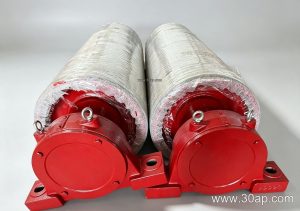
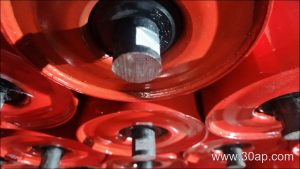
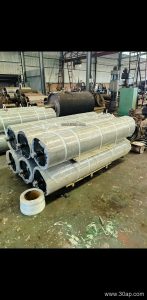
Widths are usually stated in millimetres. Common examples are B500, B650, B800, B1000, B1200, B1400, B1600, B1800 and B2000. A wide belt does not automatically dictate one pulley diameter, and shaft size must be calculated from the actual conveyor design rather than assumed from belt width. Drive pulleys, tail pulleys and bend pulleys each have their own load case and are not interchangeable.
Where It Fits in the Plant
In a coal mining conveyor belt system, an EP carcass with a flame retardant cover is often specified for underground mining conveyor belt duty, while a plain abrasion resistant grade serves surface coal handling. In cement plants, heat resistant covers are used after clinker coolers. In power plants, the belt moves coal from stockyard to bunker. In quarries and stone crushing lines, EP belts feed crushers and carry screened aggregate.
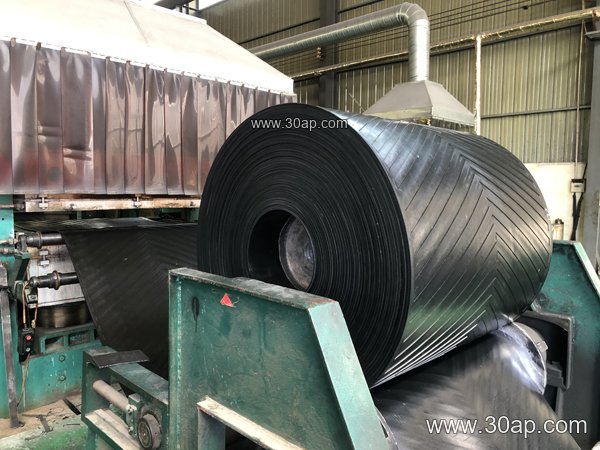
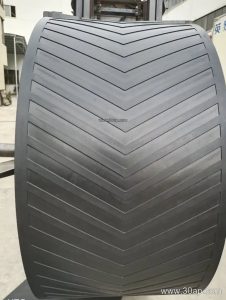
Other fabric types are sometimes compared. An NN Conveyor Belt uses nylon in both directions and offers higher elongation, which suits some shock-loading positions. A Steel Cord Conveyor Belt is chosen when very long centre distances or extreme tension demand a metallic carcass. For steep inclines, a Chevron Conveyor Belt or a Corrugated Sidewall Conveyor Belt may be needed to prevent material rollback. None of these replace the EP belt where its properties match the duty.
Buyer Checklist
Before ordering, confirm the following with the conveyor designer and the belt supplier:
- Peak tension and the resulting strength grade.
- Belt width, ply count and cover thickness.
- Material temperature and any oil, acid or chemical exposure.
- Fire safety requirements for underground or enclosed galleries.
- Splice method and available vulcanising equipment.
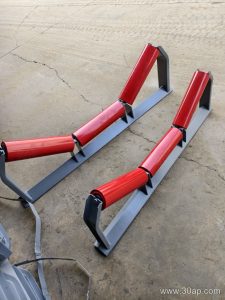
- Pulley diameters, trough angles and idler roller spacing along the route.
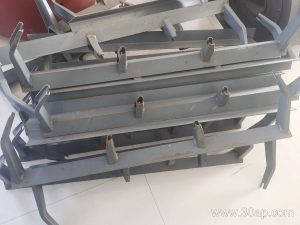
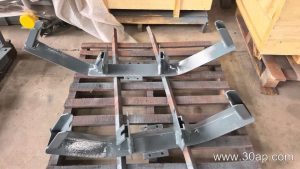
Also check that the conveyor pulley lagging, conveyor bracket condition and idler roller alignment are correct before fitting a new belt. A misaligned frame can damage even a correctly specified EP belt within weeks.
Maintenance Notes
Inspect covers for cuts and exposed fabric, especially near loading points where impact is high. Keep the tail area clean so material does not build up against the bend pulley. Track cover wear and re-splice before the carcass is exposed. For hot or oily service, record cover hardness changes over time, because compound ageing is the usual first sign that the belt grade no longer suits the duty.