What a Pipe Conveyor Belt Is
A Pipe Conveyor Belt is a conveyor belt that is trained into a tube shape along the carrying run. It begins flat at the tail, curls into an overlapping circle after the loading point, and opens again before the discharge pulley. Because the material travels inside the tube, spillage, dust release, and exposure to wind and rain are reduced compared with an open troughed belt. The same belt returns flat or in a relaxed profile on the return side.
It is still a conveyor belt in the ordinary sense, but its construction and the layout of the conveyor are adapted to the pipe profile. The belt must be flexible enough to form a stable overlap, stiff enough to hold the tube without collapsing, and strong enough to carry the required tonnage over the route.
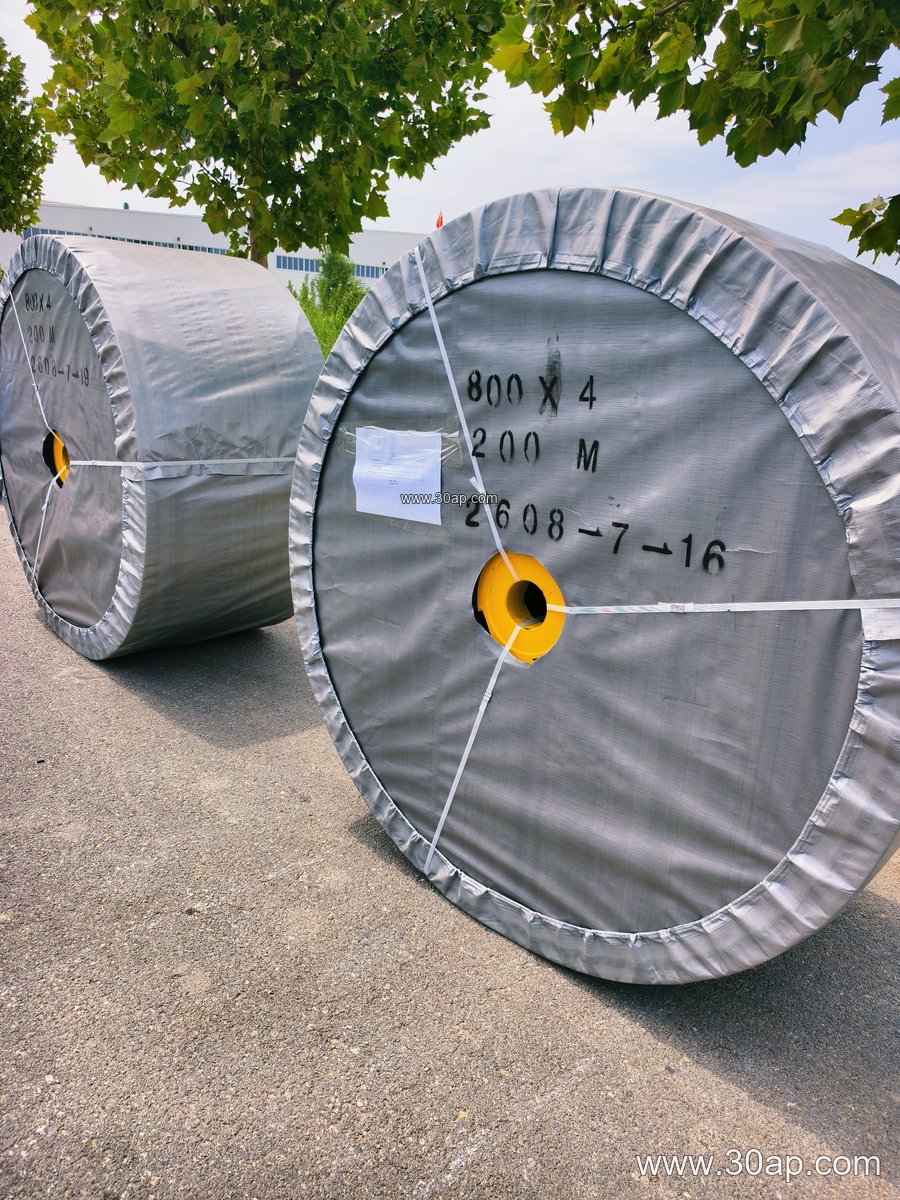
Construction and Belt Build
The carcass usually uses fabric plies or steel cord, depending on tension and route length. Fabric-core options are common on medium-duty routes, while a Steel Cord Conveyor Belt is selected where high strength and long center distances are needed. Cover compounds are chosen for the cargo: abrasion resistance for ore, flame retardancy for coal, heat resistance for clinker, and oil resistance for certain industrial streams.
Pipe belts often have a specially designed edge and overlap zone. The overlap must seal well but still release cleanly at the opening station. Transverse rigidity is important, and the pulley diameters, idler roller arrangement, and transition lengths are all set by the belt supplier and conveyor designer rather than by belt width alone.
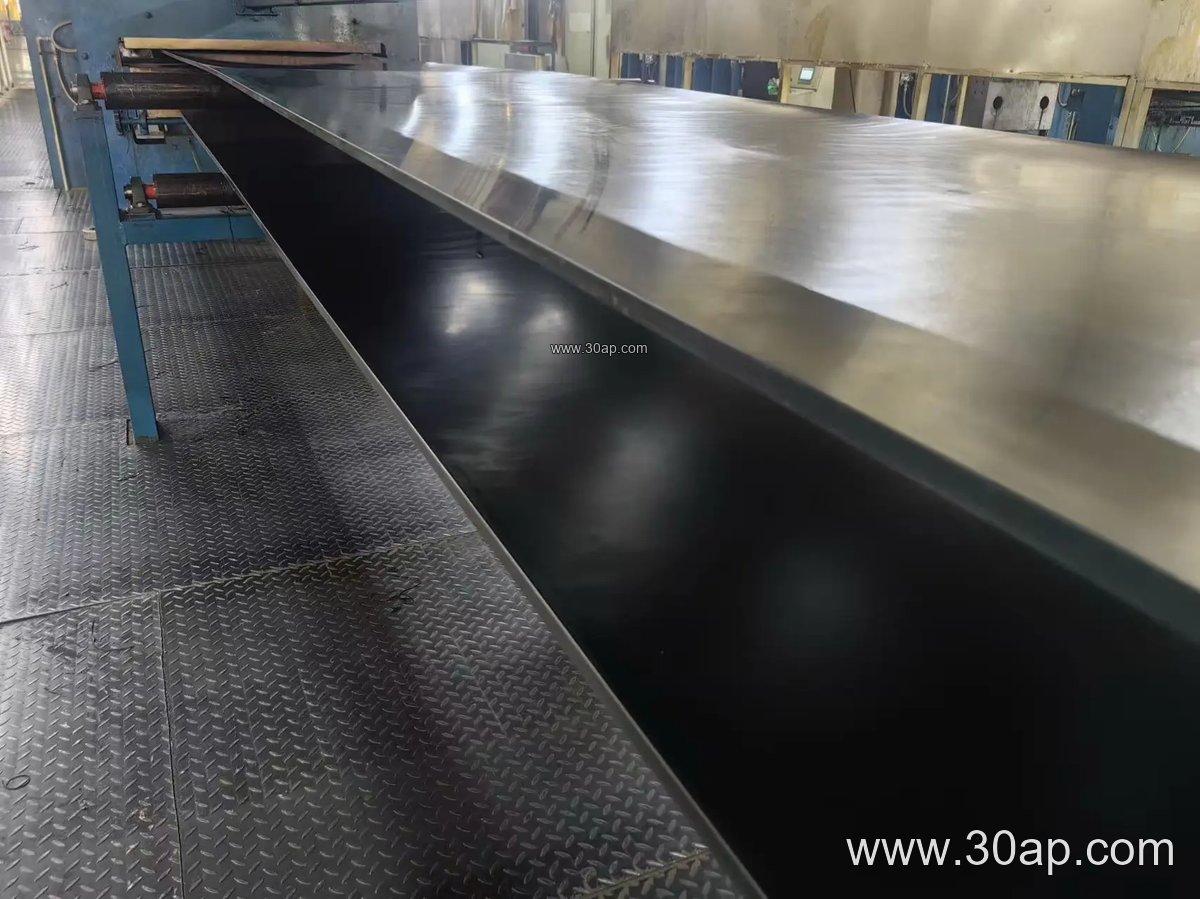
| Belt Item | Common Reference |
|---|---|
| Pipe diameter | Usually selected from 100 mm to 600 mm and above |
| Belt width | Common references include 500 mm, 800 mm, 1000 mm, and 1200 mm wide conveyor belts |
| Fabric strength grades | EP200, EP400, EP630, EP800, EP1000, EP1250, EP1600 |
| Steel cord grades | ST1000, ST1600, ST2000, ST2500 |
| Cover thickness | Often 4+2 mm, 5+2 mm, 6+2 mm, or 8+3 mm |
| Carcass plies | Typically 2 to 6 fabric layers |
Where It Fits in the Plant
Pipe conveyors suit routes that need dust control or space saving. In a coal mining conveyor belt system, the enclosed run limits coal dust escape along the line. In cement plants, a pipe belt can carry clinker, limestone, and raw meal through congested areas. Power plants use them for coal and ash handling, while ports and ship loading terminals value the curved horizontal and vertical alignment that a pipe route can follow. Quarries and aggregate plants also use pipe belts where a conventional open belt would scatter material.
Some routes combine the pipe belt with other belt types. A short Chevron Conveyor Belt or a Corrugated Sidewall Conveyor Belt may be used on an inclined feeder or transfer section, but those are separate belt designs and are not substitutes for the pipe belt on the main enclosed run.
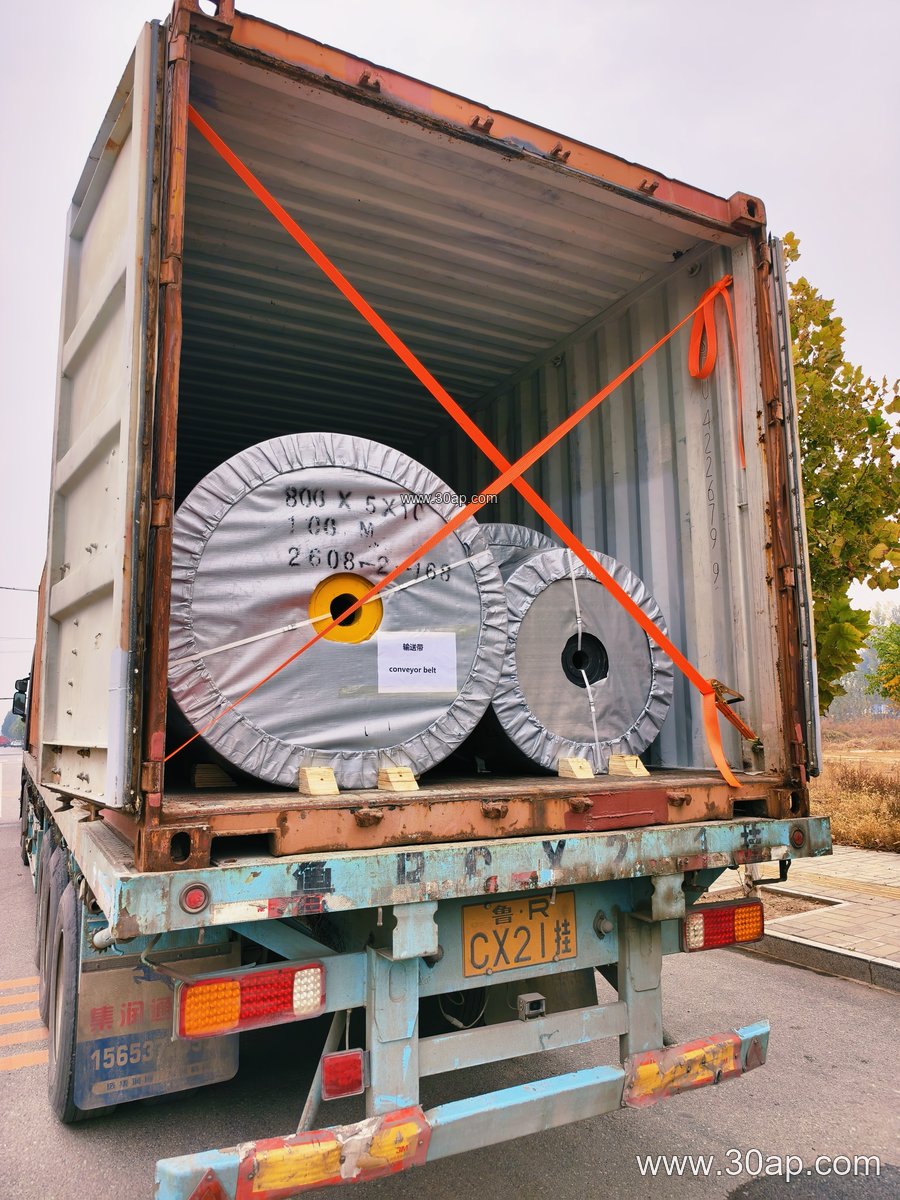
Conveyor Components Around the Belt
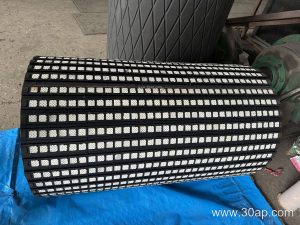
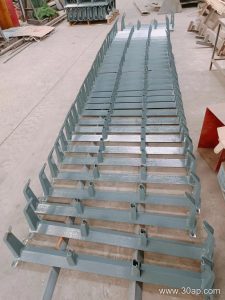
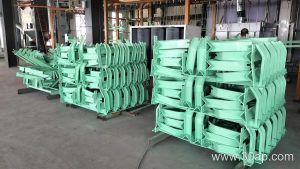
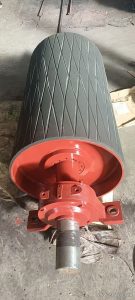
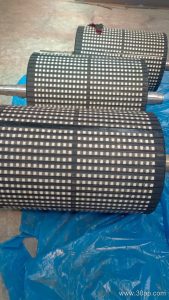
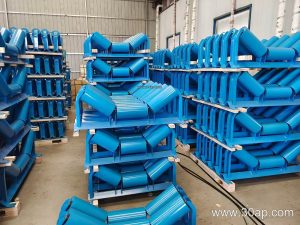
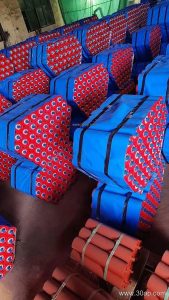
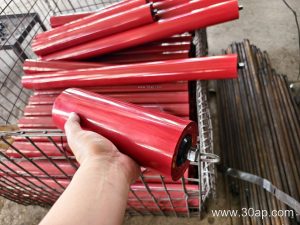
The pipe shape is held by a series of idler rollers arranged in a hexagonal or circular pattern. The conveyor pulley at the drive and tail ends must match the belt’s bending requirements, and the drive pulley, tail pulley, and bend pulleys each have a different role. A conveyor bracket supports the idler frames and must keep alignment along the whole route. Transition idlers gradually change the belt from flat to round, and their spacing is a design item that should not be estimated from belt width alone.
For an existing plant, matching a new pipe belt to the current conveyor pulley and idler roller positions is more important than choosing a strength grade in isolation. The belt supplier should review the pulley diameters, troughing and transition geometry, and take-up travel before the belt is ordered.
Buyer Selection Notes
- State the material, bulk density, lump size, moisture, and temperature range.
- Give the required capacity, route length, lift, curves, and the number of loading and discharge points.
- Confirm the pipe diameter and belt width with the conveyor designer, not from a single table.
- Specify cover grade for abrasion, flame, heat, oil, or static conditions as applicable.
- Ask for the recommended pulley diameters, transition lengths, and overlap direction.
For mining, cement, power, and quarry projects, a fabric-core option such as an EP belt may be offered where tension allows, and a steel cord version where it does not. The final choice depends on the calculated tension and the route, so the belt and conveyor should be treated as one system.