What an Underground Mining Conveyor Idler Does
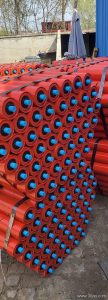
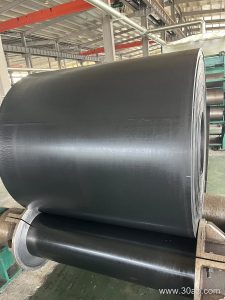
In an underground mine, a conveyor belt often runs through dips, curves and transfer points where dust and moisture are constant. The idler roller underneath or above that belt carries the load and keeps the belt tracking. When the application calls for a heavy frame and sealed bearings, this is usually described as an underground mining conveyor idler. It is a rotating support, not a drive component. Drive, tail and bend pulleys move or redirect the belt through power or tension, so they are not interchangeable with an idler roller.
Common Types and Where They Sit
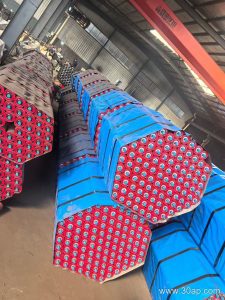
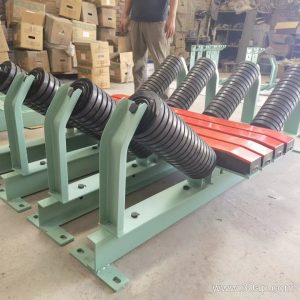
An underground layout rarely uses one idler type everywhere. The carrying side may use a three-roll troughing set, while the return side may use a flat or V-shaped roller. In a coal mine or ore transfer, impact zones often take rubber-disc impact idlers. Self-aligning idlers help correct belt wander on long drifts. The table below shows typical combinations, not fixed rules.
| Position | Typical idler type | Common trough angle |
|---|---|---|
| Carrying side, normal load | Three-roll troughing idler | 20, 30, 35 or 45 degrees |
| Carrying side, loading point | Impact idler with rubber discs | Same as adjacent troughing set |
| Return side, flat belt | Flat return idler | 0 degrees |
| Return side, training | V-return or spiral idler | V angle |
| Transition zone | Transition idler | Between trough and flat |
Roller Diameter and Belt Width
Buyers often ask how to match roller diameter to belt width. There is no single rule. A B800 belt may run on Ø89, Ø102 or Ø108 rollers depending on load, speed and frame design. Wider belts such as B1400 or B1600 usually use larger diameters like Ø133, Ø159 or Ø178 to reduce rotation speed and bearing load. The roller length also changes with belt width and trough angle. For a three-roll troughing set, common roller lengths are roughly 200 mm for B500, 315 mm for B800, 465 mm for B1200 and 600 mm for B1600. Side rollers and centre rollers can differ, so these are examples only.
Construction Details That Matter
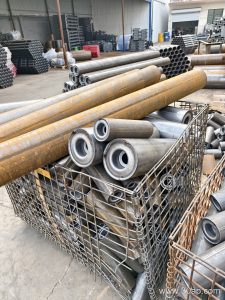
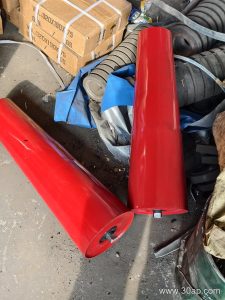
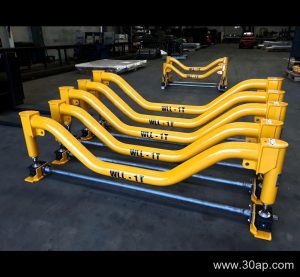
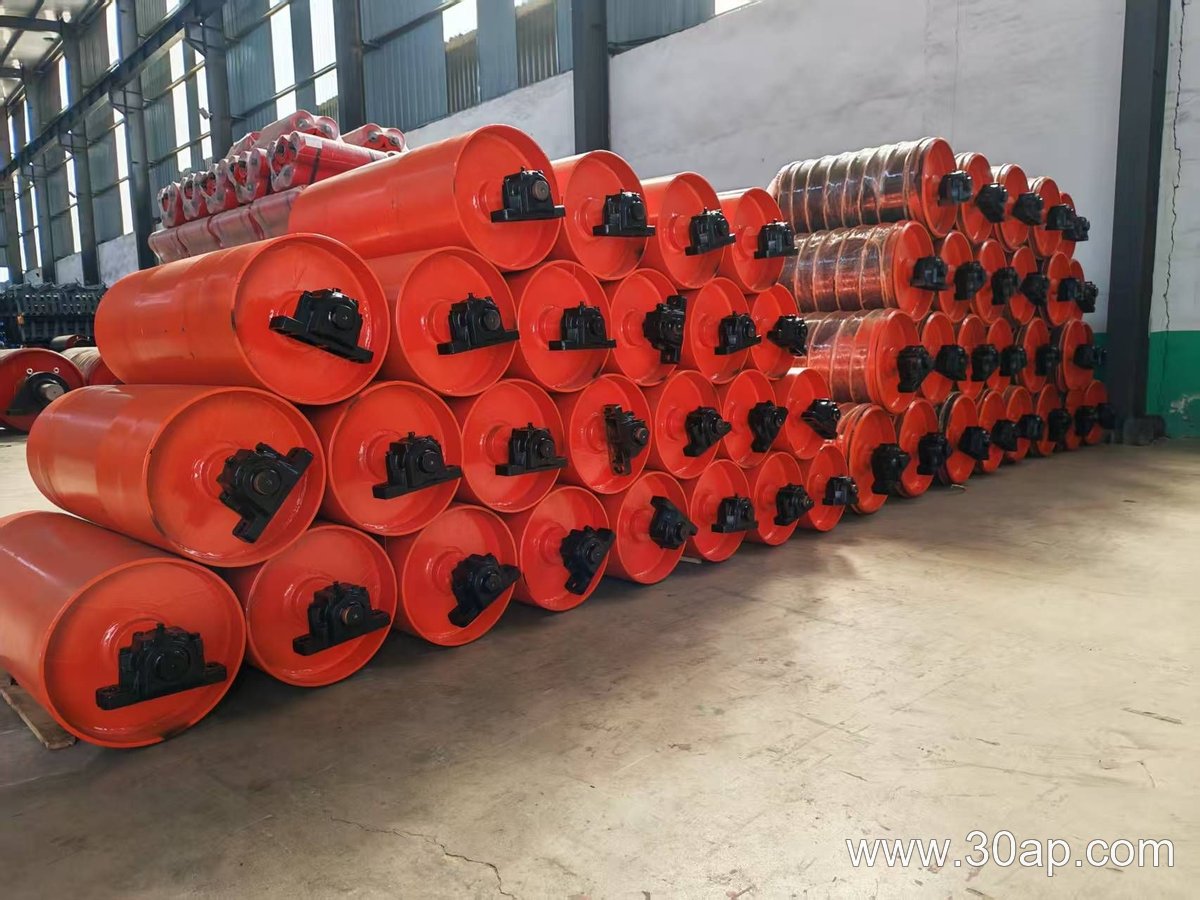
A typical idler roller has a steel tube shell, a shaft, bearing housings and a sealing system. Common bearings include 6204, 6205, 6305, 6306, 6308 and 6310. A bearing number does not lock the roller to one diameter. The seal is often the weak point underground, because fine dust and acidic water attack grease. Rubber, nylon or ceramic surfaces are chosen when abrasion or material build-up is a problem. The conveyor bracket that holds the idler also affects alignment; a bent bracket can make a good roller run badly.
Selection and Maintenance Notes
Before choosing an underground mining conveyor idler, confirm belt width, belt speed, material density and the angle of the conveyor. Check whether the idler sits in a loading zone, a curve or a wet sump. Ask for the roller diameter, shell thickness, bearing type and seal design. During operation, listen for a seized roller, watch for belt misalignment and replace damaged rollers before they cut the belt. A drive pulley or tail pulley should be inspected separately, because their failure modes are different from an idler roller. In a coal mine, cement plant or aggregate line, keeping idlers turning freely is one of the simplest ways to protect the conveyor belt and reduce downtime.