What a Conveyor Support Leg Does
A conveyor support leg is the vertical member that carries the weight of a belt conveyor structure down to the floor, foundation, or steel frame. In practice, it is the standing column under the stringers, and it holds the idler roller frames, the conveyor bracket assemblies, and the belt load at a stable height. On a long overland line or a transfer house in a coal mining plant, these legs are what keep the whole run level and aligned, so the belt tracks properly and the pulleys are not fighting a twisting frame.
People often call the same part a conveyor stand leg, belt conveyor support leg, or conveyor frame leg. All of these refer to the same structural component: the vertical support under the conveyor section. It is not a pulley and it is not an idler; it is the steel that holds them up.
How the Leg Is Built
Most support legs are fabricated from angle steel, channel steel, or folded steel plate, then drilled or punched for bolting to the stringer and to a base plate. A typical design includes a top plate or clevis that connects to the longitudinal beam, a foot plate with anchor holes, and sometimes diagonal bracing for lateral stiffness. Height is set by the conveyor profile, so a ground-level quarry conveyor belt line may use short legs, while a crusher discharge or a port loading line may need tall, braced legs to clear trucks or stockpiles.
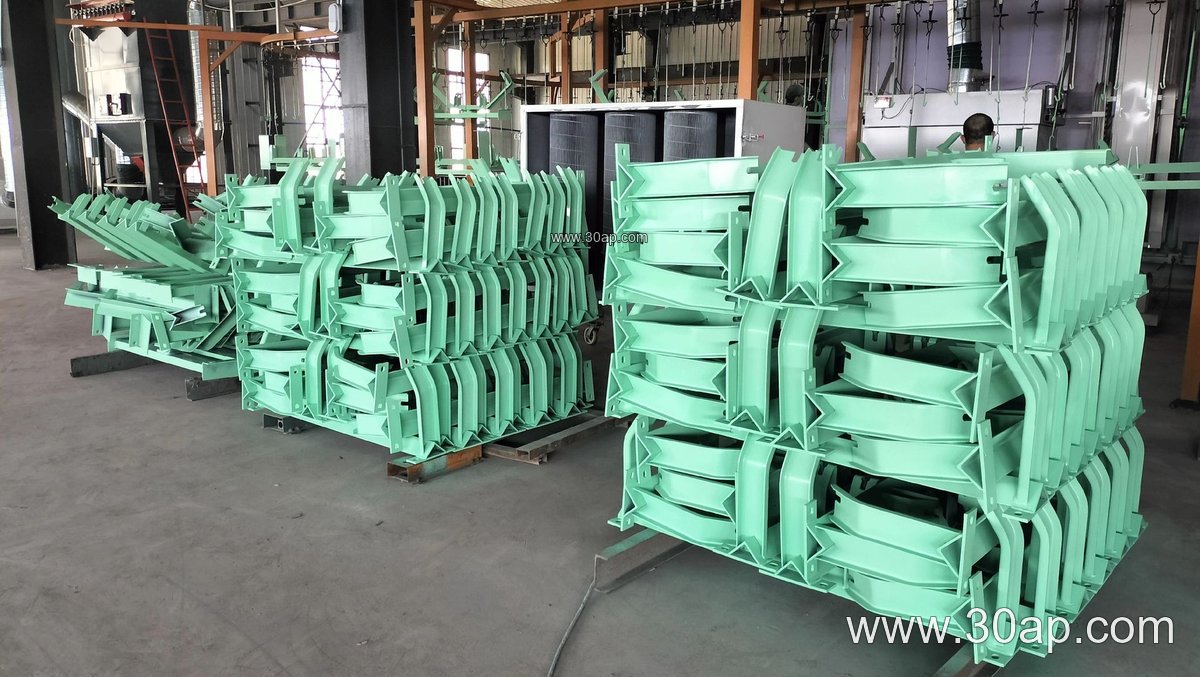
Finishing matters in dusty or wet plants. Hot-dip galvanizing or a heavy paint system helps legs survive washdown in a cement plant or humidity in a tunnel boring site. Bolt holes are usually matched to the stringer spacing, and the base plate is sized for the anchor pattern rather than a single fixed dimension.
Where It Fits in the Conveyor Structure
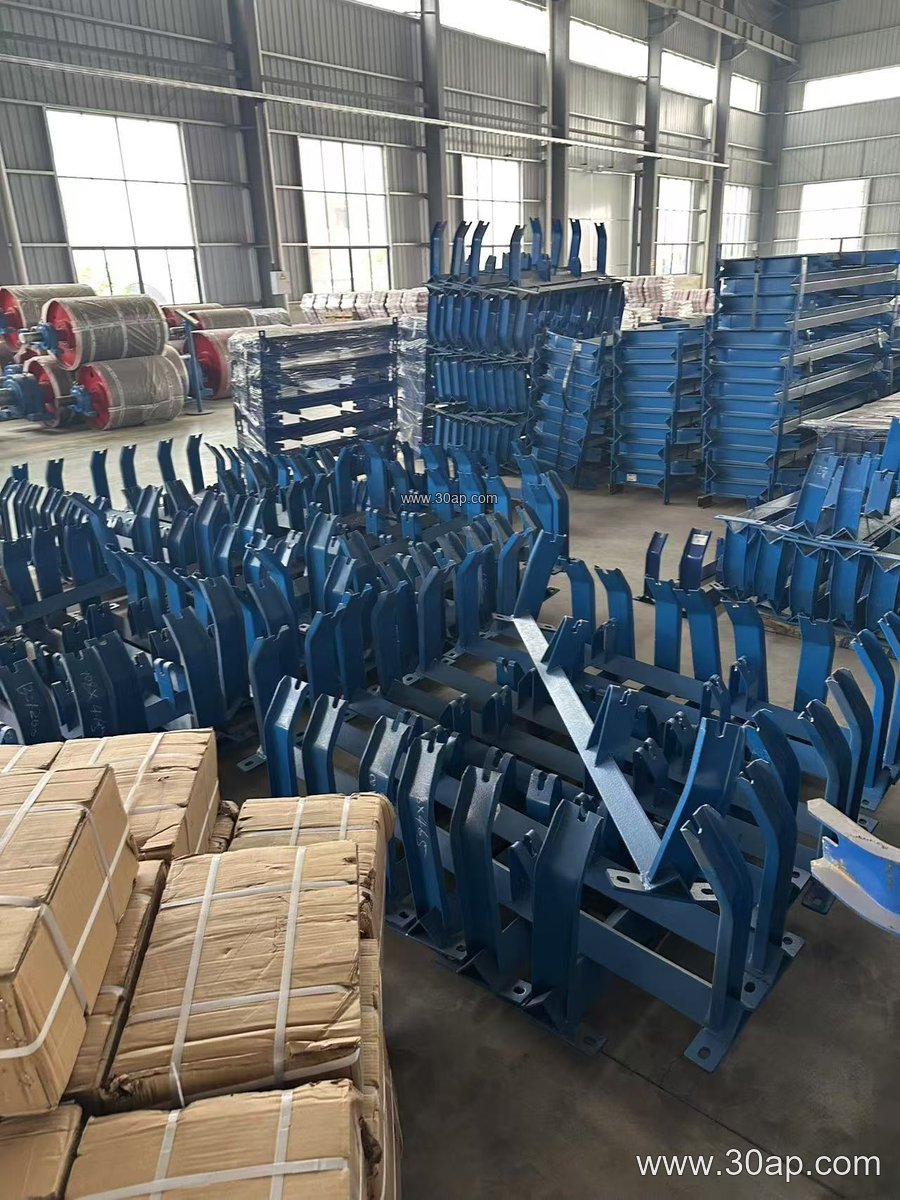
The leg works together with the rest of the frame. The upper run carries troughing idler frames, the return run carries return brackets, and the belt itself rides on the idler roller. A conveyor pulley at the head or tail transfers the drive force, and the support legs simply keep the line at the correct elevation between those points. In a coal mining conveyor or an iron ore line, the legs are often placed at regular intervals along the stringer, with closer spacing near transfer points where impact loads are higher.
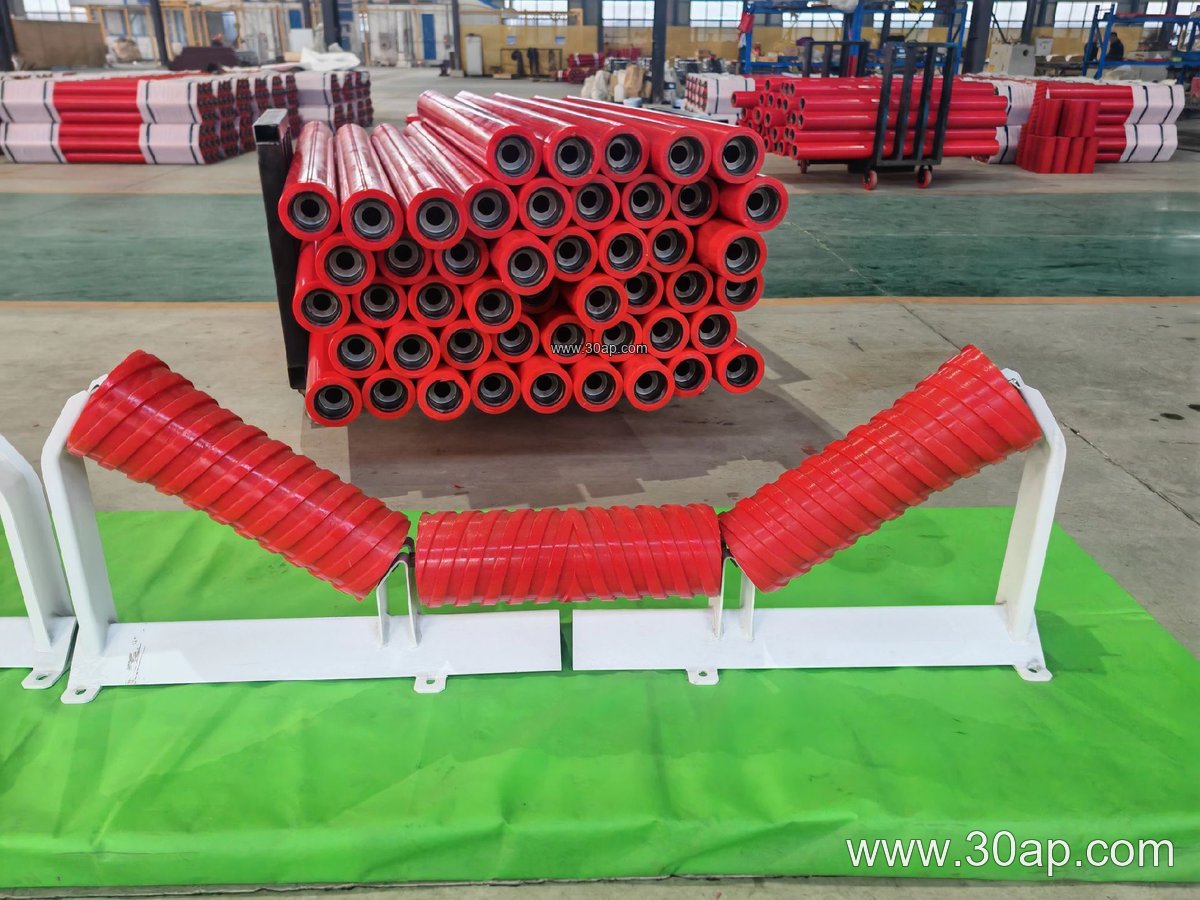
For layout work, engineers usually think in terms of belt width and idler diameter together. Common combinations include B800 with 35 degree troughing and Ø108 idlers, B1200 with 45 degree troughing and Ø133 idlers, or B650 with 30 degree troughing and Ø89 idlers. These are reference examples, not fixed rules; the leg height and bolt spacing follow the actual design.
Common Support Leg Reference Data
The table below shows typical reference values used when specifying legs for standard belt widths. Treat them as guidance for early planning, not as verified supply commitments.
| Belt Width | Trough Angle | Idler Diameter | Typical Leg Material |
|---|---|---|---|
| B500 | 20–30 degrees | Ø89 | Angle steel |
| B650 | 30 degrees | Ø89 | Angle steel |
| B800 | 35 degrees | Ø108 | Channel steel |
| B1000 | 35 degrees | Ø108–Ø133 | Channel steel |
| B1200 | 35–45 degrees | Ø133 | Folded plate |
| B1400 | 35–45 degrees | Ø133–Ø159 | Folded plate |
| B1600 | 35–45 degrees | Ø159 | Channel or folded plate |
| B1800 | 45 degrees | Ø159–Ø194 | Folded plate |
| B2000–B2200 | 45 degrees | Ø194 | Heavy folded plate |
Fixed or Adjustable Legs
Fixed legs are cut to one height and welded or bolted in place. They suit permanent lines such as a power plant coal handling system or a limestone quarry conveyor where the profile will not change. Adjustable legs use slotted holes, telescoping sections, or shim packs so the frame height can be corrected during installation or after foundation settlement. Adjustable versions are common in temporary crushing and screening setups and in tunnel spoil lines where the floor is uneven.
Neither type is automatically better. A fixed leg is stiffer and cheaper to fabricate, while an adjustable leg costs more but saves time when alignment must be corrected on site.
What Buyers Should Check
- Confirm the belt width and the idler roller diameter the leg must support, since these drive the bracket spacing.
- Ask for the stringer and base plate hole pattern, not just the overall height.
- State the environment: a dusty cement plant, a wet coal mining conveyor, or a coastal port may need different coating.
- Check whether bracing is included for tall legs, because lateral stiffness matters on long spans.
- Request the drawing for the full assembly, including the conveyor bracket that joins the leg to the stringer.
A well-specified conveyor support leg is a small part of the total cost but a large part of the conveyor’s reliability. Matching the leg to the belt width, the trough angle, and the surrounding structure keeps the idler roller frames square and the belt running true, whether the line moves limestone, coal, ore, or aggregate.