What a Corrugated Sidewall Conveyor Belt Is
A corrugated sidewall conveyor belt is a fabric or steel reinforced rubber belt fitted with raised, wave-shaped edges and horizontal cleats between them. Together, the sidewalls and cleats form open pockets that carry bulk material up steep slopes without the material sliding back or spilling over the edges. This product is also known as a skirted conveyor belt with cleats, and the two names describe the same construction. Mining plants, cement works, coal preparation facilities, power stations and quarry sites use this design where space is short and a steep lift is needed.
How the Belt Is Built
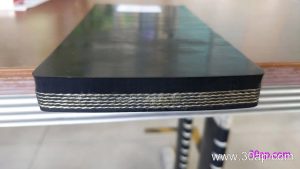
The base belt is usually an EP conveyor belt or NN conveyor belt carcass covered with abrasion resistant rubber. Corrugated sidewalls are bonded to both edges, and cleats are vulcanized across the belt at intervals that match the pocket volume required. Reinforcing fabric inside the sidewall gives it stiffness so it stays upright through the run. In coal mining and underground coal mining work, flame retardant and anti-static grades are common, often built on a PVG conveyor belt base. The table below shows typical reference ranges; actual values follow the design of each conveyor.
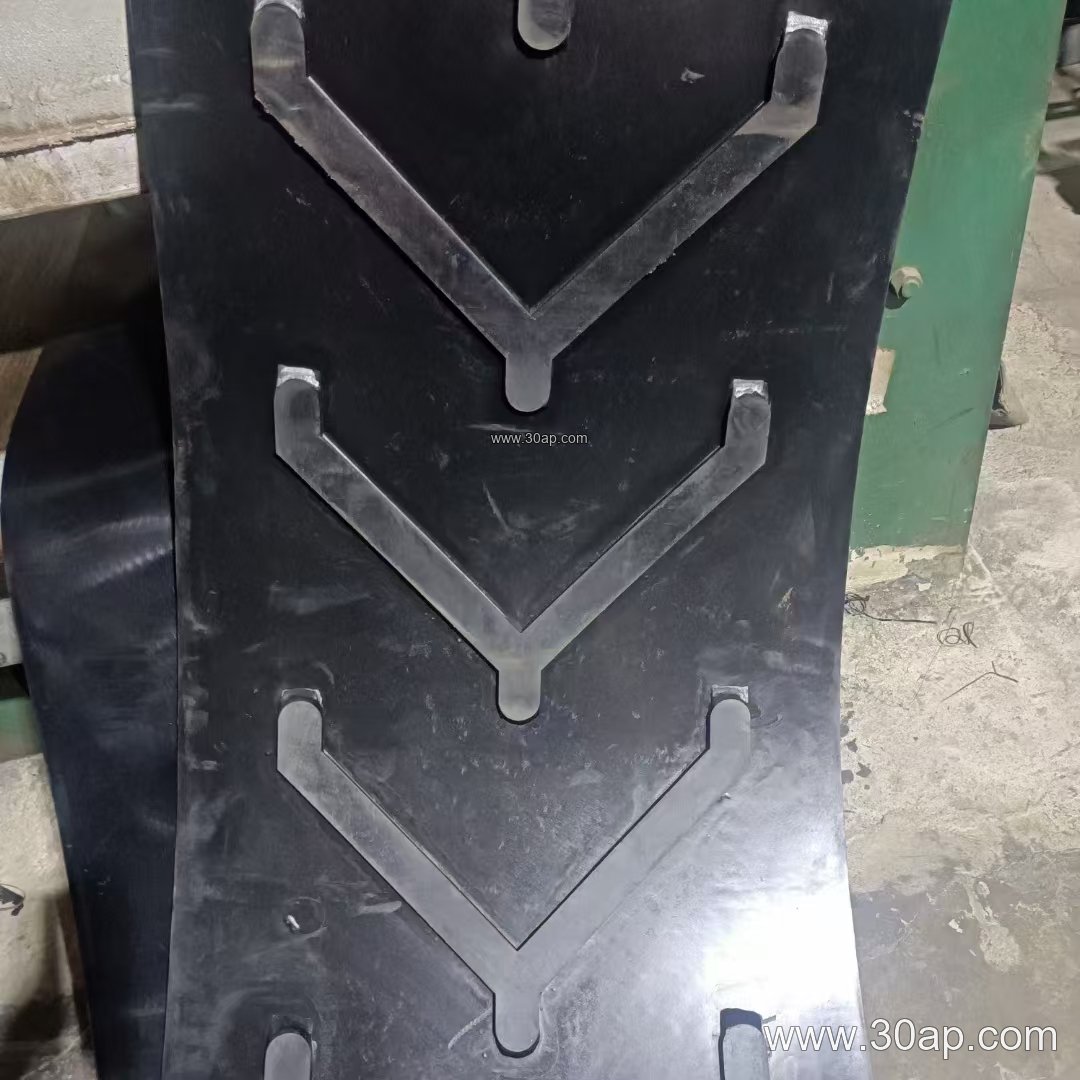
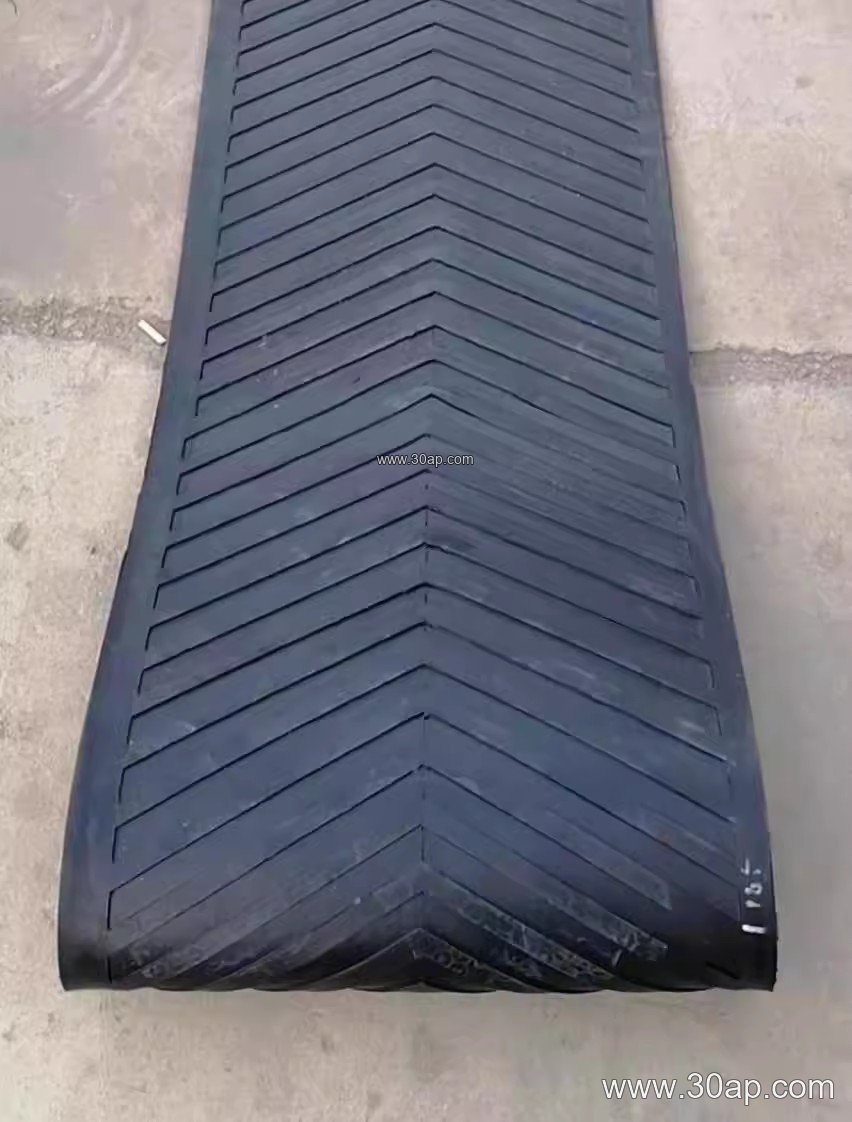
- Base types: EP fabric core, NN fabric core, steel cord, PVC or PVG
- Sidewall height: often 40 mm to 300 mm or more, set by the required pocket depth
- Cleat pitch: commonly 100 mm to 800 mm, chosen for the material and incline
- Belt width: B500, B650, B800, B1000, B1200 and wider
- Cover thickness: 3+1.5, 4+2, 5+2, 6+2 or 8+3 mm depending on wear
- Carcass plies: usually 2 to 6 layers in fabric constructions
Where It Fits in a Conveyor
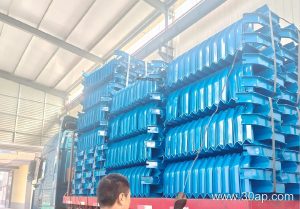
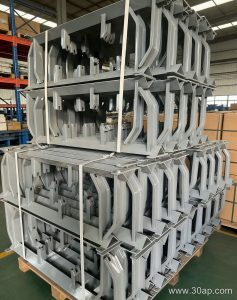
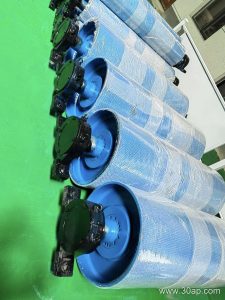
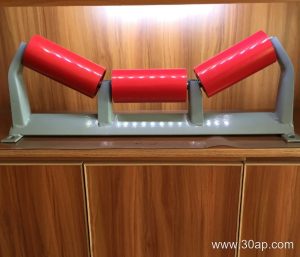
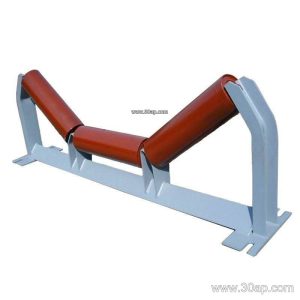
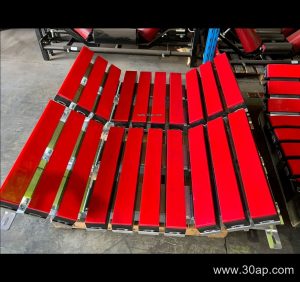
The belt runs on a conventional conveyor pulley arrangement, but the sidewalls change how the transition zones are handled. The tail pulley is normally flat, while the drive pulley is often crowned to keep tracking. Special bend pulleys with small diameter and vertical rolls support the belt as it folds from the horizontal feed section into the inclined run. Support idler rollers under the belt are frequently replaced by flat panels or short rolls because the corrugated edges cannot pass through a standard troughed idler set. Conveyor brackets and frame sections must leave clearance for the sidewall, so the belt is not squeezed between the structure and the pulley.
Typical Industries and Duties
Steep angle conveyors built around this belt serve cement plants moving clinker and raw meal, power plant coal bunkers, sand and aggregate plants, fertilizer handling, and port ship loading where a compact route is valuable. A mining conveyor belt in an iron ore or copper ore circuit may use a heavy-duty carcass with high abrasion resistant covers. For hot material such as cement clinker, a heat resistant grade is selected. For oily or chemical-laden cargo, oil resistant, acid resistant or chemical resistant covers help protect the carcass. In cold regions, cold resistant compounds keep the sidewalls flexible.
Choosing the Right Specification
Start with the material: lump size, bulk density, moisture, temperature and abrasiveness. Then fix the incline angle and required capacity, which together set the pocket size, sidewall height and cleat pitch. A belt that is too narrow with tall sidewalls can bridge and block, so the width and cleat spacing should be matched to the largest lumps. Select the carcass strength using the tension calculation, for example P = (qb + qm) x g x L / 2 for a simplified inclined section, and confirm the result with the pulley and take-up layout. If the route includes a horizontal section, consider whether a chevron conveyor belt or a standard flat belt is a better fit for that part of the line; the corrugated sidewall design is specifically for the steep section.
Maintenance Points for Buyers
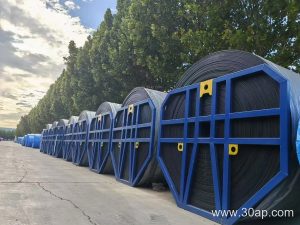
Inspect the sidewall base and cleat roots regularly, because cracking there is the first sign of fatigue. Keep the bend pulley area clean so lumps do not lodge under the folded sidewall. Check that idler rollers and conveyor pulleys turn freely, and confirm belt tracking after any frame or bracket adjustment. Store spare belt in a dry, shaded place and avoid tight coiling that can deform the corrugated profile. When ordering, state the belt width, sidewall height, cleat pitch, cover grade and carcass type clearly, and ask the supplier to confirm the pocket volume for the intended duty.